

By using this site, you agree to the Privacy Policy and Terms of Use.
Accept
India Times NowIndia Times NowIndia Times Now
Notification Show More
Font ResizerAa
  • India News
    India News
    Politics is the art of looking for trouble, finding it everywhere, diagnosing it incorrectly and applying the wrong remedies.
    Show More
    Top News
    The States Braces for Protests Over New COVID Rules
    August 29, 2021
    A.P. Chambers draws GST Council’s attention to issues that need redressal
    October 21, 2025
    Yunus keen to improve ties with India, says adviser
    December 24, 2025
    Latest News
    India’s January trade deficit widens before U.S. tariff relief kicks in
    February 16, 2026
    M.P. Assembly’s Budget Session begins with uproar over Indore deaths during Governor’s address
    February 16, 2026
    ‘Advance of AI creating a governance responsibility’
    February 16, 2026
    Supreme Court to take a fresh look at pleas on ex post facto eco clearance regime
    February 16, 2026
  • Technology
    TechnologyShow More
    Strengthening the Team: Thryve PR Onboards Pranjal Patil as PR Executive & Project Manager
    October 1, 2025
    How to Take the Perfect Instagram Selfie: Dos & Don’ts
    October 1, 2021
    Apple iMac M1 Review: the All-In-One for Almost Everyone
    Hands-On With the iPhone 13, Pro, Max, and Mini
    September 4, 2021
    Apple VS Samsung– Can a Good Smartwatch Save Your Life?
    August 30, 2021
  • Posts
    • Post Layouts
      • Standard 1
      • Standard 2
      • Standard 3
      • Standard 4
      • Standard 5
      • Standard 6
      • Standard 7
      • Standard 8
      • No Featured
    • Gallery Layouts
      • Layout 1
      • Layout 2
      • layout 3
    • Video Layouts
      • Layout 1
      • Layout 2
      • Layout 3
      • Layout 4
    • Audio Layouts
      • Layout 1
      • Layout 2
      • Layout 3
      • Layout 4
    • Post Sidebar
      • Right Sidebar
      • Left Sidebar
      • No Sidebar
    • Review
      • Stars
      • Scores
      • User Rating
    • Content Features
      • Inline Mailchimp
      • Highlight Shares
      • Print Post
      • Inline Related
      • Source/Via Tag
      • Reading Indicator
      • Content Size Resizer
    • Break Page Selection
    • Table of Contents
      • Full Width
      • Left Side
    • Reaction Post
  • Pages
    • Blog Index
    • Contact US
    • Search Page
    • 404 Page
    • Customize Interests
    • My Bookmarks
  • Join Us
Reading: Inclusive politics in an age of division
Share
Font ResizerAa
India Times NowIndia Times Now
  • Finance ₹
  • India News
  • The Escapist
  • Entertainment
  • Science
  • Technology
  • Insider
Search
  • Home
    • India Times Now
    • Home 2
    • Home 3
    • Home 4
    • Home 5
  • Categories
    • Technology
    • Entertainment
    • The Escapist
    • Insider
    • Finance ₹
    • India News
    • Science
    • Health
  • Bookmarks
    • Customize Interests
    • My Bookmarks
  • More Foxiz
    • Blog Index
    • Sitemap
Have an existing account? Sign In
Follow US
Home » Blog » Inclusive politics in an age of division
India News

Inclusive politics in an age of division

Times Desk
Last updated: February 16, 2026 7:48 pm
Times Desk
Published: February 16, 2026
Share
SHARE


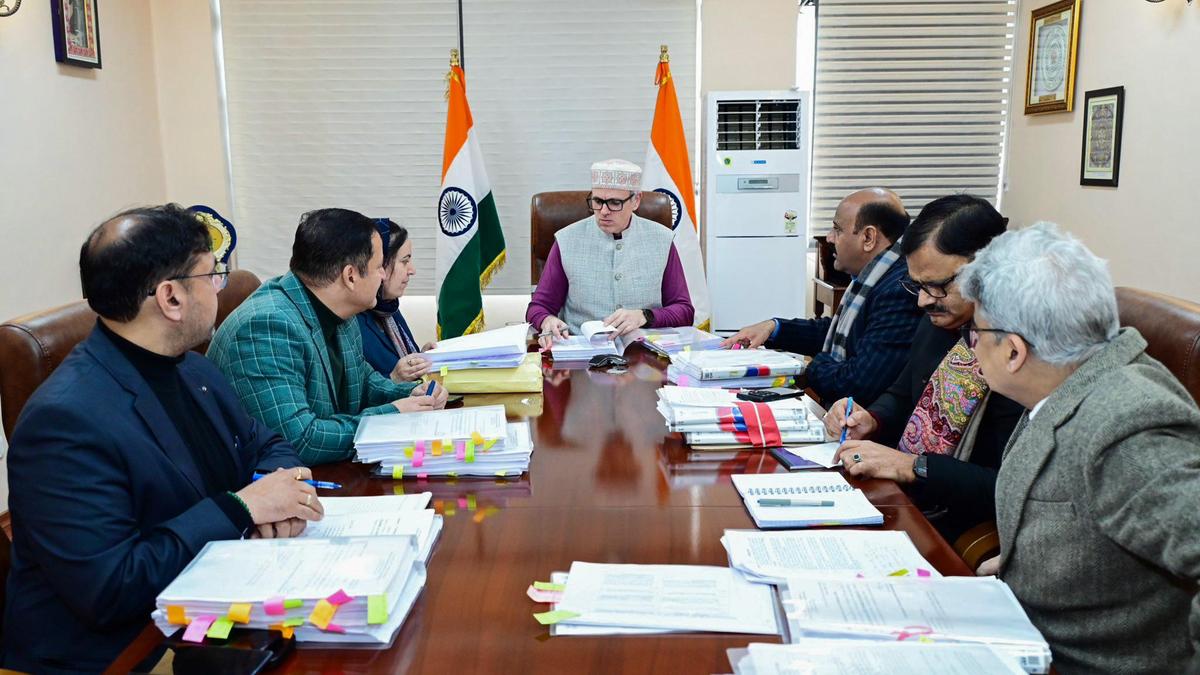
In a careful balancing act, the region’s smallest-ever Cabinet of six members comprise Chief Minister Omar Abdullah from Central Kashmir; Sakeena Itto from South Kashmir; Javid Ahmad Dar from North Kashmir; Javed Rana, a Pahari from Poonch in the Pir Panjal Valley; Satish Sharma from Jammu’s Chhamb; and Surinder Kumar Choudhary from the Pir Panjal Valley. File photo: X/@CM_JnK via ANI

In a careful balancing act, the region’s smallest-ever Cabinet of six members comprise Chief Minister Omar Abdullah from Central Kashmir; Sakeena Itto from South Kashmir; Javid Ahmad Dar from North Kashmir; Javed Rana, a Pahari from Poonch in the Pir Panjal Valley; Satish Sharma from Jammu’s Chhamb; and Surinder Kumar Choudhary from the Pir Panjal Valley. File photo: X/@CM_JnK via ANI

Of late, polarising narratives have dominated headlines from Jammu and Kashmir (J&K). Last month, the National Medical Commission withdrew the MBBS course from the Shri Mata Vaishno Devi Institute of Medical Excellence in Jammu after protests erupted over the fact that a majority of the students who qualified through NEET were Muslim rather than Hindu. Last week, BJP MLA Vikram Randhawa described residents from the Kashmir Valley as “land grabbers” who had illegally occupied land in Jammu. Students have hit the streets demanding that the National Law University be established in Jammu rather than Kashmir.

Amid this din, however, the stories of Aga Syed Ruhullah Mehdi and Shammi Oberio — both National Conference (NC) parliamentarians — provide a glimpse into a less-discussed story — that of J&K’s inclusive politics.

For the first time since the 1990s, none of the Abdullahs, who have long administered J&K, managed to make it to either House of Parliament in the 2024 general elections. There were also other notable changes during the elections. Shammi Oberoi, an eloquent Sikh from Srinagar, became the first from the community from the Kashmir Valley to enter the Rajya Sabha, in 2025. His two speeches in Parliament have won him accolades even from Opposition leaders in Kashmir, a rare gesture in present-day politics.

In the 2024 elections, Syed Aga Ruhullah Mehdi, a Shia cleric from an influential family, also became the first from the community to win parliamentary elections by a huge margin of 1.88 lakh votes. Earlier too, Shia leaders from Kashmir have represented the community, but only in the Rajya Sabha. Notably, it was a majority of Sunni Muslim votes that catapulted Mr. Mehdi to the position, enabling him to represent the Kashmir Valley against the backdrop of the dilution of Article 370 and the downgrading of J&K into a Union Territory in 2019.

Mian Altaf Ahmed Larvi became the first Gujjar leader from J&K in the Lok Sabha. The only region left unrepresented was the Chenab Valley. But with Sajjad Ahmad Kichloo from Kishtwar winning the Rajya Sabha elections, that gap was filled too.

Representation was the defining feature of the 2024 Assembly elections as well. The numerically upscaled 90-member J&K Assembly went to the polls after a decade. It was a moment for all the political parties to seize. The JKNC won 42 seats — 35 from the Kashmir Valley and seven from the Pir Panjal and Chenab Valleys, including two Hindu representatives. None came from the Jammu plains.

During the process of government formation, the NC’s strength rose to 54 with the support of Independents and the Congress (6 seats each). However, it was not numbers alone that defined governance. In a careful balancing act, the region’s smallest-ever Cabinet of six members comprise Chief Minister Omar Abdullah from Central Kashmir; Sakeena Itto from South Kashmir; Javid Ahmad Dar from North Kashmir; Javed Rana, a Pahari from Poonch in the Pir Panjal Valley; Satish Sharma from Jammu’s Chhamb; and Surinder Kumar Choudhary from the Pir Panjal Valley.

There were many firsts. Mr. Choudhary became the first Hindu Deputy Chief Minister from the Pir Panjal Valley and also the first without a coalition government in place. In the past, J&K had Hindu Deputy Chief Ministers only when political parties allied with either the Congress or the BJP. If not for numerical necessity, it was the compulsion of inclusive politics that led the government to allocate two Cabinet berths to the Pir Panjal Valley. Jammu would have been excluded from this model had Mr. Sharma not been inducted. He became the first Independent MLA to serve as Cabinet Minister.

The Peace of Westphalia in 1648 helped define the architecture of the modern nation-state and the idea of sovereign geography. Yet beyond sovereignty, the treaties also underscored the principles of balance of power and collective security — ideas that continue to shape democratic systems.

In modern democracies, voting is not merely about endorsing or opposing a political idea; it is also about ensuring that diverse communities and regions find representation within that sovereign framework. At a time when exclusionary politics is gaining ground everywhere, J&K’s political landscape serves as a reminder that inclusion is central to the legitimacy of governance.

Published – February 17, 2026 01:18 am IST



Source link

SIR in West Bengal done in hurry, may jeopardise democratic participation: Amartya Sen
A.P. CM tells officials to improve public service delivery by adopting technologies
PM Modi to address nation at 5 p.m. today
‘Rathotsavam’ draws crowds to Srinivasa Mangapuram
Two Indians among 6 killed in jeep mishap in Nepal
TAGGED:Inclusive politicsJ&K politics
Share This Article
Facebook Email Print
Leave a Comment

Leave a Reply Cancel reply

Your email address will not be published. Required fields are marked *

Follow US

Find US on Social Medias
FacebookLike
XFollow
YoutubeSubscribe
TelegramFollow

Weekly Newsletter

Subscribe to our newsletter to get our newest articles instantly!
[mc4wp_form]
Popular News

Minister congratulates 12 swimmers from Kurnool for winning medals in recent State competitions

Times Desk
Times Desk
November 10, 2025
Kerala local body polls: The rise and fall of a people’s collective in Chellanam
T-CHIP Semicon Constitution Summit 2025 concludes with MoUs, global roadmap
Rajasthan surpasses target for millet outlets in rural areas
KTR writes to Rahul to break silence on ₹5 lakh crore alleged HILTP land scam in Telangana
- Advertisement -
Ad imageAd image
Global Coronavirus Cases

Confirmed

0

Death

0

More Information:Covid-19 Statistics
© INDIA TIMES NOW 2026 . All Rights Reserved.
Welcome Back!

Sign in to your account

Username or Email Address
Password

Lost your password?

