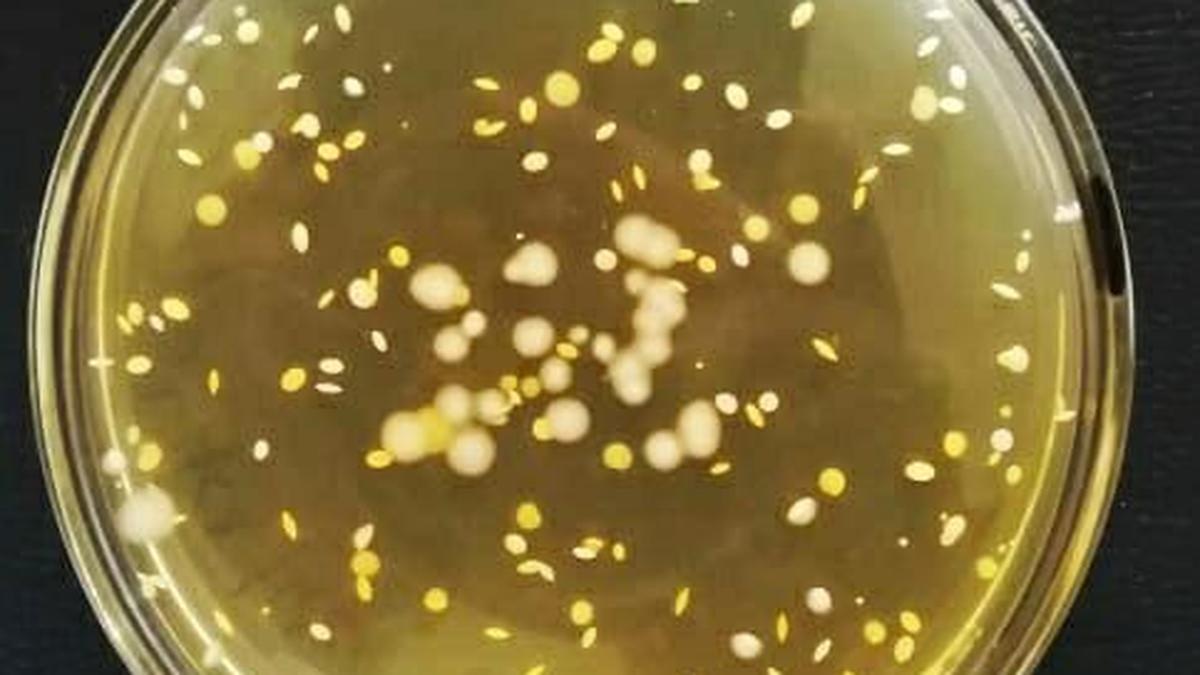
Lacticaseibacillus rhamnosus
| Photo Credit: SPECIAL ARRANGEMENT
Scientists at Kerala Veterinary and Animal Sciences University (KVASU) have secured a patent for a pioneering technology that enables the production of curd and related dairy products using a highly resilient starter culture developed through respiratory mode that can be preserved for extended periods.
The patent was granted for developing a technology to produce a more robust and long-lasting starter culture. The innovation is expected to significantly benefit the dairy processing sector by improving efficiency and product stability.
The research was carried out by faculty members of the College of Dairy Science and Technology, Thiruvananthapuram, and the Verghese Kurien Institute of Dairy and Food Technology, Mannuthy. The team includes Rejeesh R., Beena A.K., Lijimol James, P. Sudheer Babu, S.N. Rajkumar and Rachana C.R.
Aerobic respiration
The study was conducted on Lacticaseibacillus rhamnosus, a bacterium belonging to the Lactobacillus group, commonly used in milk fermentation. Traditionally, Lactobacillus bacteria convert milk into curd through anaerobic respiration (fermentation), a process that generates limited energy. However, the researchers experimented with subjecting the same bacteria to aerobic respiration.
They found that when grown under altered conditions, the bacteria exhibited unprecedented growth in numbers, enhanced metabolic activity, greater efficiency and improved stress tolerance. As a result, the starter culture developed through this method can be refrigerated and stored for more than four months without losing effectiveness.
“Lactic acid bacteria (LAB) predominantly rely on fermentative metabolism, leading to accumulation of lactic acid, and too much of it can slow their growth and reduce their survival over time. By carefully adjusting the growth medium to encourage aerobic respiration instead of just fermentation, we can lower lactic acid build-up, enhance biomass yield, and improve cellular robustness. This approach can help us develop better starter culture with higher activity and consistency, especially in fermented milk product lines, particularly liquid fermented products,” says Dr. Rejeesh.
Researchers believe this breakthrough could pave the way for the development of innovative fermented dairy products and contribute substantially to advancements in dairy technology and value-added milk processing.
Published – February 14, 2026 08:04 pm IST