


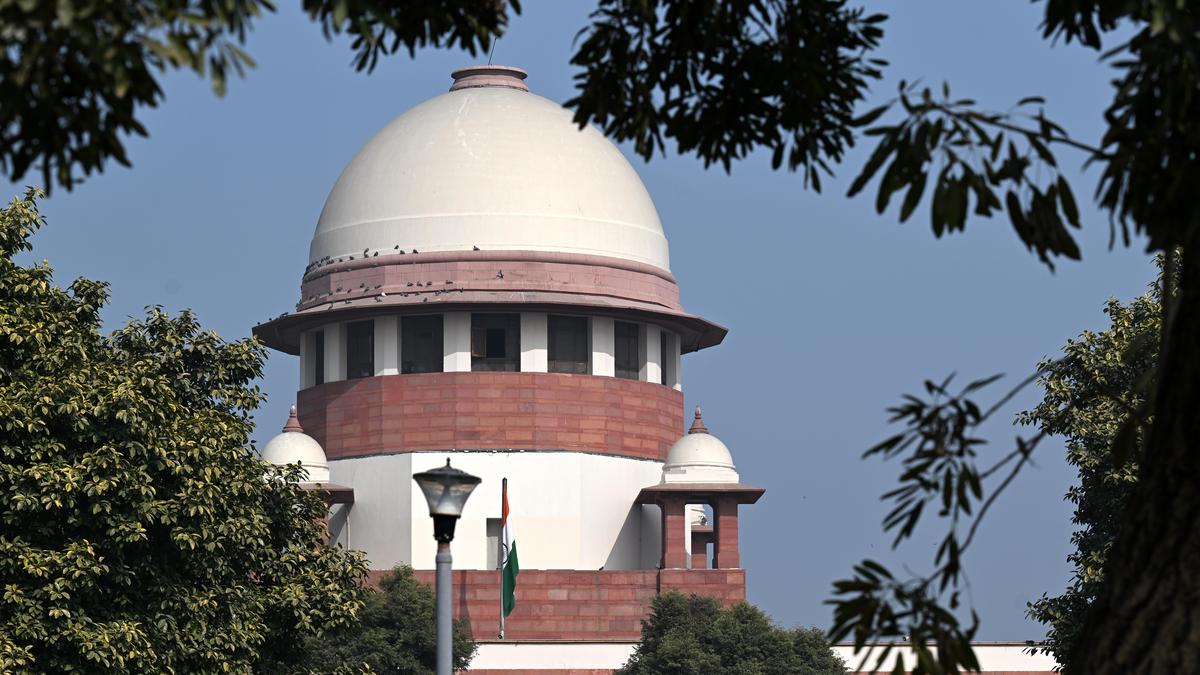
SC on Monday, January 5, 2026 denied bail to Umar Khalid and Sharjeel Imam, while it allowed the release of five other co-accused, including Gulfisha Fatima, Meeran Haider, Shifa Ur Rehman, Mohd. Saleem Khan and Shadab Ahmad.
| Photo Credit: Shashi Shekhar Kashyap
The Supreme Court on Monday (January 5, 2026) interpreted that an ‘act of terror’ under the Unlawful Activities (Prevention) Act (UAPA) is not limited to the final flourish of violence but the build-up to it too.

A Bench headed by Justice Arvind Kumar, in its judgment on the bail pleas filed by the accused in the Delhi riots ‘larger conspiracy’ case, referred to Section 15(1)(a) of the 1967 Act to note the residuary phrase of “by another means” while defining acts of terror using “bombs, dynamite or other explosive substances or inflammable substances or firearms or other lethal weapons or poisonous or noxious gases or other chemicals or by any other substances (whether biological radioactive, nuclear or otherwise) of a hazardous nature…”

The statutory intent, the court said, was not to limit the definition of terror to the use of weapons.
“Confining Section 15 [terrorist act] to only conventional modes of violence will be to unduly narrow its ambit contrary to plain language,” Justice Kumar said.

One of the arguments raised by the petitioners in the riots case was that they did not participate in the actual acts of violence in February 2020. The Delhi Police had argued that they had conspired for a “regime change” through an armed rebellion and disruption of supply of essential commodities, amounting to ‘terrorist act’ under the UAPA.
The court said a ‘terrorist act’ under the UAPA extended to disruption of essential supplies leading to economic insecurity and destabilisation of civic life even if violence was not committed in the process.
The offences covered under the UAPA go beyond the ordinary offences and affect the security and integrity of the nation, Justice Kumar said. A terrorist act is not an isolated, solitary and final act; it was the culmination of “organised, sustained and conspiratorial activities unfolding over time”.
The court reasoned that getting bail under Section 43D(5) of the UAPA was more stringent than in any other ordinary criminal laws solely due to the distinctive nature of the offences under the Act. The usual presumptions (of innocence) in favour of the accused had been curtailed.
However, Section 43D(5) neither denies judicial scrutiny of a bail application nor does it mandate bail by default. Its stringent restrictions operate only if the court is convinced the accusations are “prima facie true” after a disciplined and structured scrutiny.
Besides, enquiry into allegations by a bail court was “accused-specific”, directed on the individual roles and attributes played by each of them. The role of an accused, to the bail court, must reflect a “real and meaningful nexus” to the terrorist act as distinguished from mere association or a peripheral presence, the Supreme Court said.
Published – January 05, 2026 05:13 pm IST



