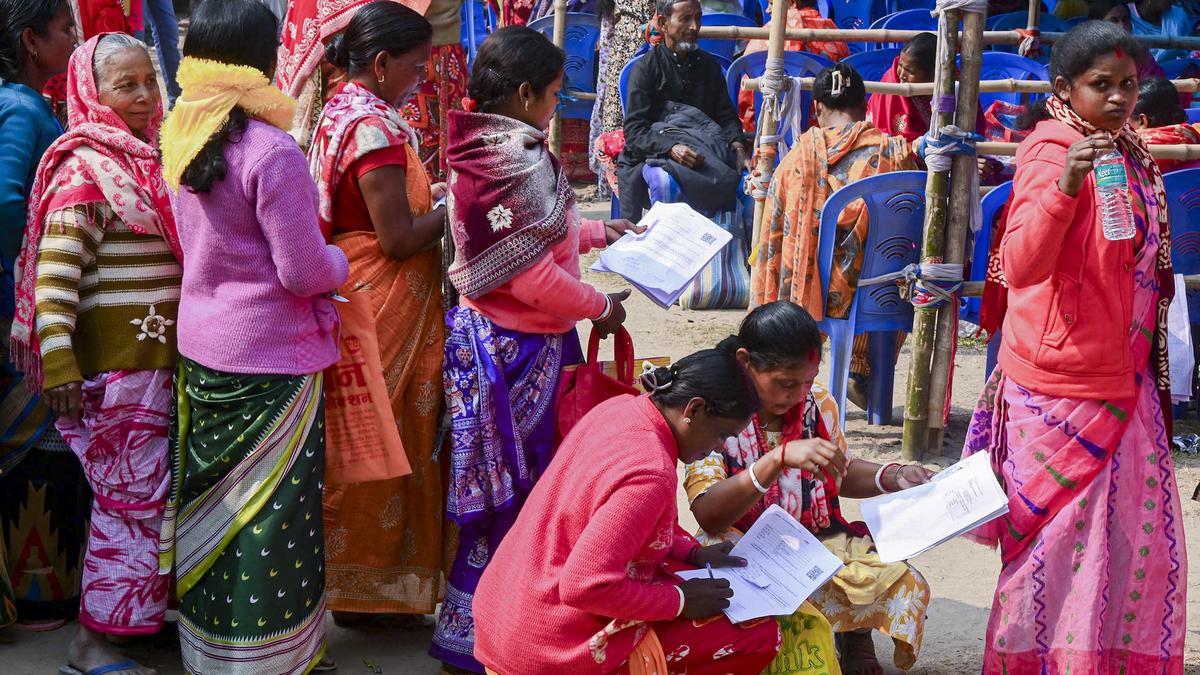
People wait in queues at a centre during hearings under the Special Intensive Revision (SIR) of electoral rolls, in Balurghat, Dakshin Dinajpur district, West Bengal, Tuesday, Jan. 20, 2026.
| Photo Credit: PTI
About 3.5 lakh voters marked as “unmapped” under the Special Intensive Revision (SIR) of the electoral rolls in West Bengal did not turn up for hearings, raising concern among election officials. During the first phase of the SIR hearing in the State, about 32 lakh voters were categorised as unmapped as they could not establish any link with the 2002 electoral rolls.

According to State Election Commission officials, the no-show rate among unmapped voters stood at over 10%. While the last date for hearings for unmapped voters ended this week, the Election Commission has extended the date till February 7.
Also Read | West Bengal SIR: ‘Logical discrepancies’ defy science, Election Commission informs Supreme Court
People who failed to appear can approach their Booth Level Officers (BLO) to seek a fresh hearing slot, though they will have to provide a valid reason for their absence. Poll officials said that though many of the no-shows could be genuine cases, the high number—3.5 lakh—has fuelled suspicion that some entries may be bogus.
43.7% deleted women voters “permanently shifted”
A study by the Sabar Institute found that 43.7% of women voters deleted from West Bengal’s 2026 draft electoral rolls were categorised as the “permanently shifted”, indicating high chances of relocation due to marriage. The top five areas having such cases were Pandabeswar, Jamuria, Mandirbazar, Dantan, and Nabagram.
The analysis also showed that 37.29% of deleted women voters were marked as dead, 16.54% as untraceable, and 2.48% as already enrolled. Sitai, Mekliganj, Katulpur, Sonamukhi, and Keshpur accounted for the highest number of women voters recorded as deceased.
“Women are among the most vulnerable groups when it comes to citizenship documentation—be it board examination records, passports or caste certificates. Data suggest they often lack these documents compared to men,” Sabir Ahamed of the Sabar Institute told The Hindu. He noted that this documentation gap could have contributed to the exclusions during the SIR process.
Published – January 24, 2026 09:18 pm IST