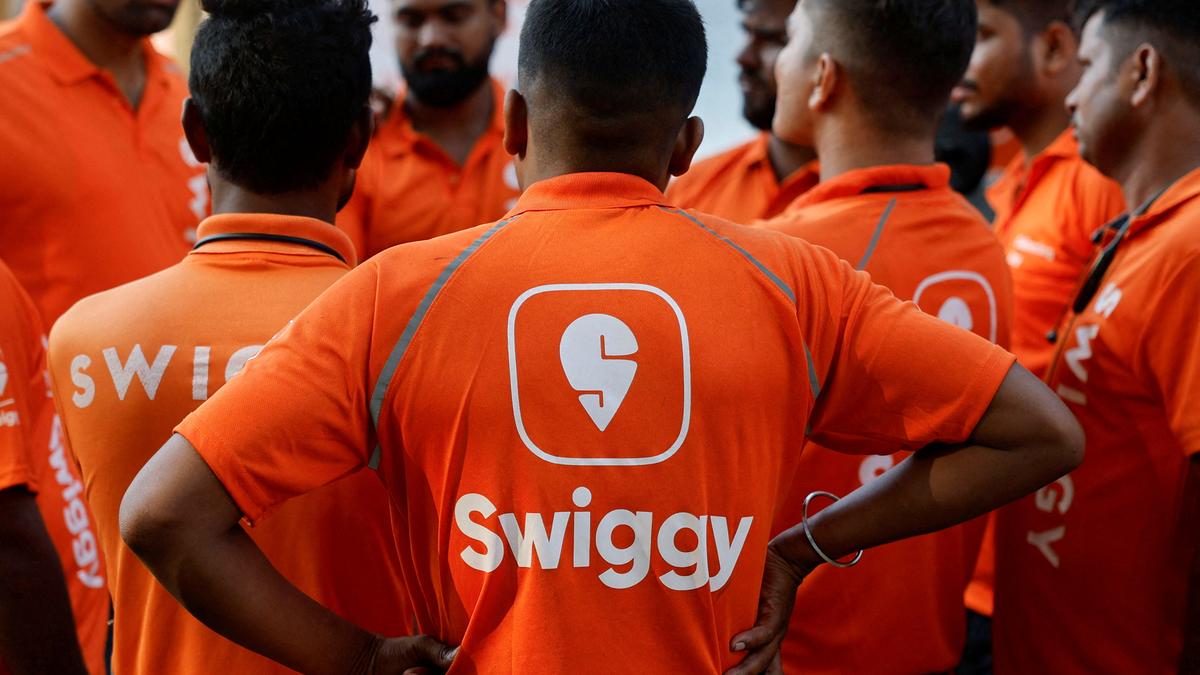
Restaurateurs cite high commissions, unilateral discounts, and poor communication from the big players as reasons for the platform migration
| Photo Credit: REUTERS
The story so far:
App-based food delivery has been facing a shake-up in Tamil Nadu in recent months. Breaking new ground, restaurants from smaller towns such as Namakkal and Cuddalore have logged off popular app-based food delivery giants Swiggy and Zomato. They have instead on-boarded Zaaroz, a lesser-known, homegrown alternative.
Why are restaurants switching platforms?
Restaurateurs cite high commissions, unilateral discounts, and poor communication from the big players as reasons for the platform migration. Restaurants claim they have to pay a commission, sometimes ranging between 30% and 35% plus GST to Swiggy and Zomato. Besides, the apps unilaterally offer deep discounts to customers, denting profits.
In small towns, the hoteliers are largely skilled businessmen but not fully digitally literate. As a result, they are unable to comprehend the terms and conditions they sign up for and are not able to contest the deep discounting tactics. Increasing food prices to cope with consequential losses hasn’t been viable either. As a result, restaurant owners say they end up incurring heavy losses and are forced to wind up their business.
What is Zaaroz, and how does it operate differently?
Headquartered in the temple town of Chidambaram — over 230 km north of Chennai — Zaaroz was founded in 2019 by Ram Prasath, a young entrepreneur. It has been operating as an app-based general delivery platform in over 50 Tier-2 and Tier-3 locations in Tamil Nadu with 5,000 vendors on board and serving an estimated eight lakh customers. It has since ventured into the food delivery business. Unlike the commission-based operations models of Swiggy and Zomato, restaurants are onboarded on the Zaaroz platform for a flat monthly subscription: ₹3,000 plus GST for bigger restaurants and ₹1,500 plus GST for smaller eateries, messes, and bakeries. The company also provides electric bikes to delivery executives, and for those using fuel-driven bikes, it offers ₹2 per km towards petrol expenses.
How have restaurateurs responded?
In July, many restaurants in Namakkal — the poultry and lorry body building hub in western Tamil Nadu — logged off Swiggy and Zomato and migrated to Zaaroz. The Namakkal Town and Taluk Hotel Owners Association secretary, N. Arul Murugan, said, “Earlier, the eateries paid ₹20,000 to ₹30,000 as commission to the apps. Now we are able to save 90% of the money.” As a result, he said, restaurants were able to slash menu prices.
Last month, the Cuddalore District Hotel Owners Association also switched over to the new app. Terming these two districts as a “pilot,” Tamil Nadu Hotel Owners Association president Venkadasubbu said the model would be adopted by restaurants across the State, as popular delivery apps were overcharging both hoteliers and customers.
What does the future look like?
The founder of Zaaroz, Mr. Prasath, said the company is expanding to other districts and towns, including Theni and Perundurai. However, taking on established players with deep pockets, experience, and economies of scale is not easy. In the app-based cab-hailing market, new entrants have struggled to survive against the big players.
The same would hold good for the food delivery business, where patronage needs to be sustained. In 2021, the Kerala Hotel and Restaurant Association launched its own food delivery app, ‘Rezoy’, charging a flat 10% commission. However, it expanded too quickly from Kochi to Thrissur to Malappuram and collapsed under the pressure.
Attempts by restaurant owners elsewhere to break free from Swiggy and Zomato have met with little success. Zaaroz will face similar challenges in terms of logistics, customer acquisition, driver retention, and platform reliability. It is too early to decide if it will tick all the boxes.
Published – October 10, 2025 08:30 am IST