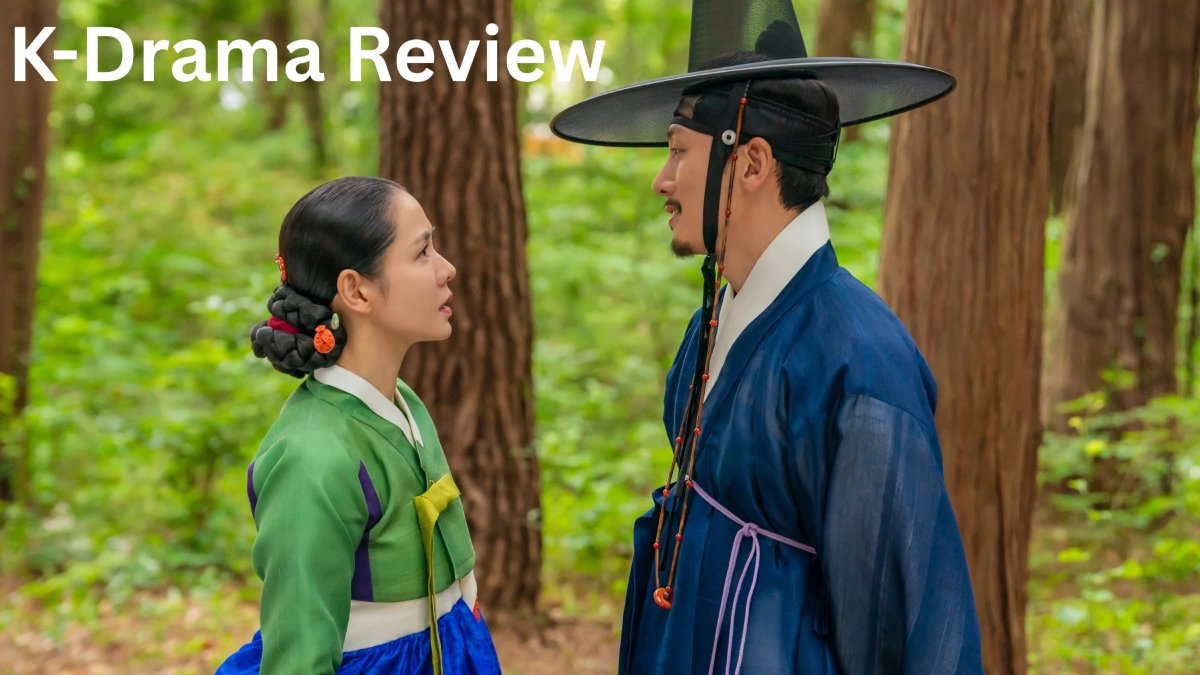

- The Scandal Plot: A familiar story with a distinctly Korean setting
- The Scandal: Writing and direction
- Son Ye-jin gives Lady Cho more than one side
- Ji Chang-wook makes Cho Won complicated
- Nana is not simply the woman caught in the middle
- The Scandal: The visuals understand the mood
- Where The Scandal loses momentum
- The Scandal: Verdict
The newly released South Korean drama The Scandal takes the familiar Dangerous Liaisons setup and places it in Joseon, where desire, reputation and social rules are tightly intertwined. Led by Son Ye-jin, Ji Chang-wook and Nana, the eight-episode Netflix series has enough complicated relationships and emotional manipulation to keep its central game interesting.
What holds it back is the pacing. The drama looks beautiful and its three leads are convincing, but the story occasionally takes too long to move from one emotional beat to the next. That does not mean The Scandal fails to keep you hooked or make you want to know what happens next. It tests your patience, but rewards those who stick with it.
The Scandal Plot: A familiar story with a distinctly Korean setting
Directed by Jung Ji-woo, The Scandal is inspired by Pierre Choderlos de Laclos’ 1782 French novel Dangerous Liaisons and is also based on the 2003 Korean film Untold Scandal. The series reworks the story for Joseon, using the period’s rigid social structure to give the characters’ choices greater consequences.
At the centre is Lady Cho, played by Son Ye-jin, a noblewoman who is increasingly frustrated by the restrictions placed on her. She turns to her cousin Cho Won, played by Ji Chang-wook, a well-known playboy, and proposes a wager involving Hui-yeon, a young widow played by Nana.
The challenge is straightforward: Cho Won has to seduce Hui-yeon. What starts as a game gradually becomes more complicated as attraction and genuine emotion begin to interfere with the original plan. That premise is familiar, but the Joseon setting gives it weight. The characters cannot simply walk away from the consequences of their actions. Reputation, marriage, gender and social standing all influence what they can say and do.
The Scandal: Writing and direction
The Scandal is based on Pierre Choderlos de Laclos’ 18th-century French novel Les Liaisons dangereuses, the same source that inspired the 2003 Korean film Untold Scandal, directed by E J-yong and starring Bae Yong-joon, Lee Mi-sook and Jeon Do-yeon. The Netflix series uses the familiar story of seduction, manipulation and a dangerous wager but gives it more space to explore its characters. Set in Joseon, it ties their choices to the restrictions of class, marriage, and reputation, rather than treating the wager as a straightforward romance.
Jung Ji-woo’s direction keeps the drama visually restrained and lets the relationships drive the story. The period setting, costumes and controlled staging add to the tension, particularly in the scenes involving Son Ye-jin’s Lady Cho, Ji Chang-wook’s Cho Won and Nana’s Hui-yeon. The approach feels distinct from Untold Scandal, even though the central premise remains familiar. The drawback is the pacing, with some stretches taking longer than necessary to move the story forward. Still, the decision to focus on character motivations and the social rules of Joseon makes the adaptation more than a simple retelling.
Son Ye-jin gives Lady Cho more than one side
Son Ye-jin is one of the strongest reasons to stay with the series. Lady Cho could easily have become a conventional manipulator who moves people around like pieces on a board. Instead, Son gives her a mixture of control, frustration and vulnerability. She understands the rules of the world she lives in and knows exactly how much room she has to bend them.
At the same time, there is a sense that Lady Cho’s games are partly a response to how little control she has over her own life. That contradiction makes the character more interesting. She is neither presented simply as a victim nor reduced to a villain.
Ji Chang-wook makes Cho Won complicated
Ji Chang-wook gets a different challenge as Cho Won. Initially, he is confident, flirtatious and comfortable treating romance as entertainment. His wager with Lady Cho appears to be another game he believes he can easily win. The character becomes more interesting once that confidence begins to crack. Ji Chang-wook handles the shift without making Cho Won’s transformation feel abrupt. His performance is particularly effective in quieter scenes, where the character’s uncertainty becomes more visible than it is in his flirtatious exchanges.
His chemistry with Son Ye-jin also gives the series much of its tension. Their characters have a history and a complicated emotional connection, so even their conversations about the wager carry another layer.
Nana is not simply the woman caught in the middle
Nana’s Hui-yeon could have been written as little more than the innocent target of Cho Won and Lady Cho’s game. The series gives her more to work with. Hui-yeon begins as a young widow who is expected to maintain a particular image of virtue. Nana plays her with restraint, allowing the character’s feelings and doubts to emerge gradually. As Hui-yeon becomes more aware of what is happening around her, the dynamic changes. She is no longer simply someone being manipulated by two people with more power and freedom than she has.
This is also where The Scandal becomes more than a period romance. The series repeatedly asks what happens when people who have very little control over their own lives try to regain it through other people’s emotions.
The Scandal: The visuals understand the mood
The Scandal is one of those dramas where the visual presentation is an important part of the experience. The production design, costumes and cinematography create a heightened version of Joseon rather than attempting to make the period setting feel like a history lesson.
Jung Ji-woo also uses physical details to build tension. A glance, a pause or the distance between two characters can sometimes say more than a long conversation. The sensuality is therefore tied to the story rather than being inserted simply for effect. Desire is complicated because of the rules surrounding it.
Where The Scandal loses momentum
The biggest problem is that the eight-episode format sometimes feels longer than it needs to be. The basic wager is established early, but the drama occasionally circles around its characters and their conflicts instead of pushing the story forward. Some episodes take their time getting to developments that could have arrived sooner.
This is the one area where the series can test the viewer’s patience. The source material is built around deception and consequences, so the tension depends heavily on how quickly the characters’ plans begin to unravel. There are also moments when certain character decisions feel more convenient for the plot than completely convincing within the story.
That said, the slower sections do not erase what works. Once the relationships become emotionally complicated, the drama becomes much easier to stay invested in.
The Scandal: Verdict
The Scandal is at its best when it stops being a simple story about seduction and becomes a study of people trying to exercise control in a society that gives them very little of it. Son Ye-jin, Ji Chang-wook and Nana form a strong central trio, and each brings a different emotional quality to the same dangerous game. The Joseon setting adds genuine stakes to the story, while Jung Ji-woo’s direction gives the series a polished and sensual visual identity.
It is not as consistently gripping as its premise suggests, and the pacing could have been tighter. But there is enough complexity in Lady Cho, Cho Won and Hui-yeon’s relationships to make the eight episodes worthwhile.
Rating: 3.5/5
Also Read: