

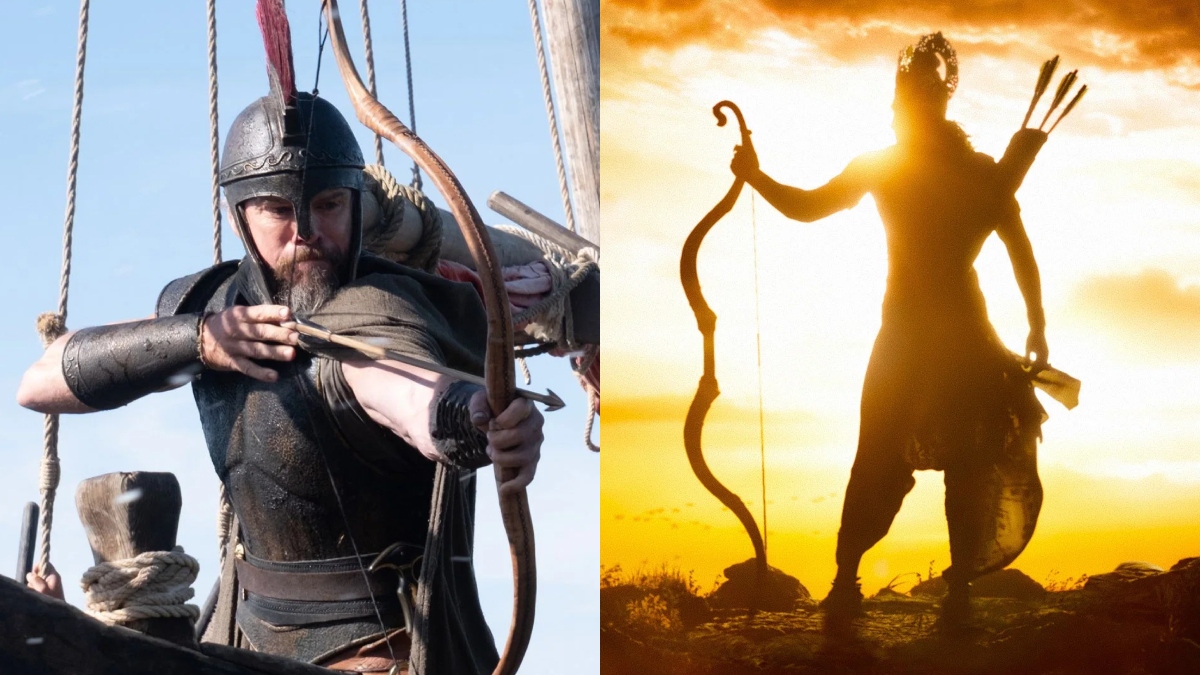

Christopher Nolan’s The Odyssey has finally made its way to cinemas, and while audiences have been talking about its scale, performances and visual effects, another conversation has quietly gathered momentum online. Many Indian viewers have pointed out that several moments in the film feel surprisingly familiar, drawing comparisons with the Ramayana and the Mahabharata.
The similarities are thematic rather than historical. There is no evidence that Homer’s epic was influenced by the Indian scriptures, or vice versa. However, tales from different corners of the world also tend to reach common conclusions, particularly those involving themes like courage, sacrifice, duty and the desire to go back home.
The homecoming
Probably, one of the most obvious parallels that can be drawn is the theme of the hero’s homecoming. Odysseus of The Odyssey spends 10 years participating in the Trojan War and other 10 years attempting to go back home to Ithaca. His journey is fraught with obstacles. There are storms, sea monsters, temptations and difficult decisions blocking the path of the protagonist.
This plot element resembles in many ways that of Lord Ram’s homecoming after 14 years of banishment from Ayodhya in the Ramayana. The context is certainly different, but the two stories come to the same point. The hero finally goes back home in order to get his place, meet his family members and restore order.
It is the theme of homecoming rather than any fighting that has caught viewers’ attention.
Divine intervention
Another reason people are drawing comparisons is the role played by divine figures. In Nolan’s film, Athena, played by Zendaya, repeatedly watches over Odysseus. She guides him, inspires him and imparts her wisdom when he reaches an important turning point in his life. However, she never helps him win. Odysseus has to make tough decisions and deal with the repercussions of his deeds.
The similarity that many spectators have drawn between these two characters is that of Lord Krishna in the epic of Mahabharata. He does not fight the battle for the Pandavas but acts as their mentor and gives them strength to do what is right.
Here, the intervention of the divine beings is through guidance and not through saving.
The bow becomes the ultimate test of the true hero
Another point of similarity that many people may see is the use of the bow as the ultimate test of deserving. The story of Lord Ram in the Ramayana involves the swayamvar of Sita, which revolves around Lord Shiva’s bow where whoever can string and lift it will get to marry her. However, even the mightiest kings fail at doing that, but Lord Ram manages it, making it clear that he is indeed the deserving person. Another episode where the bow plays an important role in identifying the true hero is the climax of The Odyssey.
Here, Odysseus is presumed dead by everyone, and then Penelope declares that she will get married to the person who can string Odysseus’ bow and complete a challenge through archery which none of the suitors can accomplish. Every one of them fails in completing it, but Odysseus does it effortlessly, disguising himself as a beggar. Though coming from different literary backgrounds and holding different meanings, both these stories use the bow not only as a weapon but as a symbol of deserving, strength and destiny.
The similarities end there
Despite these shared themes, the three epics remain very different in what they ultimately set out to explore. The Odyssey is essentially a tale of a single man’s journey back home. Ramayana is all about ideal leadership and devotion to duty, whereas Mahabharata deals with dharma and the intricacies of human nature in a much larger context.
That is why the comparisons drawn by people have more to do with common themes and not how similar two tales can be. Whether it is the ancient Greek world or ancient Indian civilization, stories of perseverance and searching for home continue to touch people from different parts of the world.



