

By using this site, you agree to the Privacy Policy and Terms of Use.
Accept
India Times NowIndia Times NowIndia Times Now
Notification Show More
Font ResizerAa
  • India News
    India News
    Politics is the art of looking for trouble, finding it everywhere, diagnosing it incorrectly and applying the wrong remedies.
    Show More
    Top News
    The States Braces for Protests Over New COVID Rules
    August 29, 2021
    Massive explosion inside J&K police station leaves 8 injured
    November 14, 2025
    Kurnool bus fire accident | List of 23 passengers who escaped; one canceled journey before boarding
    October 24, 2025
    Latest News
    ₹277 crore released to gram panchayats
    January 13, 2026
    Stage ready for School Kalolsavam
    January 13, 2026
    CBI again summons TVK president Vijay on January 19
    January 13, 2026
    India’s first airside reefer truck launched at Hyderabad airport to strengthen cold-chain logistics
    January 13, 2026
  • Technology
    TechnologyShow More
    Strengthening the Team: Thryve PR Onboards Pranjal Patil as PR Executive & Project Manager
    October 1, 2025
    How to Take the Perfect Instagram Selfie: Dos & Don’ts
    October 1, 2021
    Apple iMac M1 Review: the All-In-One for Almost Everyone
    Hands-On With the iPhone 13, Pro, Max, and Mini
    September 4, 2021
    Apple VS Samsung– Can a Good Smartwatch Save Your Life?
    August 30, 2021
  • Posts
    • Post Layouts
      • Standard 1
      • Standard 2
      • Standard 3
      • Standard 4
      • Standard 5
      • Standard 6
      • Standard 7
      • Standard 8
      • No Featured
    • Gallery Layouts
      • Layout 1
      • Layout 2
      • layout 3
    • Video Layouts
      • Layout 1
      • Layout 2
      • Layout 3
      • Layout 4
    • Audio Layouts
      • Layout 1
      • Layout 2
      • Layout 3
      • Layout 4
    • Post Sidebar
      • Right Sidebar
      • Left Sidebar
      • No Sidebar
    • Review
      • Stars
      • Scores
      • User Rating
    • Content Features
      • Inline Mailchimp
      • Highlight Shares
      • Print Post
      • Inline Related
      • Source/Via Tag
      • Reading Indicator
      • Content Size Resizer
    • Break Page Selection
    • Table of Contents
      • Full Width
      • Left Side
    • Reaction Post
  • Pages
    • Blog Index
    • Contact US
    • Search Page
    • 404 Page
    • Customize Interests
    • My Bookmarks
  • Join Us
Reading: The making of a Jallikattu bull
Share
Font ResizerAa
India Times NowIndia Times Now
  • Finance ₹
  • India News
  • The Escapist
  • Entertainment
  • Science
  • Technology
  • Insider
Search
  • Home
    • India Times Now
    • Home 2
    • Home 3
    • Home 4
    • Home 5
  • Categories
    • Technology
    • Entertainment
    • The Escapist
    • Insider
    • Finance ₹
    • India News
    • Science
    • Health
  • Bookmarks
    • Customize Interests
    • My Bookmarks
  • More Foxiz
    • Blog Index
    • Sitemap
Have an existing account? Sign In
Follow US
Home » Blog » The making of a Jallikattu bull
India News

The making of a Jallikattu bull

Times Desk
Last updated: January 8, 2026 6:47 pm
Times Desk
Published: January 8, 2026
Share
SHARE


January marks the beginning of the Jallikattu season in Tamil Nadu, especially in and around Madurai. While villages get busy with bull rearers and tamers, the focus often shifts to the excitement of the event itself. However, before this spectacle begins, there is an important yet quieter process: selective breeding, careful rearing, and the sale of native bull calves to enthusiasts willing to invest years in training them for Jallikattu.

Thottiapatti is a quiet village in Madurai. Unlike Jallikattu areas, there are no barricades here, no cheering crowds, or loudspeakers. Instead, the air carries the rhythm of a rural economy built around native breeds.

A spacious open area enclosed by netting houses native bulls, cows, and their calves. These cattle belong to the Keda Maadu, also known as Kizhakathi Maadu, a native breed commonly found in the Madurai region and often reared for Jallikattu. The bulls are well-maintained, and the calves are sold to rearers who take pride in nurturing bulls that may one day participate in Jallikattu.
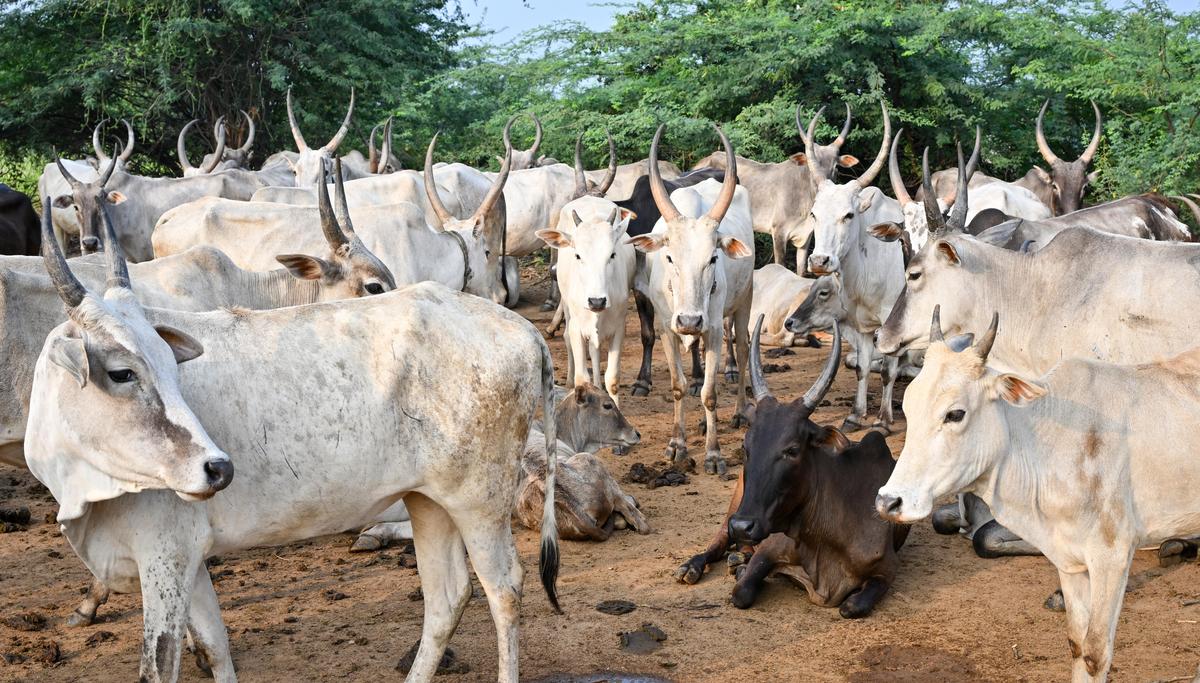
Native breed cattle are raised at Thotiappati village near Madurai, for the sale of bull calves to those who train them for Jallikattu.

Native breed cattle are raised at Thotiappati village near Madurai, for the sale of bull calves to those who train them for Jallikattu.
| Photo Credit:
R. ASHOK

S Duraisamy, who is involved in this business, says, “Several people in Thottiapatti maintain herds of native breed cows and bulls. Unlike commercial dairy farms, milk production is not the priority here. The focus is on preserving strong native lines, particularly those known for endurance, agility, and alertness — qualities that are highly valued in Jallikattu bulls.”

“We have bulls of various ages, with the oldest being around 10 years old,” he explains. “Every morning at around 10, the animals are taken out for grazing, and there is a pond nearby for them to drink. During this time, the sheds are cleaned, and the cow dung is collected and sold, which generates additional income. Before sunset, the cattle return to the enclosure. The calves are allowed to feed, and we also provide hay and grains before the animals settle down for the night,” he adds.

He mentions that the cattle are primarily cared for by women from the village and that outsiders are rarely permitted into the enclosure. “These are native breeds and need to be handled with care,” he states, emphasising that they are strong animals.

A Indra runs this business with her son and represents a group of women in the village who play a vital role in raising native breeds. After her husband’s death, she continued this business that has been passed down for generations.
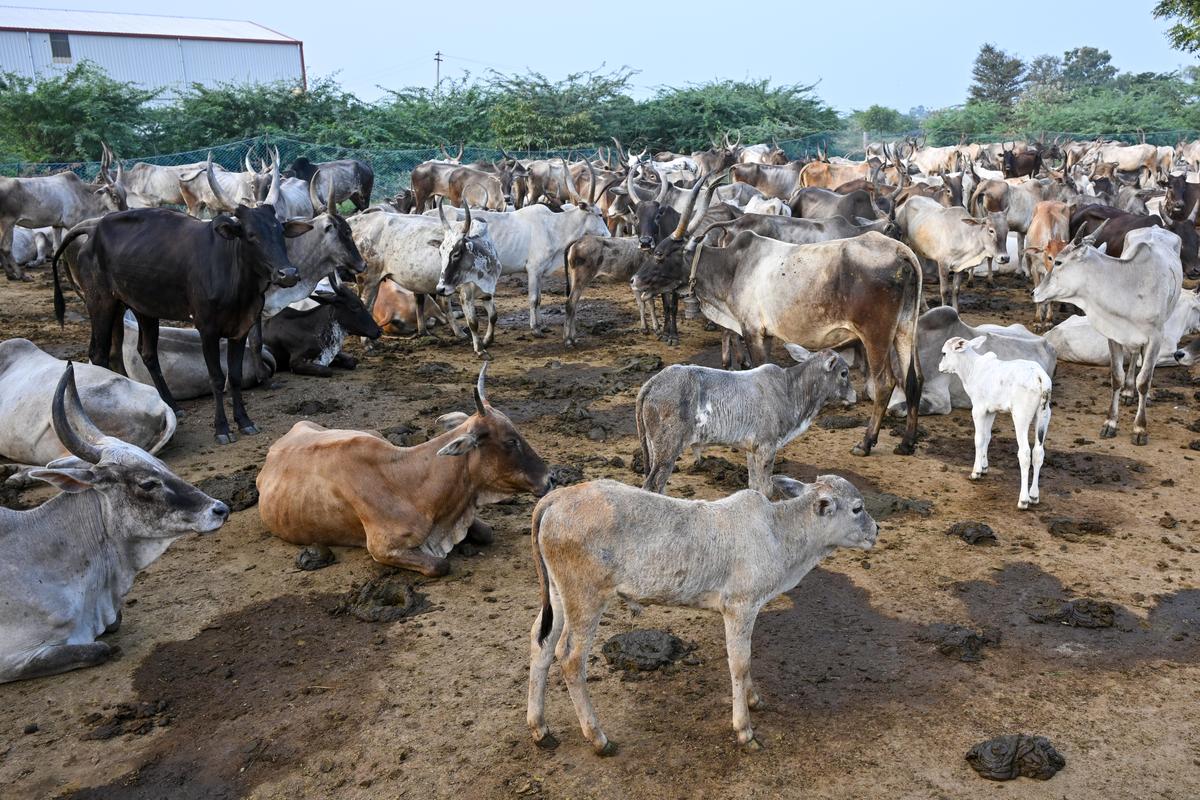
Native breed cattle are raised at Thotiappati village near Madurai, for the sale of bull calves to those who train them for Jallikattu.

Native breed cattle are raised at Thotiappati village near Madurai, for the sale of bull calves to those who train them for Jallikattu.
| Photo Credit:
R. ASHOK

“These are not just cattle; we care for them every day, and they recognise us. They do not allow others to come near, which the bond and shows the trust we have built,” she says.

“We provide medications according to the veterinarian’s advice,” she says. Indra balances her household responsibilities with the demands of her work with the cattle.

Duraisamy explains that individuals from various districts, including politicians, visit the village to buy bull calves. He notes that calves around three months old are preferred because they enable the rearers to develop a stronger bond with the animals.

He adds, “The age and health of the cattle are typically assessed by examining their teeth. Strong teeth are considered a sign of good health.”
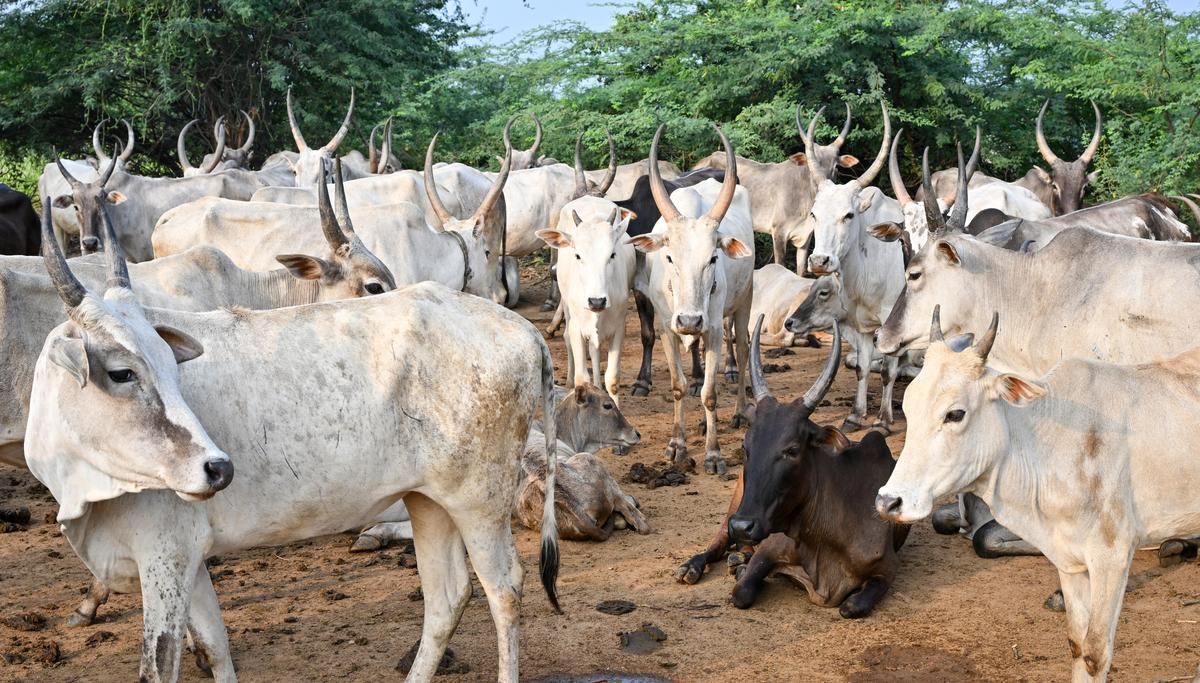
Native breed cattle are raised at Thotiappati village near Madurai, for the sale of bull calves to those who train them for Jallikattu.

Native breed cattle are raised at Thotiappati village near Madurai, for the sale of bull calves to those who train them for Jallikattu.
| Photo Credit:
R. ASHOK

“On average, more than 10 people visit the village each month to purchase bull calves,” he says. “Prices vary depending on the age of the calf, with younger calves, just a few months old, priced at around ₹15,000.”

“The ideal age for a bull to enter the vadivaasal is around three years,” he explains. “Among the Keda Maadu breed, the three-year-olds are particularly strong, energetic, and full of spirit.”

“Like the bulls, the native breed cows are also strong and energetic. Locally, these cows are called kidari maadu,” says Indra. “When they grow old or pass away, they are respectfully buried.”

“Buying and rearing bulls is a matter of pride in Madurai,” says Indra, watching the animals move across the enclosure. “No matter how many generations come, it is important that the youngsters continue to nurture and preserve this traditional Jallikattu event.”

In villages such as Thottiapatti, the story of Jallikattu starts long before the bulls arrive at the vadivaasal. For the rearers, these animals represent more than just livestock; they embody pride and heritage. It reminds us that the legacy of Jallikattu depends not only on the excitement of the arena but also on the dedication of the caretakers.

Published – January 09, 2026 12:17 am IST


Source link

Sabarimala gold row: TDB Vigilance wing records statement of officials of agency which electroplated plates
Journalist found dead in her house in Mizoram
Counting of votes in Kerala local body elections to be held on December 13
Cyclone likely to take shape over Bay of Bengal by next week
Bareilly police bust hawala, GST fraud racket; 2 held
Share This Article
Facebook Email Print
Leave a Comment

Leave a Reply Cancel reply

Your email address will not be published. Required fields are marked *

Follow US

Find US on Social Medias
FacebookLike
XFollow
YoutubeSubscribe
TelegramFollow

Weekly Newsletter

Subscribe to our newsletter to get our newest articles instantly!
[mc4wp_form]
Popular News
BusinessStartup

MCX Share Price: Stock surges over 3% to hit fresh 52-week high – Details here

Times Desk
Times Desk
October 14, 2025
Stocks making the biggest moves premarket: NVDA, BABA, WDAY, NFLX
The Witcher Season 4 release date and time in India: Netflix series cast and episodes
MLA hands over ₹35 lakh for development of municipal school at Krishnalanka
PM Modi to address nation at 5 p.m. today
- Advertisement -
Ad imageAd image
Global Coronavirus Cases

Confirmed

0

Death

0

More Information:Covid-19 Statistics
© INDIA TIMES NOW 2026 . All Rights Reserved.
Welcome Back!

Sign in to your account

Username or Email Address
Password

Lost your password?

