


It might sound odd to call a small plot overgrown with grass a museum. But the half-acre parcel of land on the premises of the office of the State Fodder Farm at Valiyathura in Thiruvananthapuram is actually one. It is the Fodder Grass Museum, which grows different varieties of fodder grass, the feed for livestock. The fodder farm and museum come under the Department of Dairy Development.
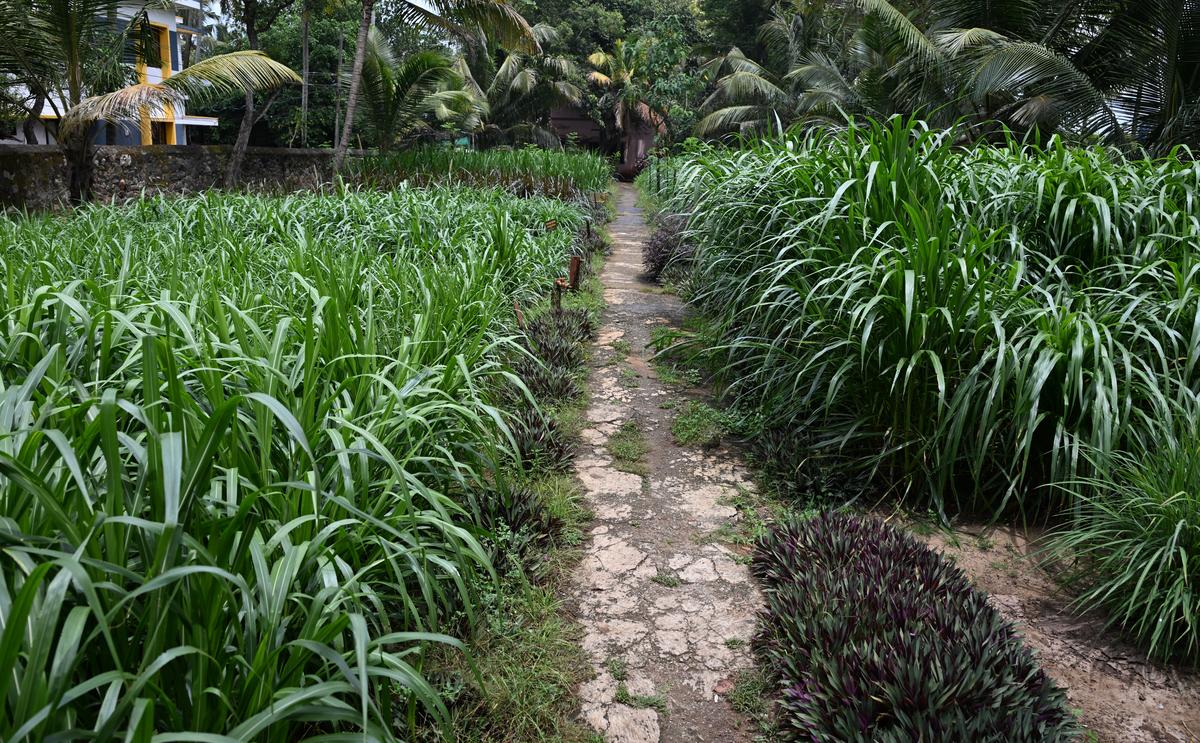
Different varieties of fodder grass at Fodder Museum, Valiyathura, in Thiruvananthapuram
| Photo Credit:
Nirmal Harindran
Over 20 varieties of fodder grass are grown here and this includes those that are/were cultivated on the fodder farm, located a few kilometres away from the Museum. This is the one-off government-run farm in the State and it is from here that forage is supplied to dairy farmers across the district.
The fodder farm was opened in 1962, while the museum was launched during 2014-15. Varieties are added as and when new hybrid grass are launched. “Farmers and other stakeholders who attend our training programmes visit the museum,” says Fahad M, assistant director/farm head, State Fodder Farm.
“Para grass and Guinea grass were among the earlier varieties grown at the farm. They were eventually replaced with high-yielding hybrid grass. All of them are on display here,” says Binu MD, agricultural assistant at the farm.
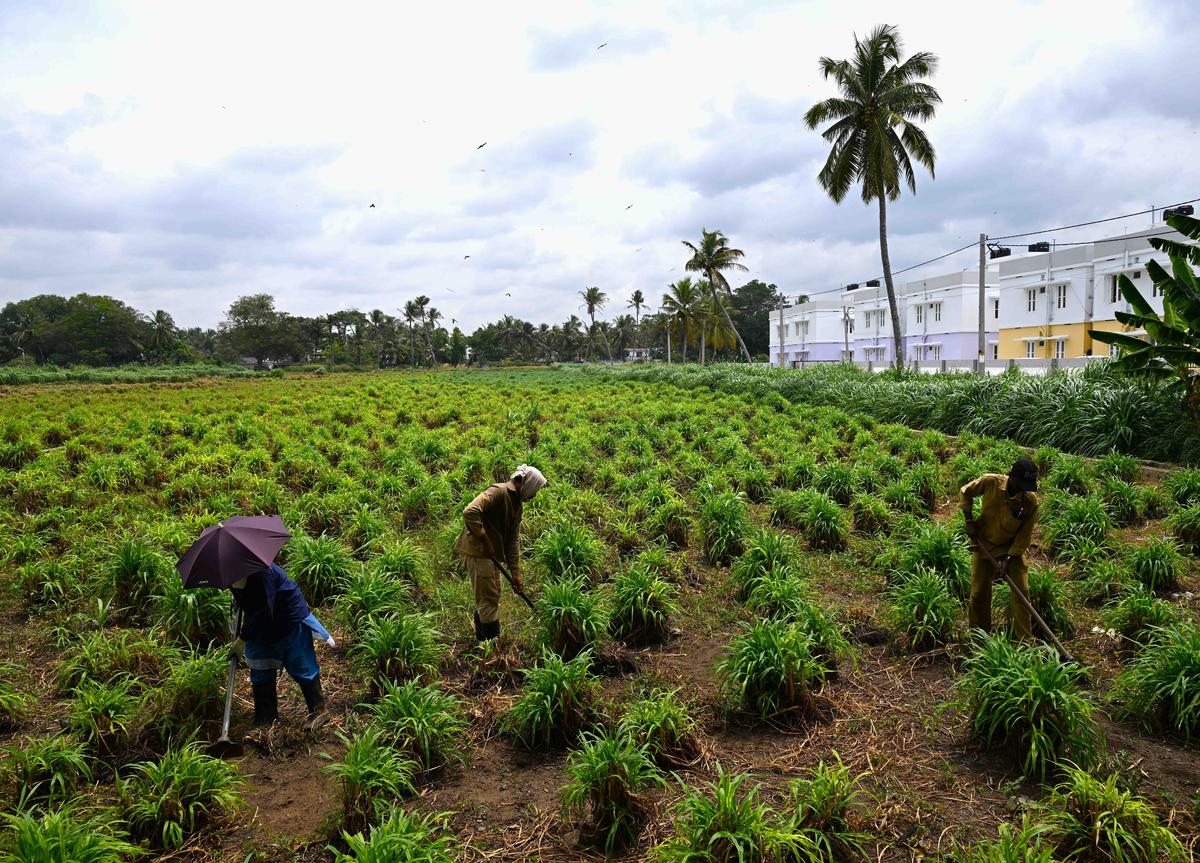
Labourers at work at the State Fodder Farm at at Valiyathura in Thiruvananthapuram
| Photo Credit:
NIRMAL HARINDRAN
Signal grass and Congo Signal grass, both of East African origin, Setaria, Gamba grass, Killikulam, Thumboormuzhi etc are the varieties on display. They are not grown commercially because they are not high-yielding varieties. Farmers prefer grass types that regenerate fast, have more protein content and therefore ensure more milk.
The hybrid varieties have been developed by the Tamil Nadu Agricultural University at Coimbatore. The predominant one is the Bajra Napier Hybrid grass, a hybrid of bajra (pearl millet) and Napier grass, which has variants such as CO3, CO4, CO5 and CO6 (CO stands for Coimbatore). “The samples of all four are there at the museum, while CO3 is the predominant variety cultivated on our farm. We have planted CO5 also in a small area,” says Fahad.
Super Napier and Red Napier are the other two hybrids present at the museum besides being cultivated in a small area on the farm. “They have become extremely popular with the farmers because of their quality,” says Fahad. Recent additions at the museum are Dwarf Napier, a variant of CO3, and the Australian Red Napier.
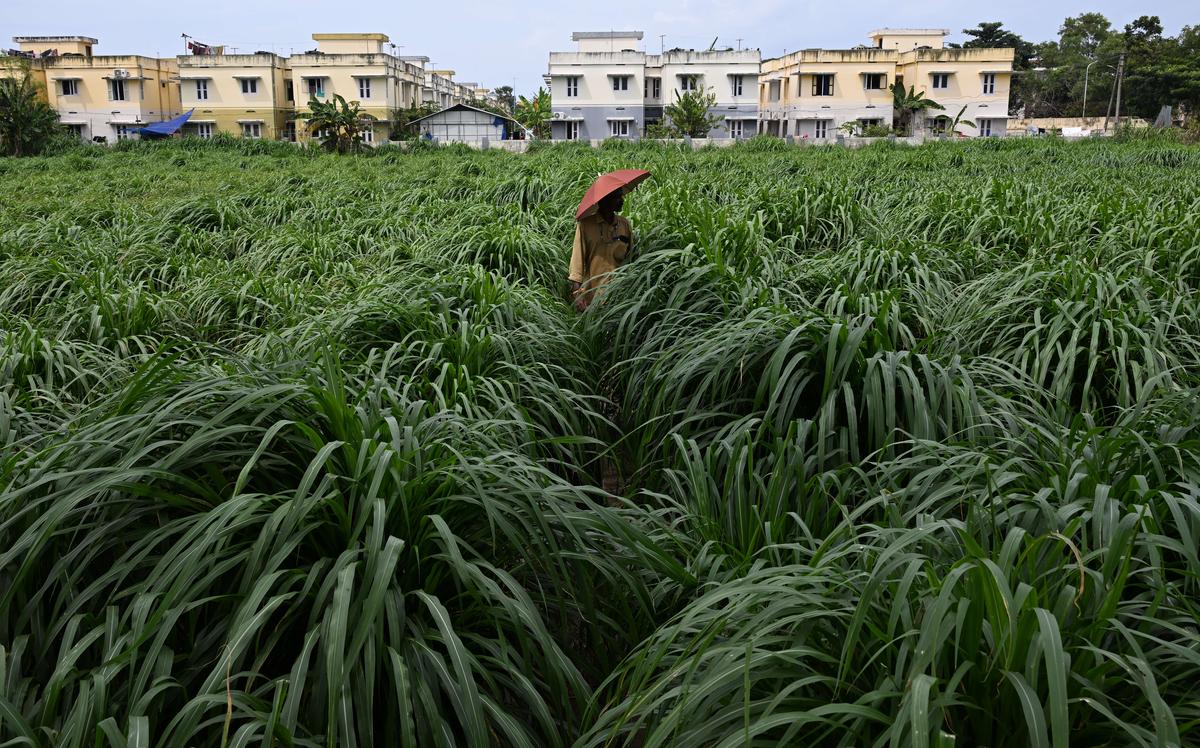
A labourer at the State Fodder Farm at Valiyathura in Thiruvananthapuram
| Photo Credit:
NIRMAL HARINDRAN
The Kerala Agricultural University has developed three fodder grass varieties, Suguna, Supriya and Susthira, and the samples of first two are there at the museum. “We are trying to bring in Susthira as well,” Fahad says.
Besides these fodder crops, fodder trees such as Agathi, drumstick and Subabul and Stylosanthes, a fodder legume, are also grown at the museum.
Fahad adds that fodder museums are often set up in universities. This include the College of Agriculture at Vellayani in Thiruvananthapuram, launched in 2020.
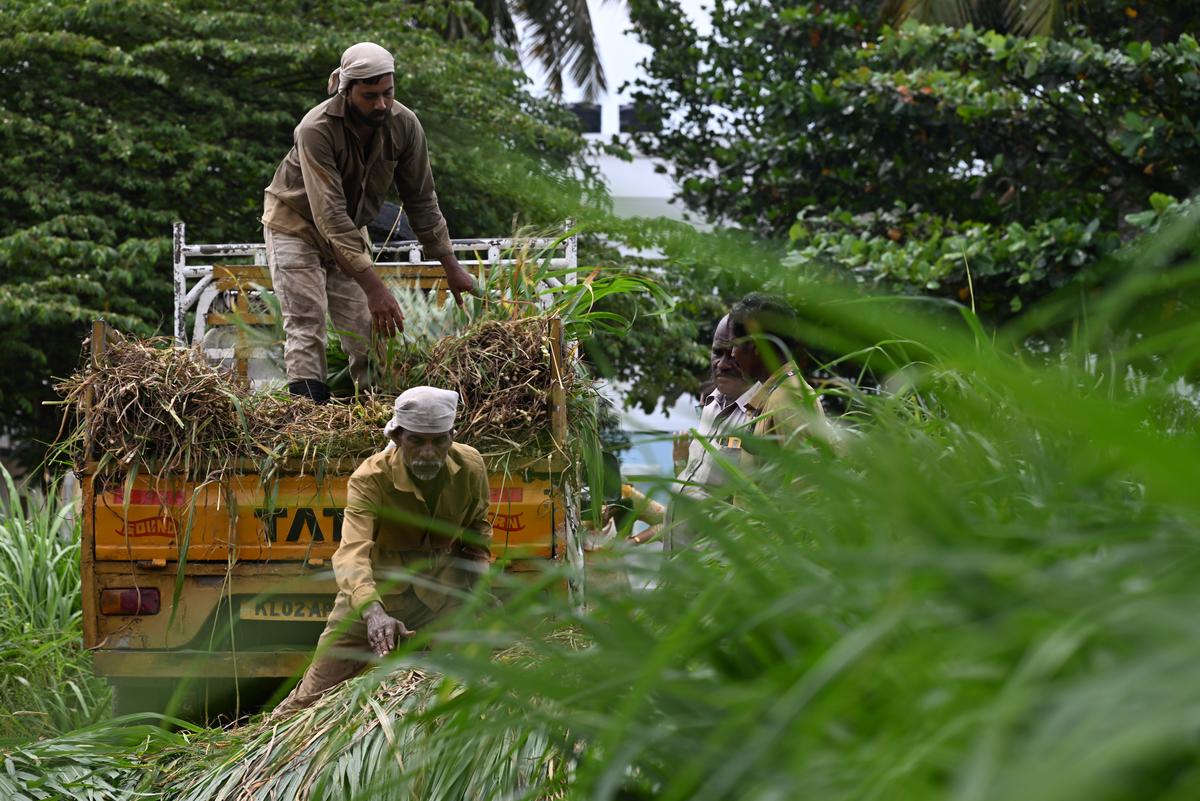
Fodder grass being loaded into a mini truck from the State Fodder Farm at Valiyathura in Thiruvananthapuram
| Photo Credit:
NIRMAL HARINDRAN
Meanwhile, a cause of worry for the Dairy Department is that the fodder farm has been shrinking over the years. From 131 acres, it has reduced to a measly nine acres after portions of the farm were given away to various government departments and institutions. A recent instance is eight acres being given for Prathyasha, the flat complex for 332 fishermen under the Punargeham scheme, inaugurated last month.
The Department has been giving away portions from their property on the condition that alternate land will be provided. But that promise has not been fulfilled yet.
“There is a huge demand for fodder grass from across the district but we are unable to meet it because of want of space,” Fahad says. The grass is supplied to dairy farmers in areas such as Menamkulam, Manacaud, Konjiravila, Maruthoorkadavu, Karumam, Vizhinjam etc. The grass is also bought by various temples in the city, like Attukal temple.
“Everyday 3,600 kilograms of grass is sold, that is 360 bundles of 10 kilograms each. We charge ₹3 per kilogram from direct buyers. The middlemen who buy from us sell it a higher rate to farmers. We sell stem also,” Fahad says.
The cutting starts by 6 am every day and is packed off 12 noon. Fourteen labourers work here. “The grass has to be cut 15 cms from above the ground. It takes 30-35 days for it to grow again,” Fahad explains. Sewage water from the nearby Sewage Treatment Plant is used for irrigation.
Public can visit the museum and the farm during working hours of the Fodder Farm office. Contact: 0471-2501706
Published – October 06, 2025 10:00 am IST



