


There is a five-fold increase in the number of snakes rescued in Telangana by Friends of Snake Society, in coordination with the State Forest department, in the past 10 years; from 3,097 in 2016 to 15,265 in 2025. Venomous snakes constituted 55.61% of the reptiles rescued last year. Increase in construction and development activity was one of the factors for the rescues clustered in the urban fringes, with some of the hotspots being Miyapur, Dammaiguda, Nagaram, Rampally, Manikonda, Bandalguda Jagir, Vanasthalipuram and Balapur. Majority of the rescues were within Outer Ring Road limits.
49.3% were Spectacled Cobras
Of the 15,265 snakes rescued last year, Spectacled Cobras constituted 49.3% (7,525), followed by 23.5% Rat Snakes (3587), 7.8% of Checkered keelback (1195) and 5.9% Russell’s Viper (897), according to the Society’s analysis of data on species composition.Avinash Visvanathan, general secretary, Friends of Snakes Society (FoSS) said that the dominance of venomous snakes in the composition has key implications on public safety and calls for the need for trained interventions in snake rescues. Trained members of the society rescued the snakes — which were released into suitable habitats, as per a press release.
Venomous snakes adapting to urban settings
The high number of venomous species rescued in urban and peri-urban regions indicates their ecological adaptability and association with human-modified environments that provide prey, shelter, and water. Though non-venomous snakes rescued were fewer, they encompassed a wide range of guilds, indicating the continued presence of diverse microhabitats within the urban landscape. “At the same time, their displacement into human spaces signals increasing habitat compression and loss of ecological buffers,” said Mr. Avinash.
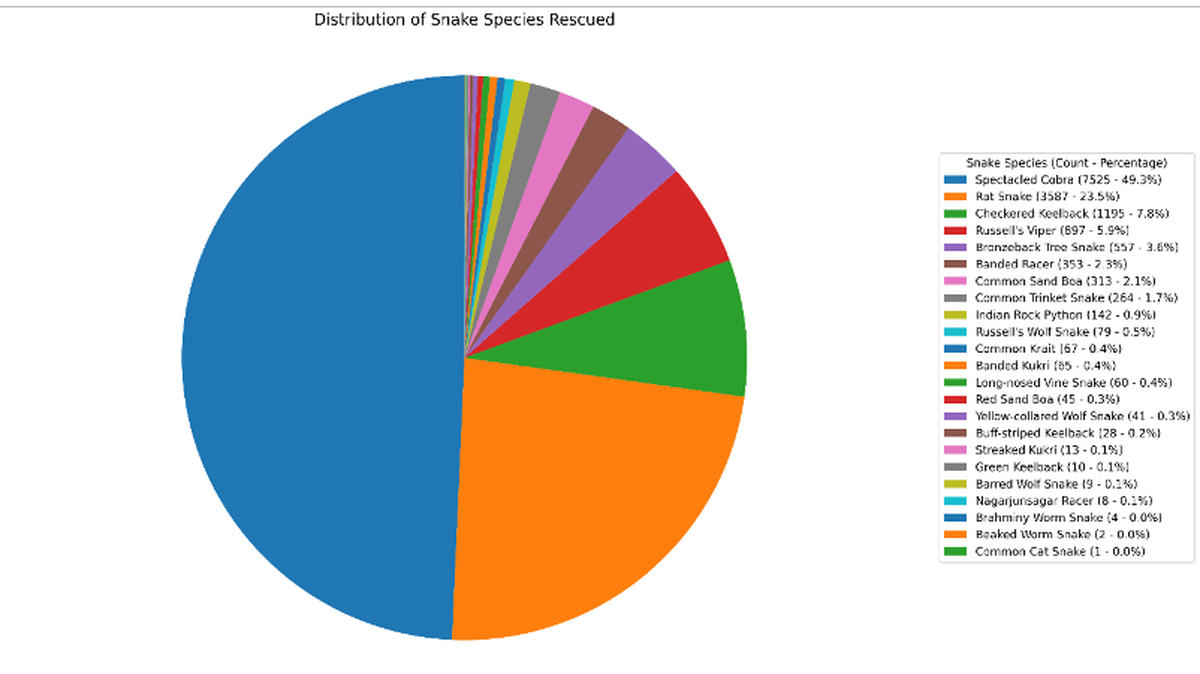
Species composition of snakes rescued by Friends of Snakes Society, in collaboration with Telangana Forest Department, in 2025
| Photo Credit:
BY ARRANGEMENT
The hotspots of the rescue incidents corresponded with rapid residential and infrastructure development zones. The human-snake conflict is most intense in landscapes where ongoing construction overlaps with remnant natural habitats, as per the Society.
Likely reasons for increase in snake encounters
“Habitat fragmentation, loss of shelter, and disruption of movement corridors in these areas are likely driving higher encounter rates. Increased awareness about snakes, their importance in environment and about snake rescue teams also led to increase in the rescue activity. While such clustering increased pressure on rescue teams, it also enables targeted mitigation through focused community outreach, improved waste and rodent management, and strategic deployment of rapid-response resources,” said Mr. Avinash.
He said that considering the data and its analysis, there is a need to shift from a predominantly reactive rescue model to an anticipatory and preventive framework. The FoSS general secretary said that integration of the data into urban planning, infrastructure development, waste and rodent management, and green-space design can help reduce conflict at its source.
“Targeted community awareness in identified hotspot zones, protection of drainage corridors and remnant habitats, and early deployment of rescue resources during high-risk seasonal windows will be critical,”he said. The society’s 24/7 helpline number is 8374233366.
Likely reasons for increase in snake rescues
Expanding urbanization and infrastructure development
Habitat fragmentation
Loss of shelter
Disruption of movement corridors
Increase in awareness about rescue teams
Snake rescue peak and low seasons
Peak rescue period -> June to September (Monsoon)
Reasons:
Natural shelters of snakes get flooded
Hatchlings emerge
High number of rescues in October – November too
Reason:
Post-monsoon dispersal and pre-brumation feeding
Decline -> December
But the rescues are relatively higher than low seasons
Relatively moderate -> January to March
Reasons:
Temperatures limit snake movement
Encounters are largely associated with shelter-seeking behaviour
Steady increase -> April and May
Reason:
Rising pre-monsoon temperatures stimulate greater movement and foraging
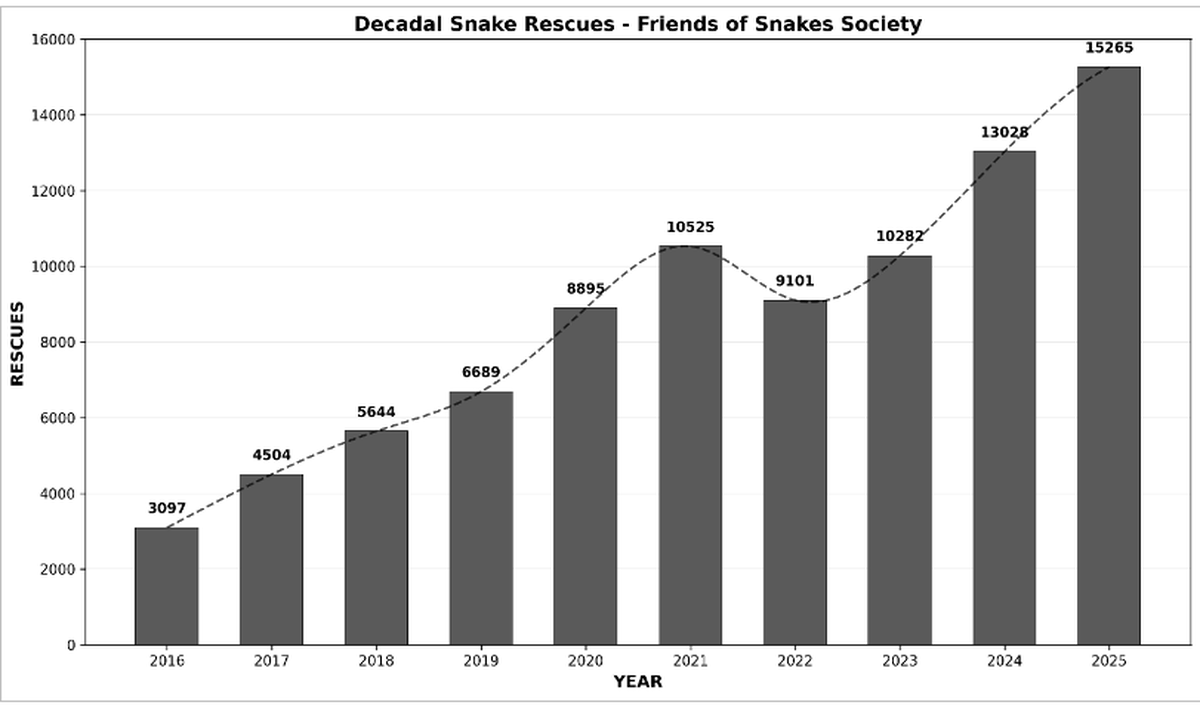
Year-wise snakes rescued by Friends of Snakes Society, in collaboration with Telangana Forest Department, from 2016 to 2025
| Photo Credit:
BY ARRANGEMENT
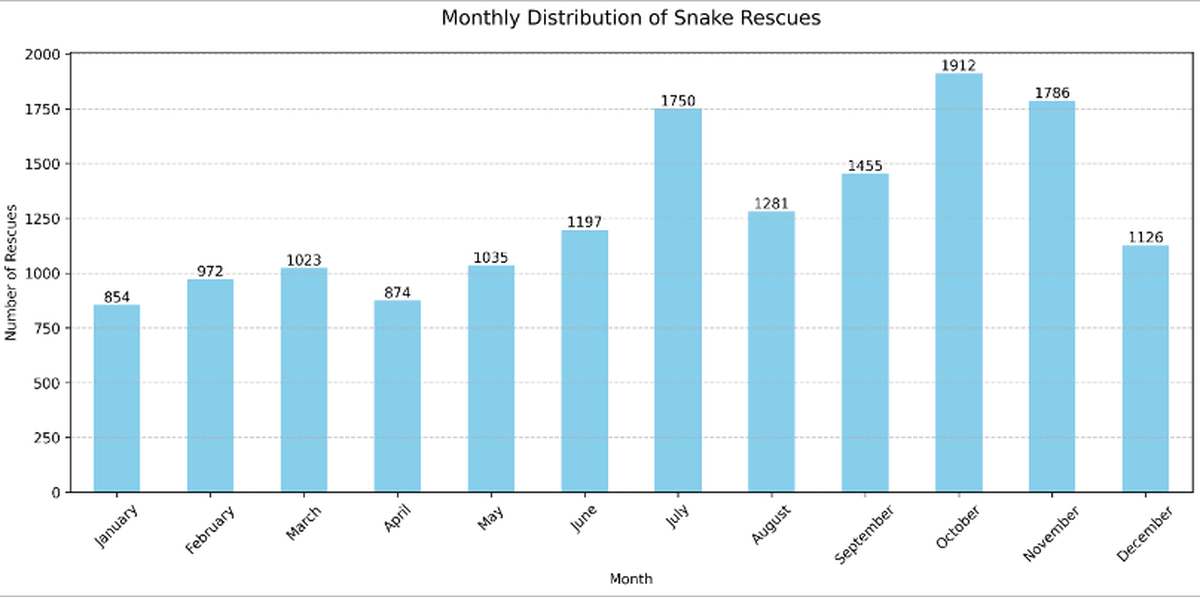
Month-wise snakes rescued by Friends of Snakes Society, in collaboration with Telangana Forest Department, in 2025
| Photo Credit:
BY ARRANGEMENT
Published – January 19, 2026 12:17 pm IST



