

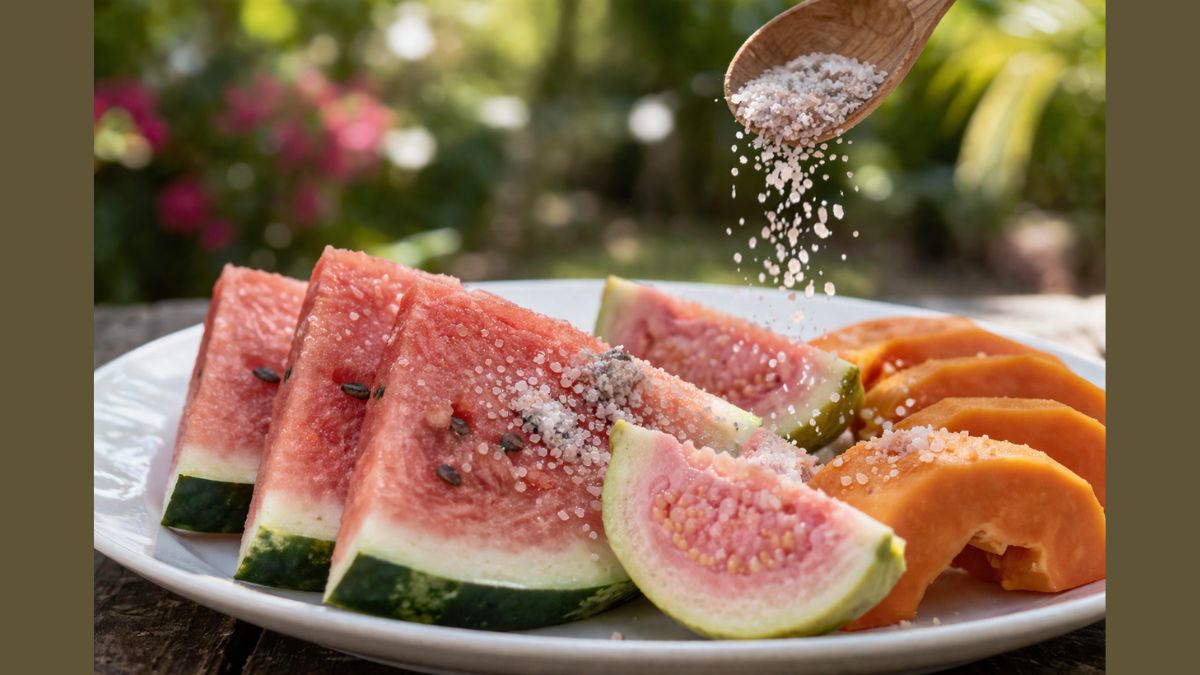

If you’ve ever had fruit chaat, you already know this. A pinch of black salt just changes everything. Watermelon, apples, guava. It somehow makes it better. But beyond the taste, there’s actually more going on.
Black salt, or kala namak, has been around for ages. Now it’s trending again, thanks to social media calling it a detox fix. But the real story is a bit more grounded. There is some research, some actual benefits. And also a need to not overdo it.
What is black salt and why people add it to fruits
Black salt is a mineral-rich rock salt, processed with herbs and charcoal. That is what gives it that slightly tangy taste and strong sulphur-like smell. Not everyone loves the smell, but the flavour works.
It is often added to fruits and drinks like buttermilk, nimbu paani or jaljeera. One practical reason. It helps slow down the browning of cut fruits when they are left out for a while. So it is not just taste, it is also about keeping fruits looking fresh.
Black salt with fruits and what research says
According to research published in the Current Research in Complementary and Alternative Medicine, combining black salt with fruits may help increase bioavailability. In simple terms, your body may absorb nutrients better.
The same research also suggests that black salt can help reduce oxidation in fruits. Which again links back to why fruits do not darken as quickly when it is added.
Health benefits of adding black salt to fruits
When used in small amounts, black salt does have some benefits.
- It may aid digestion by stimulating bile production, which helps break down food
- It can help reduce bloating and gas, especially after heavy meals
- It helps balance electrolytes, which is why it is common in summer drinks
Another point often mentioned is that black salt has slightly lower sodium compared to regular table salt. That makes it a relatively better option, especially when used carefully.
Side effects and how much black salt is safe
This is where things need a bit of attention. Black salt is still salt. And too much of it is not a good idea.
If intake goes beyond about 3 grams a day, a few issues can show up:
- Electrolyte imbalance, which can stress the kidneys and increase urination
- Stomach irritation or bloating
- Increased sodium levels, especially risky for people with high blood pressure
- Dental issues like fluorosis due to excess fluoride
The safer range is around 2 to 3 grams per day for healthy adults. Also, combining it with other high-sodium foods can push intake higher than expected.
Why black salt matters in India and the social media angle
In a hot country like India, fruits are a big part of the diet. They hydrate, they help with energy, and black salt often becomes the default add-on.
But there is a catch. With social media trends pushing black salt as a detox solution, people tend to overuse it. That is where problems start. It is not about avoiding it. It is about using it smartly.
A pinch or two is enough. Use it when needed, especially in summer. Not every single day. Balance matters more than hype.
Disclaimer: Tips and suggestions mentioned in the article are for general information purposes only and should not be construed as professional medical advice. Always consult your doctor or a dietician before starting any fitness programme or making any changes to your diet.
ALSO READ: How much fruit is too much? Cardiologist reveals the hidden health risks



