



Fisherwoman R. Maniammal of Keechankuppam checking the underground cement water tank in her house. Many families in the coastal village are forced to buy water from private suppliers for their daily needs.
| Photo Credit: Special arrangement
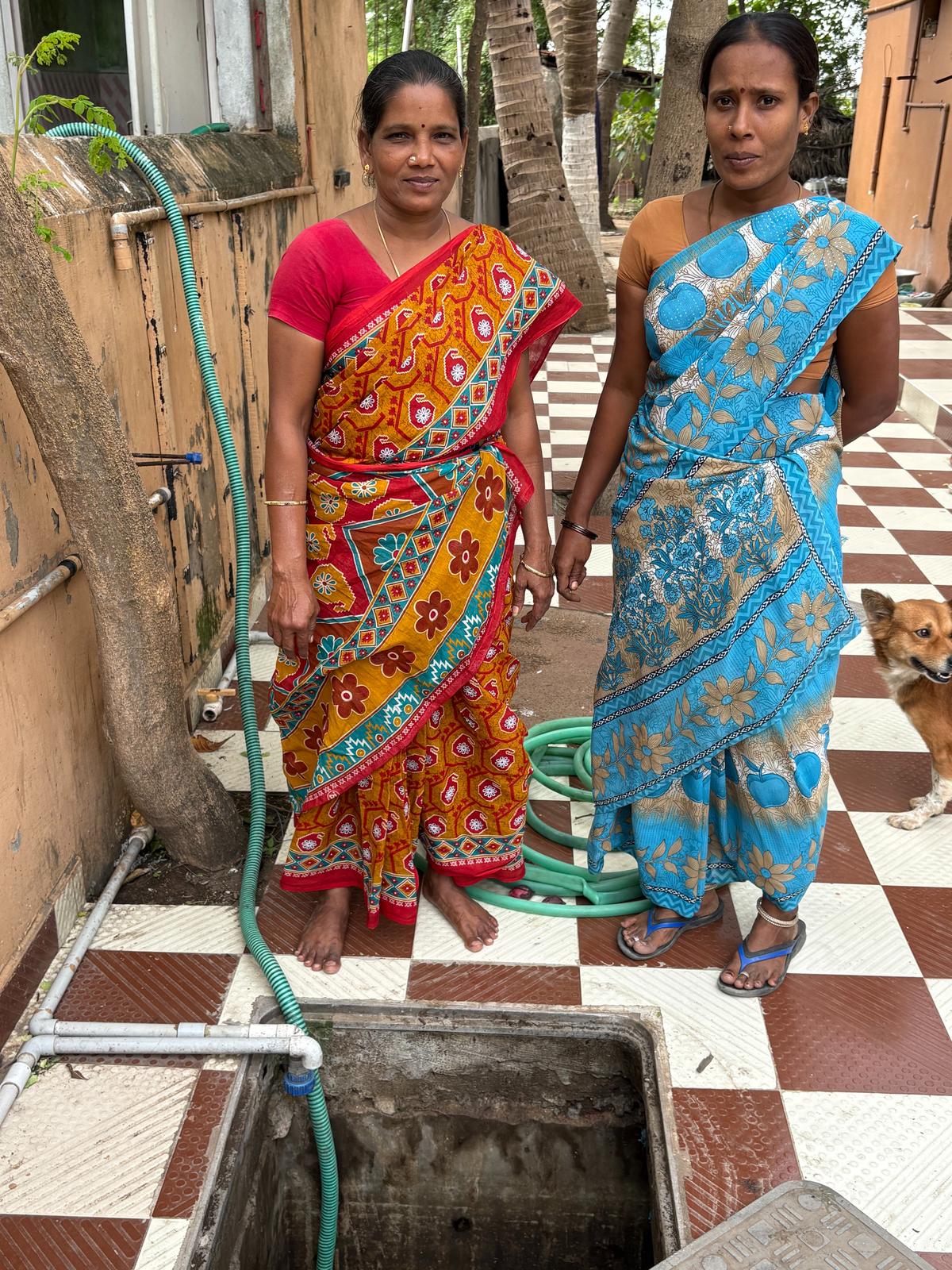
Fisherwomen R. Suganthi and S. Kalaichelvi show the sump tank at their house.
| Photo Credit:
Special arrangement
In Keechankuppam, a coastal fisher hamlet on the fringes of Nagapattinam, the struggle for drinking water has quietly reshaped the way homes are built and pushed up the cost of living. Faced with chronic scarcity, salinity of groundwater, and an erratic piped water supply, residents have built underground cement water tanks out of necessity rather than choice in their houses.
The village, a part of Akkaraipettai panchayat, is home to nearly 600 families. For the past 15 days, taps have remained dry. The Kollidam water does not reach this village, borewells have become useless because of incursion of saline water and schemes meant to ensure safe drinking water have bypassed the area.
“This is marshland. There has always been water scarcity here,” said Suganthi R., a fisherwoman. “Our groundwater is saline. We have no option but to buy water through tanker lorries,” she said.
Residents are at the mercy of private tanker lorry operators. They spend ₹1,500 to buy 4,000 litres of water. The water is barely enough for a week to 10 days for a family. When the cost becomes unaffordable, two or three households pool money and share water from a single tanker. “That water is used for everything — drinking, cooking, bathing, washing clothes, even watering plants,” said Maniammal R.
Over time, storage has become survival. Almost every house has a underground cement tank or families with modest income have large blue plastic barrels installed for storing water. These tanks typically store enough water for 10 to 15 days. “Now, anyone building a new house here knows there will be no regular water supply,” said Kalaichelvi S. “They spend extra money to build an external tank because living without one is impossible,” she added.
Adding to the hardship is poor sanitation. The area has no functional rainwater drainage; existing channels are clogged. Stagnant water has led to mosquito breeding, residents said, raising concerns about health and safety.
Villagers point out that the panchayat continues to collect tax for water that is never supplied. “Neither the Kollidam water nor the Jal Jeevan Mission reaches us,” Ms. Suganthi said. “We pay, but we are left to fend for ourselves.”
A senior official from the Tamil Nadu Water Supply and Drainage (TWAD) Board said they would look into the issue.
Published – January 19, 2026 06:30 pm IST



