

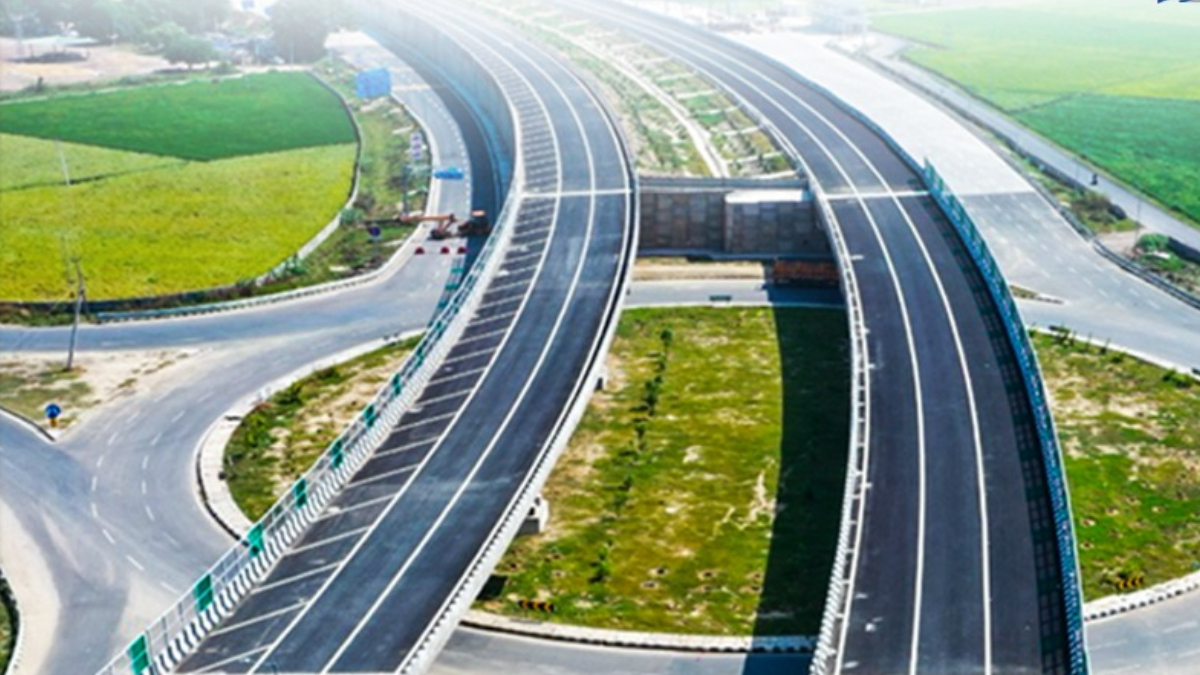

Prime Minister Narendra Modi on Friday inaugurated the Haryana section of the Delhi-Amritsar-Katra Expressway from Jind, marking a significant milestone for the nation. With the opening of this greenfield expressway, travel from Delhi to the shrine of Mata Vaishno Devi will become much easier and faster. The Greenfield corridor forms part of the 667 km Delhi-Amritsar-Katra Expressway. This project is expected to provide a new impetus to road connectivity, tourism, and industry in North India.
According to the Prime Minister’s Office (PMO), the Delhi-Amritsar-Katra Expressway, once fully operational, will reduce the travel time from Delhi to Katra from approximately 14 hours to just six hours. The journey from Delhi to Amritsar will also be reduced from approximately eight hours to four hours.
Inaugurates 157.92 km long section
Prime Minister Modi inaugurated the 157.92-kilometre-long four-lane, fully access-controlled section of the expressway. Built at a cost of approximately Rs 9,680 crore, this section is a crucial part of the 667-kilometre-long Delhi-Amritsar-Katra Expressway.
Traffic decongestion on NH-44
The opening of this new expressway will ease traffic congestion on National Highway 44. It will also provide significant relief to pilgrims, tourists, and businesspeople travelling to Shri Mata Vaishno Devi. It is also expected to boost economic activity between Haryana, Punjab, and Jammu and Kashmir.
Employment and logistics sector will benefit
This expressway will not only facilitate travel but also provide a major boost to the industrial development, warehousing, and logistics sectors in the surrounding area. Improved road connectivity will speed up freight transportation and reduce business costs.
PM Modi inaugurates other projects
Prime Minister Modi also inaugurated and laid the foundation stone for several road, rail, health, and education projects in Haryana, Punjab, and Chandigarh. These included flagging off the country’s first hydrogen train, dedicating new highway projects, medical colleges, and railway stations developed under the Amrit Bharat Station Scheme. With this, India has joined a select group of countries with operational hydrogen-powered trains, marking an important step towards the adoption of clean and sustainable mobility in the railway sector.
The inauguration of this expressway marks another major step towards a faster, safer, and modern road network in North India.
ALSO READ | NSE, SBI Mutual Funds IPOs push unlisted shares into focus: How to buy, tax rules and risks



