

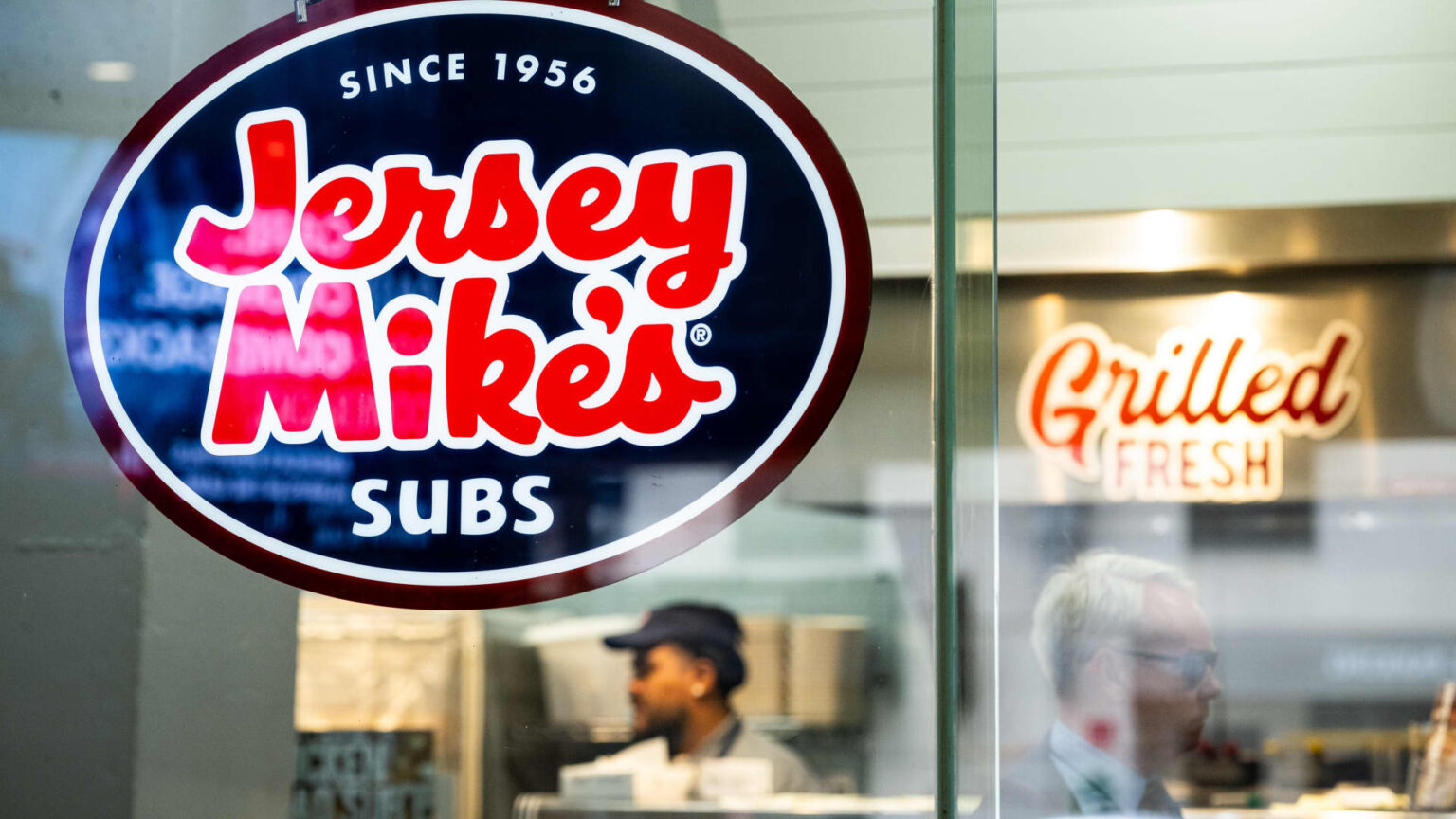

Signage at a Jersey Mike’s restaurant in Washington, July 20, 2026.
Graeme Sloan | Bloomberg | Getty Images
Five years after the initial public offering boom of 2021, public markets look a lot different as more companies are choosing to stay private for longer.
In 2021, public markets saw a multitude of companies join the ranks. The Nasdaq said it welcomed 743 IPOs that year, while the New York Stock Exchange said it added more than $1 trillion in new market capitalization, marking the second straight year of record new listings.
The biggest IPOs five years ago spanned a range of industries, including Coinbase, Roblox, Rivian, Warby Parker and more.
According to research from Morningstar, the companies that went public in 2021 raised almost $500 billion — roughly double the number of deals and capital raised in 2020, a year of intense uncertainty amid the pandemic and lowered consumer and investor confidence.
But since then, the IPO market has cooled significantly. Despite a blockbuster IPO from Elon Musk‘s SpaceX, far fewer companies are choosing to go public, and some of the ones that do have struggled to gain momentum in the current conditions.
Two consumer companies, sandwich chain Jersey Mike’s and clothing retailer Reformation, went public on Thursday. Both companies had largely uneventful IPOs, with Reformation remaining essentially flat for the day and Jersey Mike’s opening $2 below its IPO pricing and closing down nearly 6%. They join just a handful of other consumer companies that have gone public in 2026, according to Renaissance, representing a tiny slice of the overall IPO pie.
Experts say there’s a range of reasons why companies are rethinking their liquidity and capital.
“There’s under 4,000 public companies today, whereas 30 years ago, there was just under 8,000,” said Mike Dinsdale, CEO of Powerlaw, a publicly listed fund investing in private companies. “The reason for that, I think, is access to capital, and then the idea that staying private and not having any transparency into what’s happening, and then higher valuations on the public side.”
Dinsdale, who previously held executive positions at DoorDash and DocuSign, said access to capital and liquidity in nonpublic markets, along with the emergence of megafunds, have taken “the need out to rush to go public.”
He added it’s a trend he’s been seeing over the past 30 years, though the acceleration of family office interest in private companies over the past five years has contributed significantly to the trend as the private investment vehicles of the ultrawealthy look for new places to put their money.
Reformation Inc. signage during the company’s initial public offering on the floor of the New York Stock Exchange in New York, July 30, 2026.
Michael Nagle | Bloomberg | Getty Images
Secondary markets
Some of the largest consumer and retail companies have remained private, like Publix Super Markets, Sephora and Chick-fil-A.
According to Sunaina Sinha Haldea, the global head of Private Capital Advisory at Raymond James, private companies are benefitting from the rise of secondary markets.
“The secondaries market is acting as this pressure release valve to this artificial clock of having to go public,” she said. “Nobody has to go public now because of the depth of this private secondaries market.”
Venture capital has also been booming. Jason Yeh, the co-founder of Patron, a venture capital firm investing in consumer companies, told CNBC that the volatility in the public markets coupled with the stagnant performance of public consumer and retail companies has likely added to the hesitation to leave the private sphere.
“There are very large asset managers, hedge funds and other types of investors that want to buy these later-stage stakes in these large companies, and they’re able to push out having to go public longer, and you can get liquidity for earlier stage investors through that,” Yeh said.
His firm has partnered with a number of consumer companies like Sweatpals, Board, System Labs and more. He added that he believes a strong liquidity environment would mean both IPOs and acquisitions become desirable routes.
“It feels like we’re on the cusp of a handful of companies that, theoretically, on paper, should have been able to go public over the last couple of years, but will be going public ideally in the next 12 to 18 months,” Yeh said.
‘The carrot and the stick’
There are still compelling reasons for some companies to go public — an IPO is often a moneymaking move, like it was for SpaceX, which raised tens of billions of dollars when it went public.
“I do think for companies with a really strong business model of generating a lot of cash flow, eventually they will go public,” Yeh said. “Hopefully, the overall macroeconomic conditions are better when that happens, versus doing it into a weaker market.”
One of the biggest incentives to staying private is avoiding the pressure of quarterly earnings, which require revealing numbers to investors and potentially taking a hit from that visibility.
“In general, founders don’t want to go public, the majority don’t, because all of a sudden they have more visibility into what they’re doing,” Powerlaw’s Dinsdale told CNBC. “The public now has access to numbers and it has opinions on what they’re doing versus being more in control.”
To make the IPO market attractive again, he said he believes there needs to be both “the carrot and the stick,” that would make it harder to stay private while also instituting a regulatory legislative change to incentivize going public.
President Donald Trump has floated the idea of ending mandatory quarterly earnings reports, a move that was backed by the Securities and Exchange Commission earlier this year and would allow companies to report only twice a year instead. In a May statement, SEC Chairman Paul Atkins said the current rules have too much “rigidity” for companies and investors.
According to Raymond James’ Sinha Haldea, the regulation that comes with being public is a “headwind” to going down that route.
“If you are a CEO of a fast-growing company and there’s plenty of capital available, and you don’t have to deal with the governance and the reporting structures and the quarterly clock of being a public company, why would you put yourself through that?” Sinha Haldea told CNBC.
Sinha Haldea said it’s both a financial cost and a resource cost to go public rather than staying within the secondary markets and accessing capital that way. But as the milestones for companies begin to get redefined, and IPOs no longer hold quite as much weight, the “why” behind going public in every board room is no longer as simple as it used to be.
For that justification to change, and for more companies to mimic the trend of 2021 markets, she said the “operational burden of being public” has to change first.
“There is a lot of reporting compliance, litigation, dilution of management time that goes into being a public company,” Sinha Haldea said. “That equation needs to change through regulation for the decision between private and public to become more neutral.”



