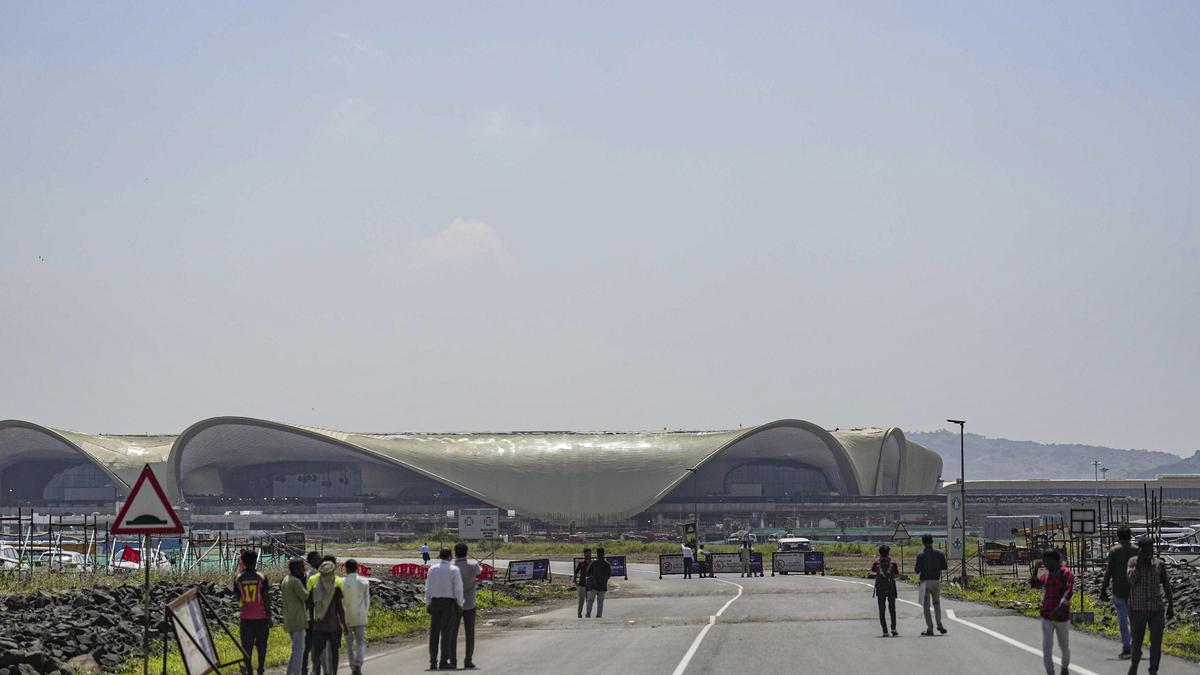
An outside view of the Navi Mumbai International Airport.
| Photo Credit: PTI
IndiGo and Akasa Air on Saturday (November 15, 2025) said they will commence operations from the newly-constructed Navi Mumbai International Airport (NMIA) starting December 25.
Akasa to commence flights in staggered manner
Connecting directly with four Indian cities, Akasa Air will operate its maiden flight between Delhi and NMIA on December 25 which will be followed by services to Goa, Kochi and Ahmedabad in subsequent days.
The airline said it will progressively ramp up operations from the second airport in the Mumbai Metropolitan Region, scaling up to 300 domestic and 50 international weekly departures over a period of time.

As part of its broader network strategy, Akasa said it is also set to ramp up to 10 parking bases by the end of FY2027, with a focused international expansion into key Middle Eastern and Southeast Asian markets.
“For Akasa Air, NMIA strengthens our strategic presence in the Mumbai Metropolitan Region and western India, allowing us to optimise capacity deployment and capture new demand pools across,” said Praveen Iyer, Co-Founder and Chief Commercial Officer, Akasa Air.
IndiGo to begin domestic flights
IndiGo will start flight operations from the airport with domestic air services to 10 cities. IndiGo also said it plans to expand its operations, progressively from the Mumbai Metropolitan Region’s second airport by adding direct routes to more destinations in due course.
IndiGo said it will connect the future-ready airport to ten cities across India including Delhi, Bengaluru, Hyderabad, Ahmedabad, Lucknow, North Goa (Mopa), Jaipur, Nagpur, Cochin, and Mangalore, starting December 25.
Gurugram-based IndiGo operates over 2,300 daily flights to more than 130 destinations, including 90 domestic airports.
The airline had a fleet size of 409 aircraft, with 362 in operations and 47 on ground, as on November 14, as per aircraft fleet tracking website, Planespotter.net.
NMIA inauguration
On October 8, Prime Minister Narendra Modi inaugurated phase one of the Navi Mumbai International Airport. The airport is built at a cost of ₹19,650 crore.
In pictures | Inside Navi Mumbai International Airport
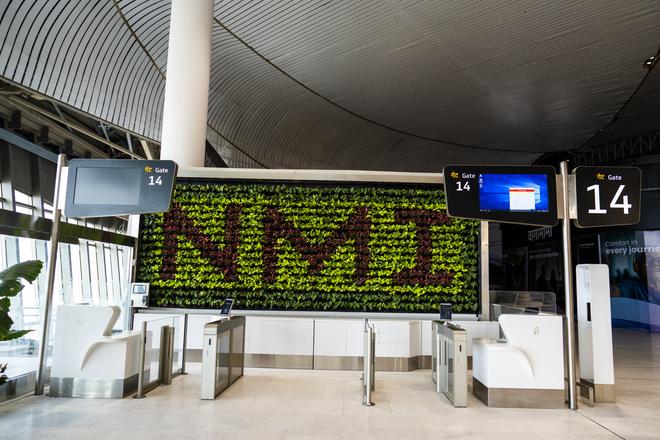
The phase 1 of Navi Mumbai International Airport is India’s largest Greenfield airport project, developed under a Public–Private Partnership (PPP).
Photo: Special Arrangement
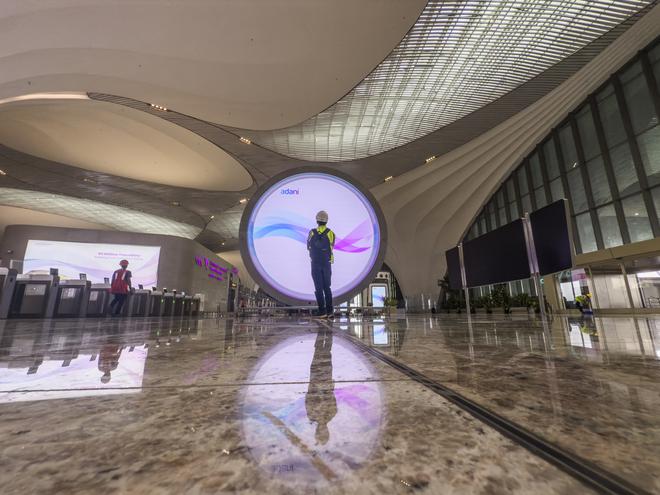
The airport is said to be well connected as it is 14 km from Jawaharlal Nehru Port Trust (JNPT) Sea Port, 22 km from Maharashtra Industrial Development Corporation (MIDC), 32 km from Thane, and 40 km from Bhiwandi. Photo: Special Arrangement
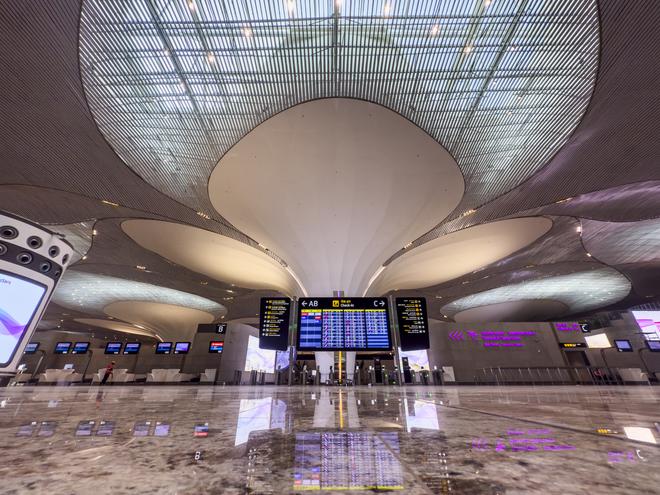
The architecture inspired by lotus, has 12 sculptural feature columns — anchors that rise like unfurling petals, 17 mega columns — unseen pillars carrying the weight of the lotus roof canopies. Photo: Special Arrangement
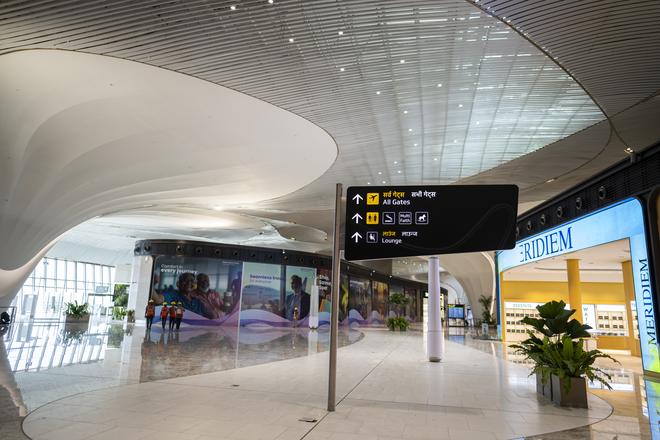
In line with sustainable practices, the airport will feature dedicated storage for Sustainable Aviation Fuel (SAF), solar power generation of approximately 47 MW, and EV bus services for public connectivity across the city. NMIA will also be the first airport in the country to be connected by Water Taxi. Photo: Special Arrangement
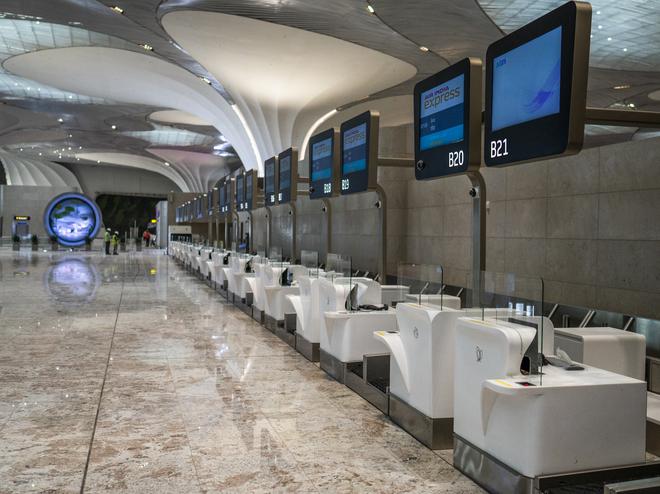
Among its unique offerings is an Automated People Mover (APM), a transit system planned to connect all four passenger terminals for smooth inter-terminal transfers, as well as a landside APM linking the city-side infrastructure.
Photo: Special Arrangement
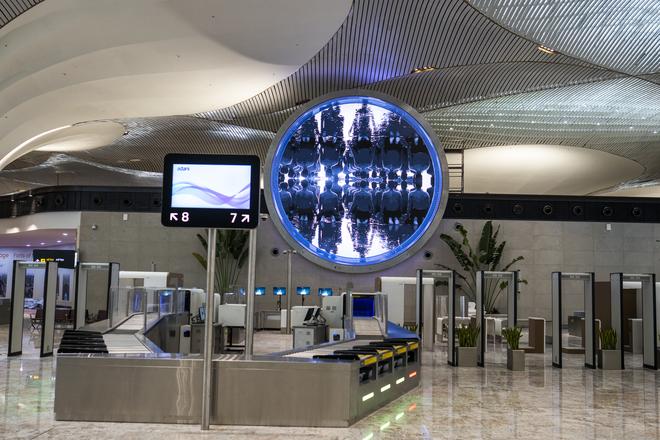
As the second international airport for the Mumbai Metropolitan Region, NMIA will work in tandem with the Chhatrapati Shivaji Maharaj International Airport (CSMIA) to ease congestion and elevate Mumbai into the league of global multi-airport systems.
Photo: Special Arrangement
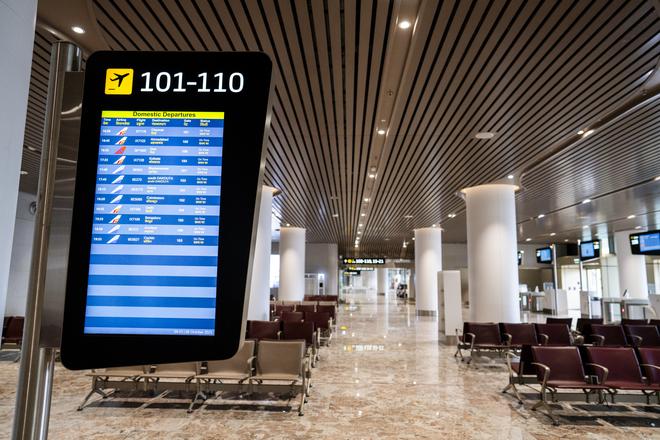
The airport, designed to be among the most efficient in the world with 1160 Ha area, will eventually handle 90 million passengers annually (MPPA) and 3.25 million metric tonnes of cargo.
Photo: Special Arrangement
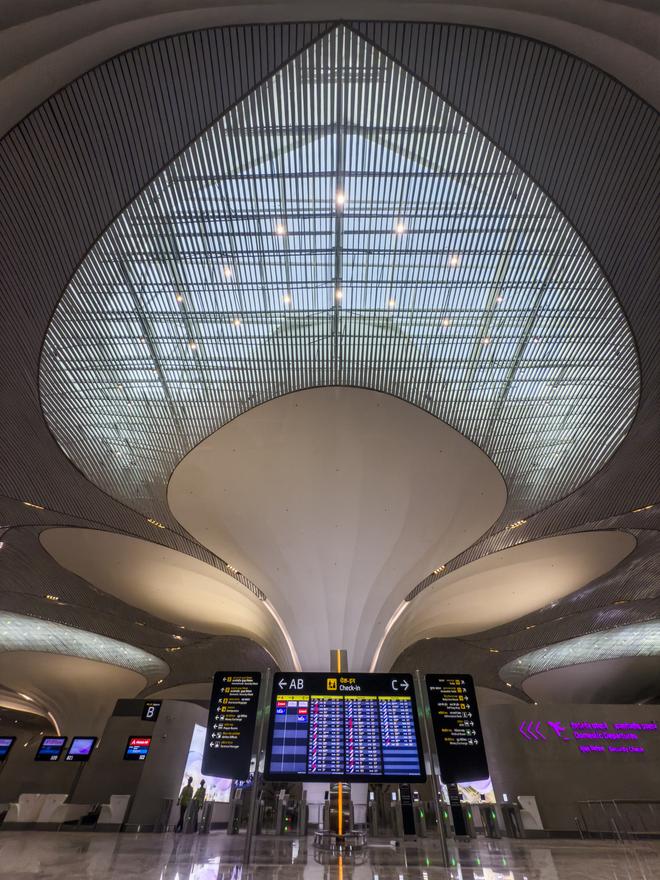
The netted structures of the lotus pillars, designed by London-based Zaha Hadid Architects, will provide passive cooling inside the airport.
Photo: Special Arrangement
1/3
Spread across 1,160 hectares, the airport will have one terminal and one runway in the first phase with an annual passenger handling capacity of 20 million.
Navi Mumbai International Airport (NMIA) is designed to complement the existing Mumbai International Airport and cater to the growing demand for air travel from India’s financial capital, IndiGo said.
Strategically located, NMIA is expected to play a pivotal role in enhancing regional connectivity and supporting economic development in western India.
Published – November 15, 2025 01:00 pm IST