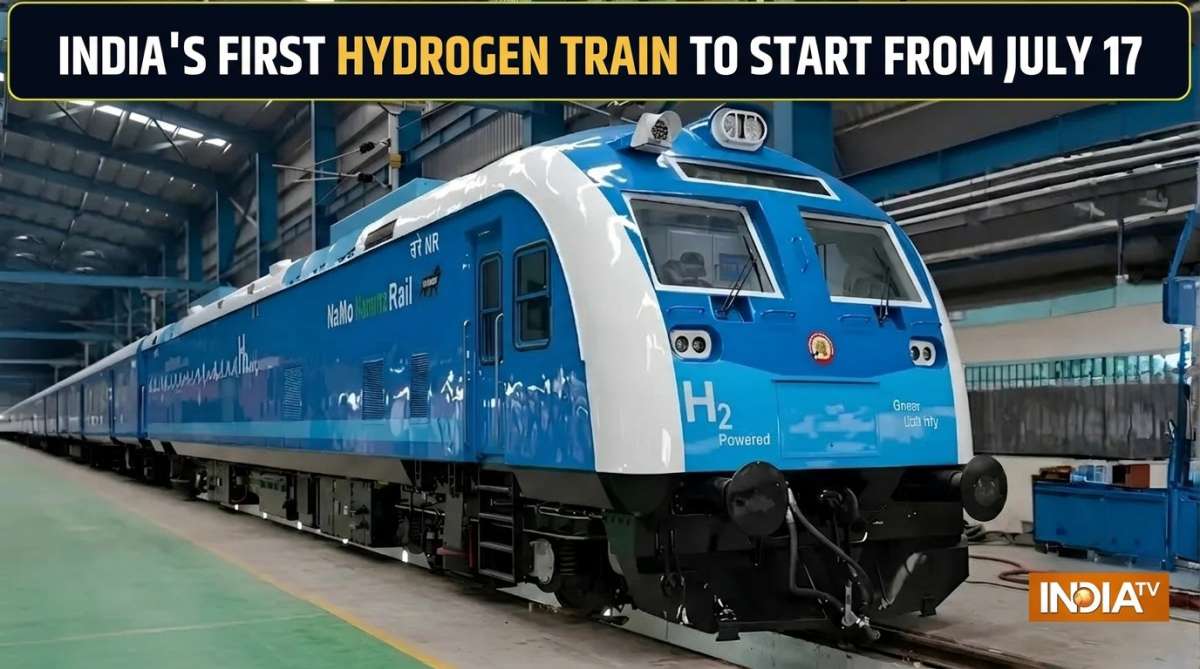

Prime Minister Narendra Modi will flag off India’s first hydrogen-powered train on July 17, marking a major step in the country’s push for clean and sustainable transport. The train will run between Jind and Sonipat in Haryana and will operate using hydrogen fuel cell technology, which emits virtually zero pollution.
The launch is being seen as a significant milestone for India’s Green Transport Mission as well as the Make in India initiative, showcasing the country’s efforts to develop eco-friendly and indigenous rail technology.
Know route, fare and other details
The Indian Railways has kept the fare for the hydrogen train highly affordable, with ticket prices ranging from Rs 5 to Rs 25. The train is expected to cover the nearly 90-km Jind-Sonipat route in just one hour, significantly reducing travel time compared to the existing Diesel Multiple Unit (DMU) service, which takes around two hours for the same journey.
The train will have a passenger capacity of around 2,500, making it not only an environmentally friendly but also a fast and cost-effective travel option.
Powered by hydrogen technology
This train will be equipped with a 1,200-kilowatt hydrogen fuel cell propulsion system. Instead of diesel, electricity will be generated through a chemical process involving hydrogen and oxygen. This entire process produces only steam and heat, thus eliminating any smoke or carbon emissions. Once filled with hydrogen, the train will be able to travel for approximately 250 km.
The Railways has also taken special care in ensuring safety on this train. Approximately 27 hydrogen cylinders have been installed. Hydrogen leakage detectors, fire detectors, and modern control systems have also been installed which will be regularly inspected. The train was designed by the Lucknow-based Research Designs and Standards Organisation (RDSO) and manufactured at the Integral Coach Factory (ICF) in Chennai.
Built at an estimated cost of around Rs 89 crore, the hydrogen-powered train is being seen as a landmark achievement for Indian Railways and a major step towards cleaner mobility. If the pilot project proves successful, similar hydrogen trains could be introduced on other routes in the future, helping reduce dependence on diesel, cut fuel costs and strengthen environmental protection efforts.
With this launch, July 17 is set to mark a new chapter in Indian Railways’ history as the beginning of a cleaner and more sustainable era in rail transport.
Also Read: Ashwini Vaishnaw flags off three new trains, know full route and other details
Also Read: Indian Railways changes timings of 2 Vande Bharat trains running from Varanasi: Check new timetable