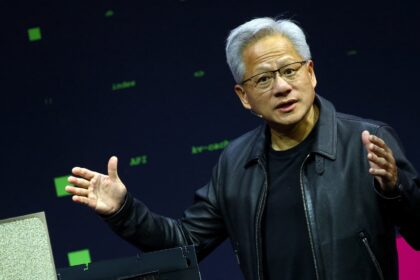
V. Kamamoti, Director, IIT Madras, said the fast-changing scenarios in AI governance and policy could well lead us away from conventional LLMs to more domain-specific LLMs and smaller models.
| Photo Credit: VELANKANNI RAJ B
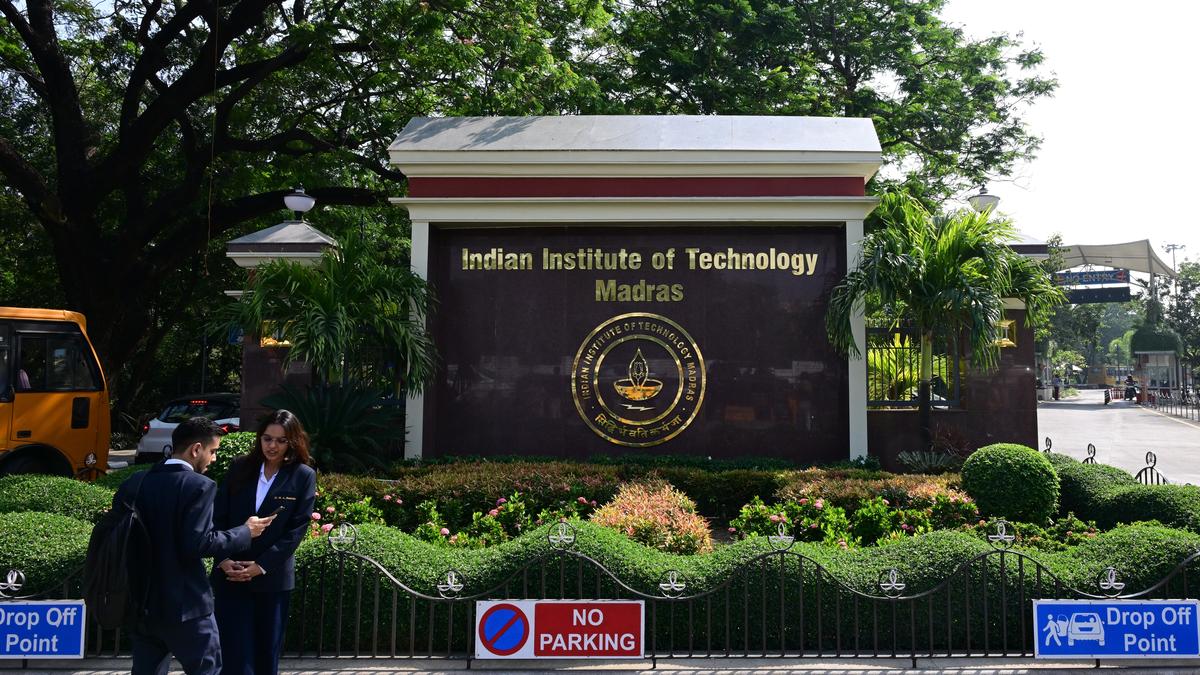
The Indian Institute of Technology (IIT) Madras on Tuesday released a dataset that would be useful in bias risk detection and assessment of Language Models in the Indian context.
The dataset, released at a Conclave on AI Governance organised by the Centre for Responsible AI (CeRAI) of the Wadhwani School of Data Science and Artificial Intelligence (WSAI), addresses the inability of global models to capture the nuances of the societal biases in the subcontinent, a critical gap in the LLMs.
Named IndiCASA (IndiBias-based Contextuality Aligned Stereotypes and Anti-stereotypes), the dataset comprises 2,575 human-validated sentences covering the demographies of caste, gender, religion, disability, and socio-economic status.

At the event, CeRAI also launched a policy chatbot called PolicyBot, an interactive system that enables non-experts to navigate through legal and policy documents. Also in the list was an AI evaluation tool that provides a framework to evaluate Conversational AI systems in a consistent, transparent, and scalable way. These apart, a Co-Intelligence Network, established in collaboration with Itihaasa Research and Digital, was also launched as a global network of individuals and organisations to leverage co-intelligence to benefit enterprises and society.
CeRAI also released a report titled “The Algorithmic-Human Manager: AI, Apps, and Workers in the Indian Gig Economy”, which brought to light the unprecedented access to new efficiencies caused by AI while also introducing significant challenges related to fairness, transparency, and worker dignity. A discussion paper on “AI Incident Reporting Framework for India” was also released.
Earlier at the inaugural, Abhishek Singh, CEO, India AI Mission and Additional Secretary, Ministry of Electronics and Information Technology, who joined virtually, said as the government prioritises innovation in AI in India, it was looking at regulating only harm that can be cause by AI. “For example, if deep fakes are there, then it should be regulated. Similarly, if any AI application in any sector can cause any damage or harm to people in those sectors, the sector regulator will come ahead and regulate that,” Mr. Singh added.

Srinivasan Parthasarathy, Professor, Department of Computer Science and Engineering, Ohio State University, stated that lessons from critical, high-uncertainty, and complex domains suggest that joint human-AI systems consistently outperform either humans or machines alone, and can result in safer, more resilient, inclusive, auditable, adaptive, and trustworthy outcomes.
V. Kamamoti, Director, IIT Madras, said the fast-changing scenarios in AI governance and policy could well lead us away from conventional LLMs to more domain-specific LLMs and smaller models, just like how we moved from a single-core 3.5 gigahertz processor to multi-core. B. Ravindran, Professor and Head, WSAI, spoke.
Published – October 08, 2025 05:45 am IST