


The Trump administration is quickly reshaping the Federal Emergency Management Agency, or FEMA, in ways that carry vast implications for state and local governments.
“We’re going to give out less money. We’re going to give it out directly. It’ll be from the president’s office,” President Donald Trump said at a press conference June 11.
The agency is responsible for coordinating response and recovery in disasters that range from floods to wildfires to terrorist attacks.
The agency reported a total budget authority of $60 billion in fiscal year 2025. Federal spending on disaster relief often draws supplemental appropriations from Congress.
Critics of FEMA say the agency is slow to pay out victims and provide guidance for communities in the process of rebuilding.
“We’ve recommended for years that they work on streamlining their recovery programs, that they better coordinate their programs so communities and survivors don’t have to navigate multiple federal bureaucratic programs. And honestly, they just have not been able to do it,” Chris Currie, a director at the Government Accountability Office, said in an interview with CNBC.
FEMA is currently managing more than 600 open disaster declarations, some of which date back almost 20 years, according to a Government Accountability Office report published in March. The spending, according to FEMA, includes $80 million in fiscal year 2025 for recovery from Hurricanes Katrina, Rita and Wilma, which devastated huge swaths of the Gulf Coast in 2005.
Cuts in federal funding for disaster relief would put the burden on state and local governments in areas affected by disasters.
When Hurricane Helene hit the U.S. in late September 2024, it caused $59.6 billion in damage in North Carolina, according to the Governor’s Recovery Office for Western North Carolina. As of May 2025, the federal government had provided about $3.7 billion in recovery funds — approximately 6.2% of the total cost of the damage, according to Democratic Gov. Josh Stein’s office.
A FEMA spokesperson said in a statement to CNBC, “FEMA’s principles for emergency management assert that disasters are best managed when they’re federally supported, state managed and locally executed.”
Much work remains nearly a year after Helene damaged many parts of western North Carolina. More than 73,000 homes were damaged, according to an April report from Rep. Chuck Edwards, R-N.C. Major roadways were also damaged, including a stretch of I-40, and the state needs additional federal funds to cover the cost of road repairs, Edwards’ report said.
The average income in the disaster area ranges from $35,809 to $55,607, depending on the county, Edwards’ report said.
“To not have FEMA means that now local governments will have to deal with disaster, and it’s always bigger than the revenues of the local government,” said Sarah Wells Rolland, founder and owner of the Village Potters Clay Center in Asheville, North Carolina. “For the funding to be taken away I think is a colossal disaster.”
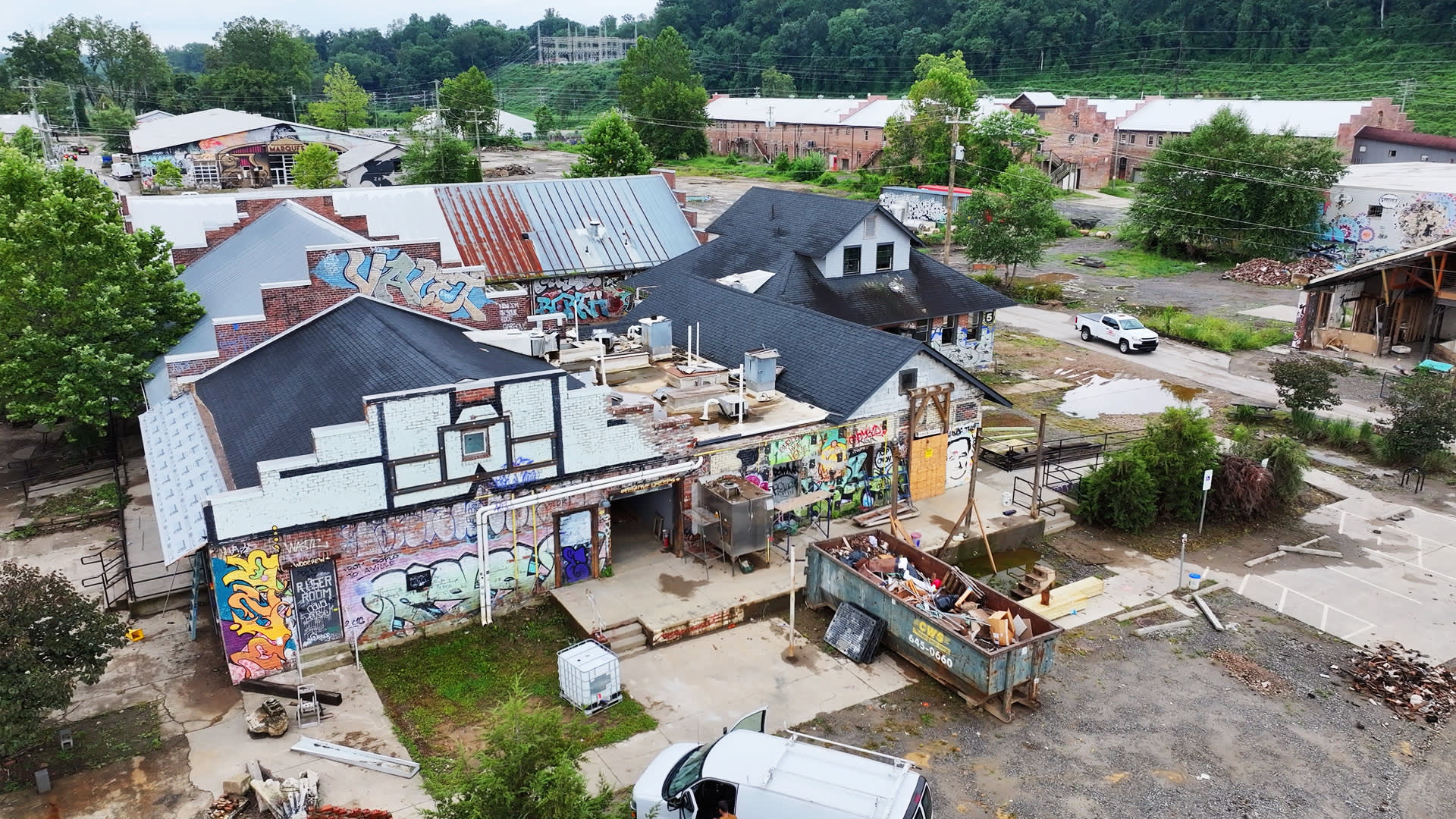
Wells Rolland said her business operated in Asheville’s River Arts District for 13 years before Hurricane Helene passed through town. The business was destroyed by more than 24 feet of flood waters, according to NOAA. The Village Potters Clay Center, which generated about $743,000 in annual revenues in 2023, documented almost $200,000 in equipment losses, according to Wells Rolland.
The business had flood insurance through FEMA’s National Flood Insurance Policy and received a payment of $165,000, according to Wells Rolland. She plans to reopen this fall in a new location on higher ground.
“We’re an economic driver for tourism, hospitality, restaurants, regional development, you know, so we’re an essential part of our economic community,” said Jeffrey Burroughs, president of the River Arts District Association. “If we can’t take on another loan, how do we get the funding to help sustain us so that we can stay open?”
Watch the video above to see how FEMA could evolve in the coming years.



