


Key Points
- Fears of higher prices and slower economic growth have unsettled markets over the past week following a spike in the oil price.
- Investors fear the specter of stagflation and what it could mean for their portfolios, but 2026 looks different to the 1970s for several reasons.
- Back then, a spike in oil prices led to spectacular gold gains fueled by a weaker dollar, but this is yet to happen.
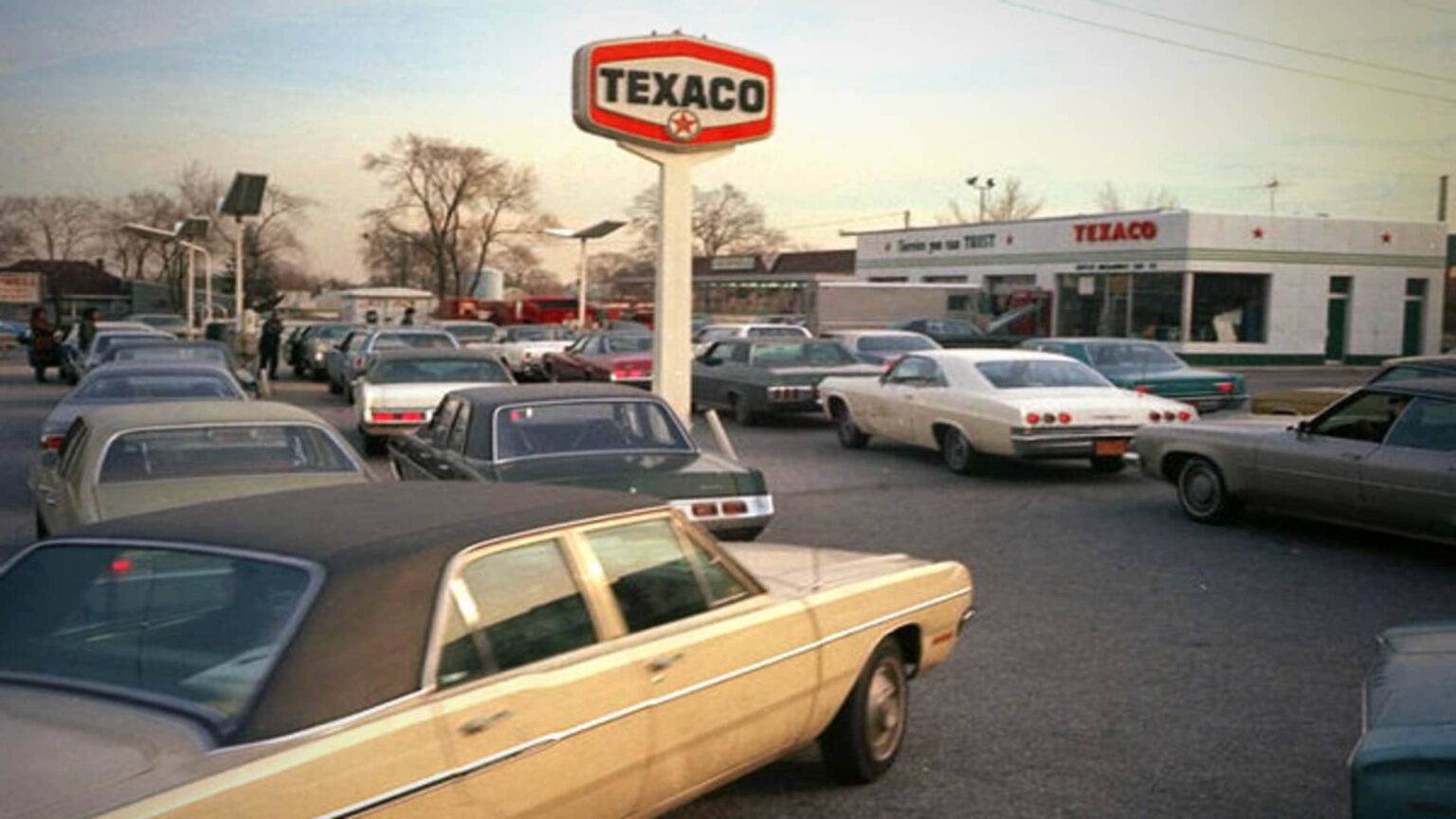
Fears of 1970s-style stagflation have been stoked as the U.S. and Israel’s war with Iran has rattled markets and prompted a spike in oil prices. A toxic mix of higher inflation and slower growth often proves a heady cocktail for both equity and bond markets, which last fell in tandem through 2022 after Russia’s invasion of Ukraine saw oil prices exceed $120 a barrel. For investors fearful of the specter of stagflation and what it could mean for their portfolios, history can provide some answers. In 1973, the S & P 500 plummeted by more than 40% as a recession coincided with the OPEC oil crisis, according to Capital Economics, leading to a lost decade for large-cap equity returns. Some investors are drawing comparisons with the 1970s to interpret where markets are headed in 2026, but there are several key differences to note this time around. Lessons from gold and small-caps The recent spike in oil prices has not resulted in spectacular gains for gold investors fueled by a weaker dollar, as was the case in 1973. In fact, the dollar has strengthened against most major currencies. “Gold may be a great hedge against uncertainty but I suspect many investors weren’t prepared for the fact this time around that it didn’t much like a stronger US dollar,” Julian Howard, head of multi-asset at Gam, told CNBC over email. He said the U.S. is now the world’s largest oil producer and a top exporter, meaning the country is now less vulnerable to supply constraints in the Middle East. @LCO.1 YTD mountain Crude oil prices “An oil price spike improves the U.S. economy’s terms of trade and pushes the dollar higher, conversely weighing gold down,” he added. Smaller companies’ stock also skyrocketed during the 1970s. Between 1975 and 1977, it was the best-performing asset class for three consecutive years, according to BofA Global Research analysis. Howard said that this performance came only after the market’s “brutal” crash. To expect small-caps to outperform in the 2020s, according to Howard, would assume a recovery phase from a market crash, the likes of which has yet to occur. Not there yet The 1970s saw entrenched inflation well above target, stagnating growth and a broken policy framework, none of which are present today, according to Charles-Henry Monchau, chief investment officer at Syz Group. “This is not the 1970s, but it may be the beginning of something comparably significant,” he wrote in a recent note. “[It could mean] a sustained regime shift from paper assets to hard assets, and a long overdue repricing of the physical economy that underpins everything else.” Monchau told CNBC that physical assets and related industries such as energy, copper, steel, and critical minerals could be the main beneficiaries of any rotation away from mega-cap technology stocks to hard assets. For now, the oil price remains below the highs experienced after Russia’s invasion and the OPEC crisis. Brent futures were 0.7% lower at $99.78 per barrel at 10:10 a.m. ET. U.S, after closing above $100 Thursday. West Texas Intermediate crude futures down by 1.3% at $94.42 per barrel.



