

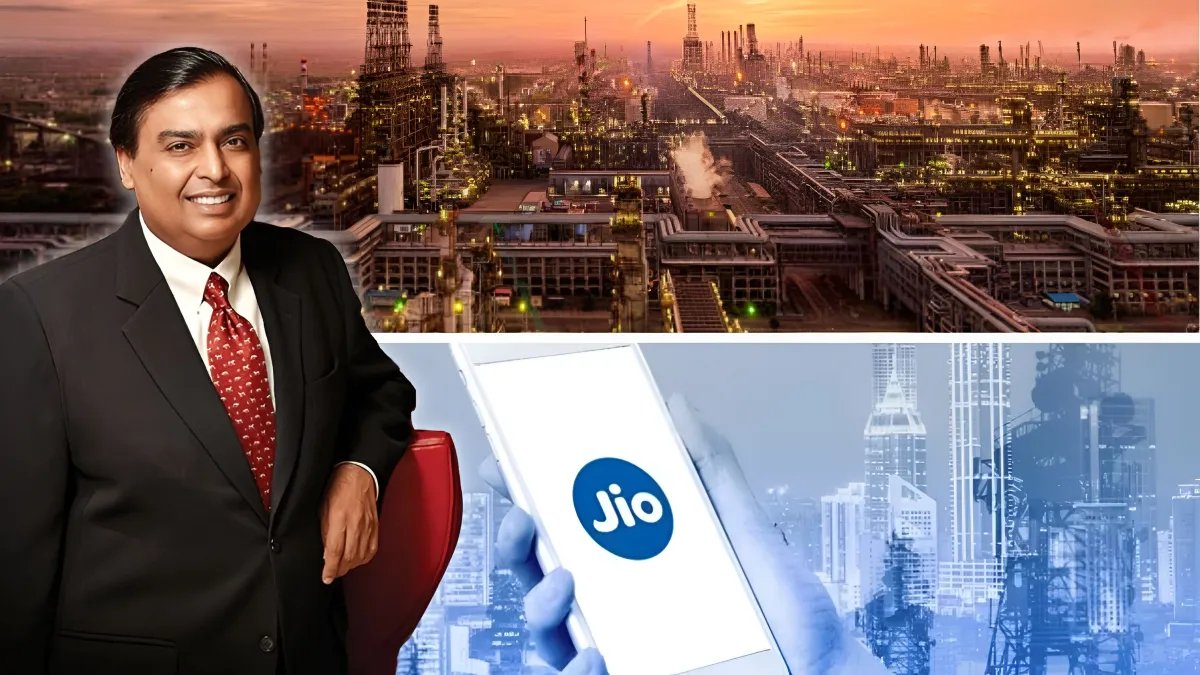

In India’s business history, some strategic decisions go beyond transforming a company’s bottom line; they reshape the nation’s economy and millions of lives. The story of Mukesh Ambani and Reliance Industries is one such defining chapter in India’s economic history. On one hand, there was the goal of building a refinery in Jamnagar, Gujarat, one of the world’s largest refining centres, in record time; on the other, there was the dream of providing affordable internet to millions of Indians through Jio. These two major projects gave Reliance a strong presence in businesses ranging from energy to digital.
Built a refinery empire to fulfil his father’s dream
Dhirubhai Ambani founded Reliance Industries. His dream was to build large-scale industrial projects in India and establish a strong global presence for the country. Pursuing this vision, Mukesh Ambani played a key role in realising the massive refinery project in Jamnagar, Gujarat. The project was remarkable for the speed at which it was completed. The Jamnagar refinery was built in just 36 months, requiring extensive planning, technology, investment, and manufacturing capabilities. Mukesh Ambani even dropped out of his studies at Stanford University and returned to India to contribute to Reliance’s business growth. The Jamnagar project cemented Reliance’s reputation as a major industrial conglomerate. It showed that Indian companies can also complete large-scale, complex projects quickly.
Jio’s affordable internet triggered India’s digital revolution
After proving its strength in refining, Reliance made a major bet in the digital world. Jio’s 2016 launch transformed the Indian telecom market. The company offered free voice calls and extremely cheap data, bringing the internet within reach of the common man. Jio added 100 million customers in just 170 days. Subsequently, the use of video calls, online learning, digital payments, and internet-based services increased rapidly in the country. India’s global ranking in mobile internet penetration also improved significantly. Jio’s network was not limited to major cities. Improved connectivity in remote villages, hilly areas, and tribal areas gave people access to education, healthcare, and new employment opportunities.
Reliance’s expansion from energy to digital technology
During the COVID-19 pandemic, when schools, offices, and many essential services moved online, digital connectivity played a crucial role in keeping millions of people connected. This period further highlighted the need for the internet. Reliance expanded beyond energy and refining to invest in telecommunications, digital services, and new technologies. The company’s strategy focused on building large businesses in India and developing the ability to compete with global companies.
ALSO READ:




