

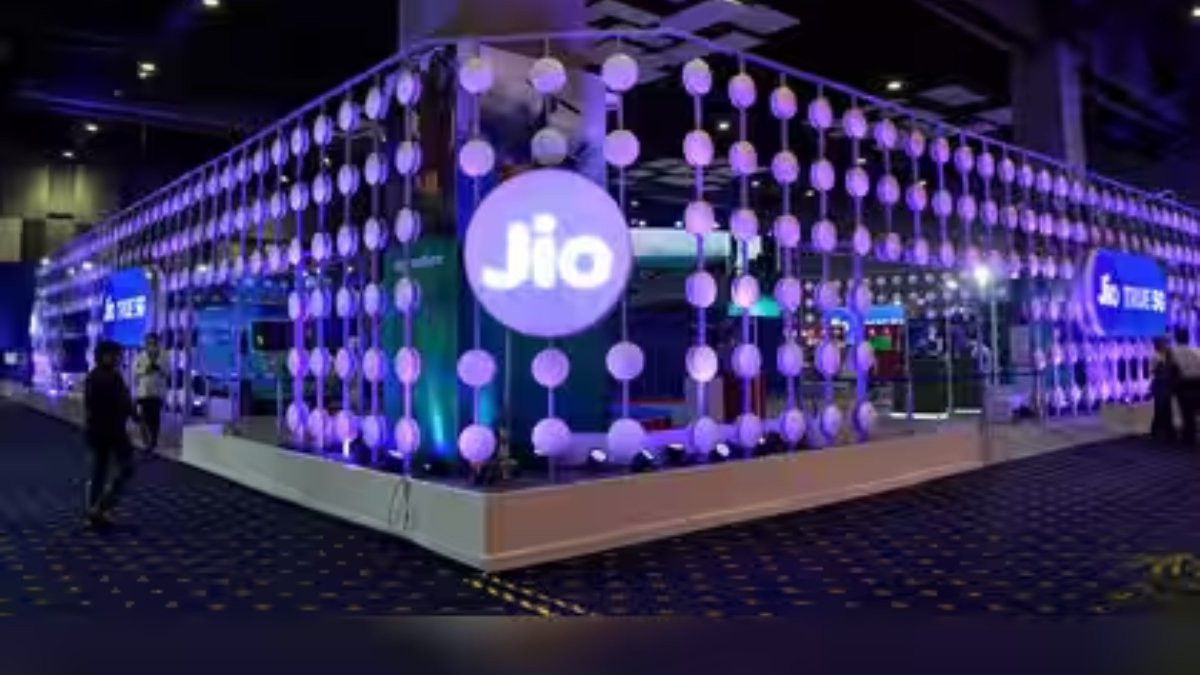

Jio entered the Indian telecom market as the 14th operator in 2016 and faced an intensely established industry where mobile data was expensive and limited. Rather than follow the industry’s existing business model, Jio challenged it with a technology-led strategy built around affordable connectivity. Driven by a vision to make digital connectivity affordable and accessible, it overhauled industry economics through free voice calls and dramatic price reductions. According to Akash Ambani, data costs have plummeted from roughly Rs 228 per GB at launch to about Rs 4.90 per GB today, with average monthly customer consumption reaching 43.7 GB.
Origin of Jio
Addressing a press conference ahead of the Jio Platforms’ IPO, at a cap price that works out to over Rs 30,200 crore and India’s largest public market offering so far, Isha Ambani recalled how she and her brother Akash started deep conversations about why India should not be left behind in the digital space.
“Why should India be left behind?” She said the answer was to build a digital technology platform company from scratch. That vision shaped Jio’s market entry and long-term ambition.
Market dominance and scale
Over time, Jio has risen to become the market leader and has consolidated the market from 14 operators into four major players. As of June 30, 2026, Jio served 533.3 million customers, which includes 284.9 million 5G subscribers. The company holds approximately 50 per cent of India’s wireless broadband subscriber market and carries over 60 per cent of the nation’s wireless data traffic.
Jio’s success is not confined to mobile connectivity. In fixed broadband, it had 27.1 million customers and a 42.60 per cent market share in FY2026, compared with 22.71 per cent for Bharti Airtel. It held a 77.49 per cent share of the 5G- and UBR-based fixed wireless access segment, demonstrating how its technology and execution have helped it establish a strong position in home broadband.
Technology-first powerhouse
Positioning itself as an end-to-end technology company rather than a traditional telecom operator, Jio has built its proprietary stack in-house—spanning 4G/5G cores, network software, operating systems, and digital applications. By June 30, 2026, the company had filed 7,220 patent applications across 4G, 5G, 6G, cloud-native networks, and AI-driven automation. Looking ahead, Jio plans to leverage this proven technological capability globally by partnering with international telecom operators as a managed-services provider.
Taking Indian-developed technology to global markets
Jio’s next opportunity extends beyond India. Its in-house technology stack, proven at scale in one of the world’s most demanding markets, could be offered to telecom operators in developed as well as developing countries. Akash Ambani described the approach as partnering with operators as an end-to-end managed-services provider, rather than simply selling hardware or software. He said the company sees “a huge market opportunity all across the world, including the developed and developing nations.” Such partnerships could open new revenue streams by taking Indian-developed technology to global markets.
Jio Platforms IPO opens for public subscription on Wednesday, October 21, with the company seeking a valuation of around USD 108 billion, according to the offering details. The subscription closes on October 23.
Jio Platforms is seeking to raise about Rs 30,213 crore through the initial public offering. The price band has been set at Rs 1,065 to Rs 1,119 per share, with the offering comprising up to 27 crore new shares.
ALSO READ:



