

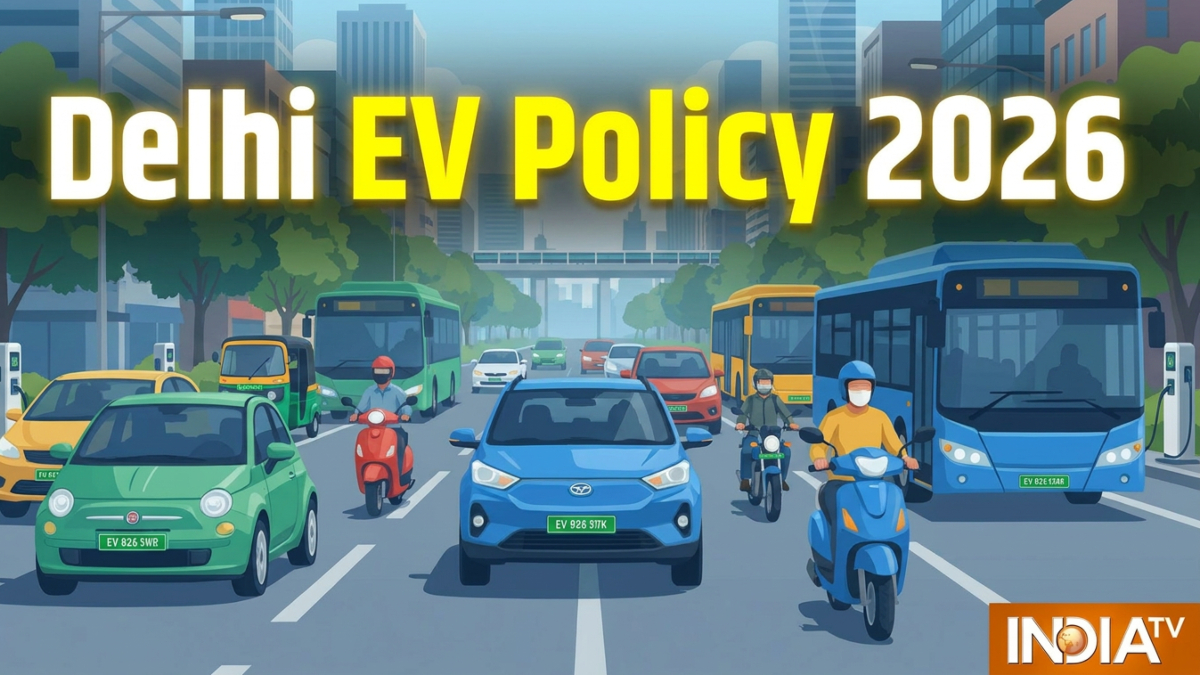

The Delhi Cabinet, chaired by Chief Minister Rekha Gupta, has approved the new EV Policy 2026. As part of the policy, all electric cars with an ex-showroom price of Rs 30 lakh or less registered in the national capital will be exempted from road tax and registration fees. Moreover, it will provide a scrapping incentive of Rs 1 lakh to owners of BS-IV four-wheelers or below-standard vehicles who scrap their vehicles and switch to electric vehicles. Moreover, all electric two-wheeler purchasers will get a Rs 30,000 subsidy, and three-wheeler buyers will get a Rs 50,000 subsidy in the first year of the Delhi EV Policy.
Similarly, buyers of electric three-wheelers will be eligible for incentives of Rs 50,000, Rs 40,000 and Rs 30,000 in the first, second and third years, respectively.
The new policy is proposed to come into effect on July 1, 2026, following the approval of Delhi LG Taranjit Singh Sandhu, and will remain valid until March 31, 2030.
Govt wants to make Delhi an EV capital
Chief Minister Rekha Gupta said that the main objective of the new EV Policy 2026 is to make Delhi a pollution-free and clean transportation capital. The government wants more people to adopt electric vehicles rather than petrol or diesel vehicles, thereby reducing air pollution and fuel costs.
Only electric autorickshaws to be registered
As part of the policy, only electric autorickshaws will be registered in Delhi from January 1, 2027, while registration of new petrol and CNG two-wheelers will be phased out, with only electric two-wheelers to be registered from April 1, 2028.
Gupta said that around Rs 15,000 crore will be invested under the new policy over the next four years to promote electric mobility and reduce vehicular pollution in the national capital.
Buyers of N1 category electric trucks will receive a purchase incentive of up to Rs 1 lakh, according to an official.
The government said the policy also envisages expansion of charging infrastructure, vehicle scrapping facilities and other measures to accelerate the transition to electric mobility across the city.
The government also said that the e-Office system is making government work faster, transparent, and digital. So far, 235 departments have been connected to this system.
ALSO READ | Why EV cars are better than petrol, diesel and CNG cars for Indian roads



