


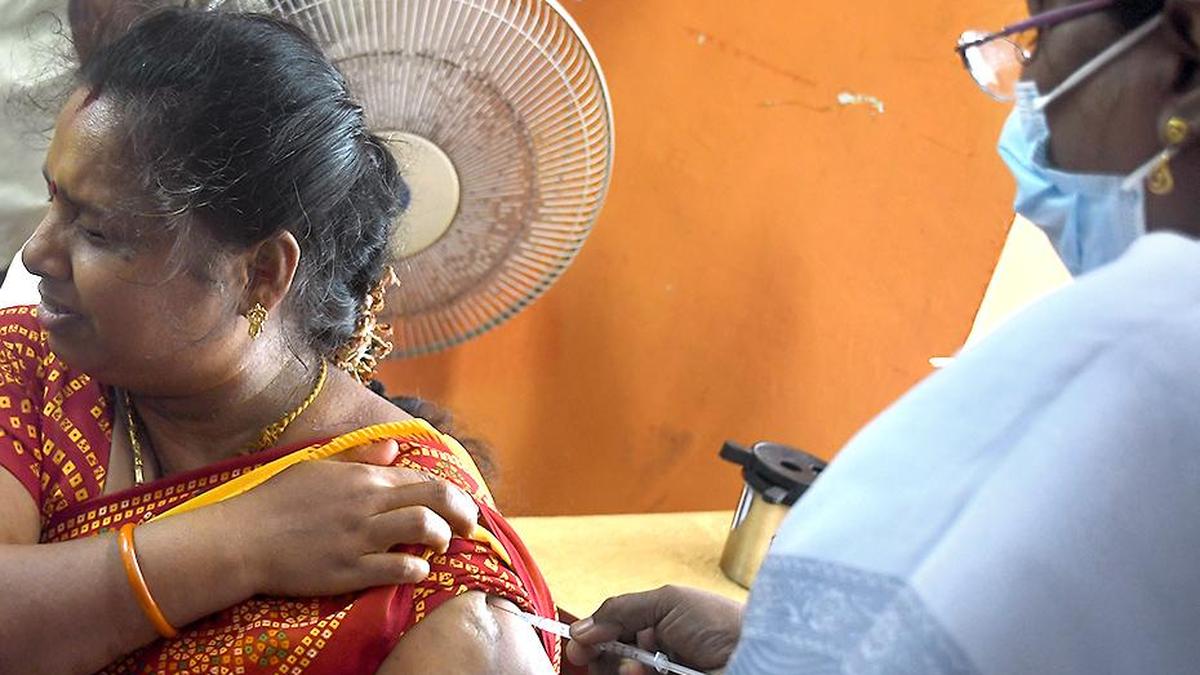
Representational file image.
| Photo Credit: B. Jothi Ramalingam
Countries should consider routine COVID-19 vaccination for groups at highest risk of severe COVID-19 disease — two doses per year six months apart — due to the limited protection beyond six months after the last dose. These groups include the oldest adults; older adults with significant comorbidities or severe obesity; residents in care and long-term care facilities; and moderately or severely immunocompromised individuals, said an update issued by the Strategic Advisory Group of Experts on Immunization (SAGE), which held its regular biannual meeting from March 9 to 12 to discuss, among other topics, the current epidemiology of COVID-19 and the COVID-19 vaccine recommendations for different population groups, typhoid conjugate vaccine (TCV) dosing schedules, and the number of bivalent oral polio vaccine (bOPV) doses in routine immunisation.
SAGE on Immunization was established by the Director-General of the World Health Organization (WHO) in 1999 to provide guidance on the WHO’s work, and is the principal advisory group to the WHO for vaccines and immunisation. SAGE is concerned not just with childhood vaccines and immunisation, but all vaccine-preventable diseases.
Read | We now know why some people had severe blood clots after COVID shots
In its latest meeting, the group discussed the future of immunisation, with experts assessing how to strengthen global immunisation planning for the rest of the decade, and help shape a long‑term vision for the future of vaccines and vaccination from 2026 to 2050.
“SAGE took up the issue of vaccine prioritization and portfolio optimization, and how WHO can support countries as they make hard decisions about their immunization programmes amid tightening health budgets,’’ the release said.
Meanwhile, the recommendation also said that countries may consider routine COVID-19 vaccination for additional groups, with at least one dose per year, based on the local context, cost-effectiveness, and programmatic feasibility. These include older adults without comorbidities; younger adults, adolescents, and children with significant comorbidities; and health and other care workers.

It adds that countries may also consider vaccinating pregnant persons, one dose in each pregnancy; and previously unvaccinated healthy children from six months to 23 months of age, only in countries with documented significant burden in this age group.
SAGE has recommended the introduction of typhoid conjugate vaccine (TCV) in countries or settings with a high or very high incidence of typhoid fever or a high burden of antimicrobial resistant S. Typhi. “Countries should consider introducing a booster dose around 5 years of age in settings with very high typhoid incidence for children who received a primary TCV dose at 9-24 months of age,” it noted.
Additionally, countries at low risk for poliovirus importation — and that already give three doses of inactivated polio vaccine (IPV) in the first year of life — may reduce the number of bivalent oral polio vaccine (bOPV) doses in routine programmes from three to two, since this combined schedule will sustain mucosal immunity.
It added that the vaccine portfolio optimisation and prioritisation approach is helping countries make tough, evidence‑based choices about how to get the most health impact from their immunisation programmes at a time of tightening budgets.
Published – March 19, 2026 02:03 am IST



