


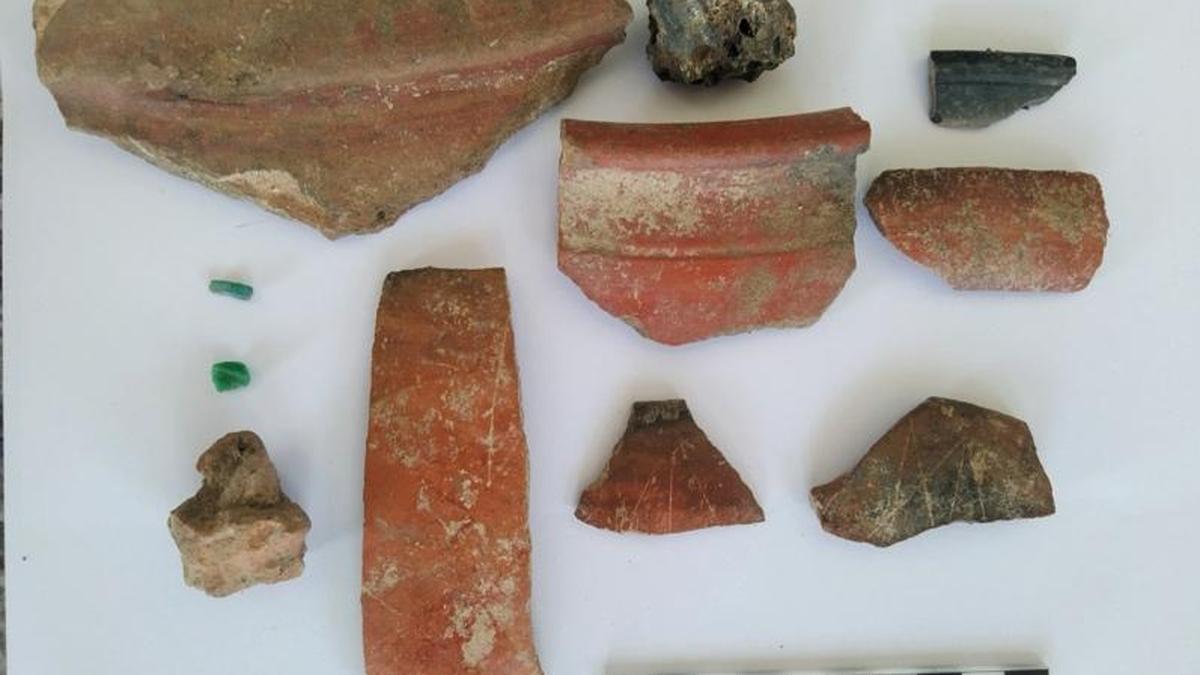
Glass beads and graffiti potsherds found at Ayyankovilpattu village in Villupuram district.
| Photo Credit: Special Arrangement
Surface-level field investigations by archaeologists from the Tamil Nadu State Department of Archaeology (TNSDA) along the banks of the Pambai river in Villupuram district, have yielded significant finds such as Iron Age urn burials, potsherds, glass beads, ring wells and ceramics, indicating the potential for full-scale excavations in the region.
The Pambai river, about 80 km long, is a tributary of the Varahanadhi river, also locally known as Sankarabarani. It originates at Kandachipuram Lake and Otteri and flows through Villupuram district and the Union Territory of Puducherry.
A team of archaeological experts including V.P. Yathees Kumar, Deputy Director; P.G. Loganathan, Assistant Director; and K. Suresh and Bharath Kumar, Archaeological Officers of the TNSDA, carried out the survey along the banks of River Pambai, following the announcement by Chief Minister M.K. Stalin in January 2025 that archaeological research would be taken up in these areas.
Surface explorations were conducted in villages including B. Karimedu, Sengadu, Kurumbankottai, Poyyapakkam, V. Pudhur, Thiruvamathur, Ayyankovilpattu, Orathur, Ayyur Agaram, Thennamadevi, Ilangadu, V. Mathur, Kandachipuram and Sengamedu.
According to R. Sivanantham, Joint Director, TNSDA, archaeological remains were identified at both habitation mounds and burial sites during the survey. At B. Karaimedu, a habitation mound locally known as Ayyanar Medu yielded ceramic assemblages including black-and-red Ware, black slipped ware, red ware, red slipped ware and white-painted red ware, along with fragments of storage jars, lids and spouts. Fragmentary bone remains and three potsherds bearing graffiti marks were also recovered.
At Sengadu, where agricultural activities have altered parts of the mound, the team documented four urn burials, scattered potsherds, a broken polished stone axe, and ceramics. Materials belonging to the Early Historic Period including red ware, red slipped ware, were found at the Kurumbankottai archaeological mound which was excavated by a private university in 2015–16.
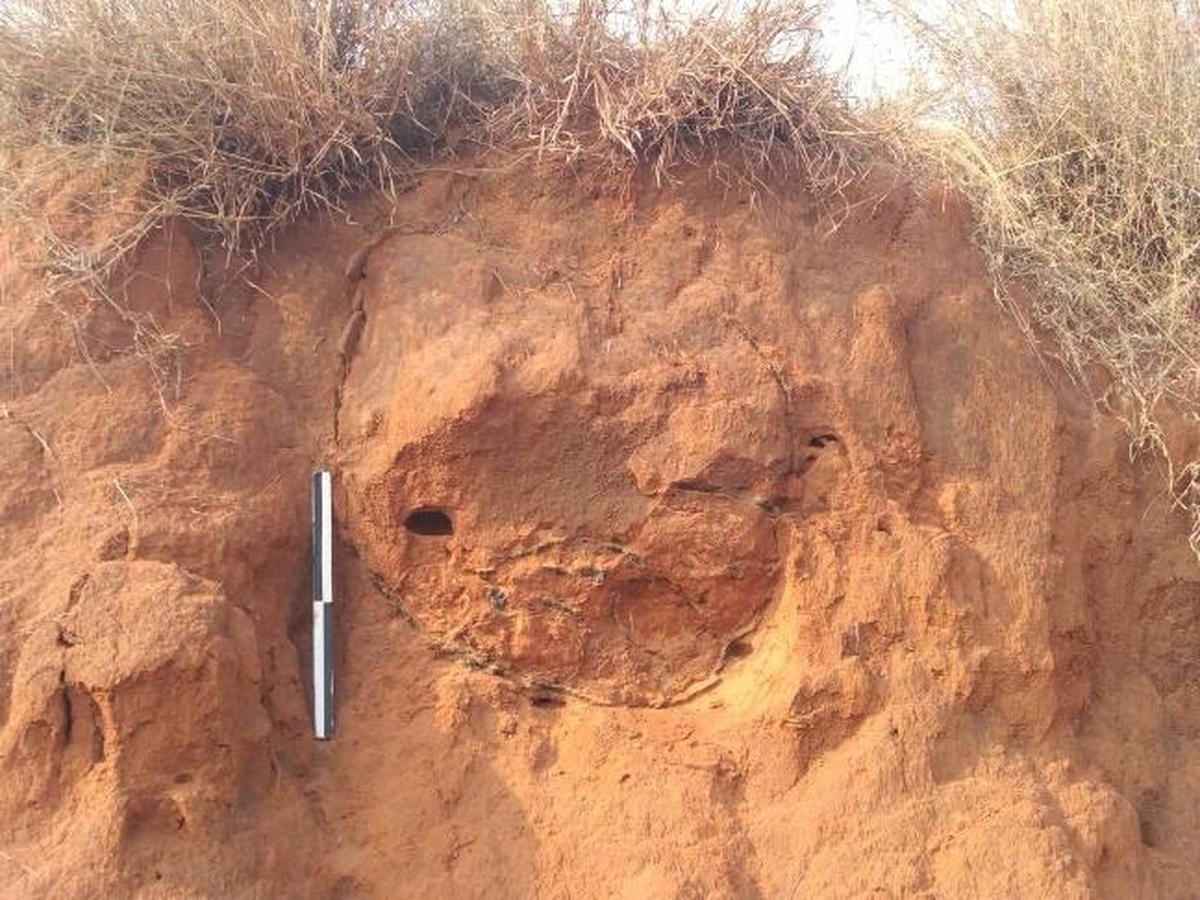
A disturbed urn burial at Sengadu village in Villupuram district.
| Photo Credit:
Special Arrangement
At Poyyapakkam, where brick kilns operate nearby, storage jars and ring wells were exposed in excavated sections of the mound. Pottery fragments, bricks, lids and ring stands were also collected. Explorations at the V. Pudhur mound, locally known as Nathamedu, yielded Red Ware, Black-and-Red Ware, Red Slipped Ware and a broken terracotta seal.
The Ayyankovilpattu site yielded potsherds including Black-and-Red Ware, Red Ware, Red Slipped Ware and Black Slipped Ware, along with decorated pottery. Glass beads, bricks and graffiti-marked sherds were also recovered.
Mr. Sivanantham said the preliminary findings suggest the cultural materials belong to the Iron Age, Early Historic and Historic periods. A full-scale excavation along the Pambai river could shed more light on ancient habitation and burial practices in the region.
Published – March 11, 2026 05:50 pm IST



