

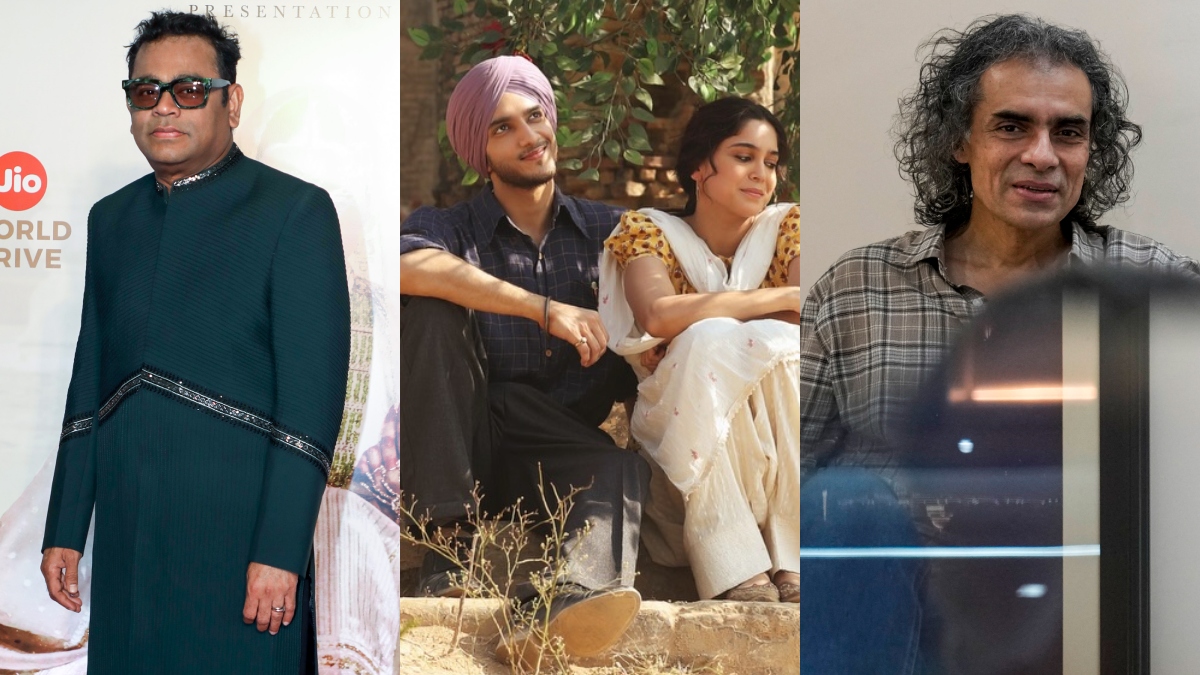

Imtiaz Ali’s Main Vaapas Aaunga has been enjoying a decent run at the box office, thanks to strong word-of-mouth and positive audience response. However, the film has also sparked a debate online, with some social media users calling it “anti-national”. AR Rahman, who has composed music for the film, appears to have little interest in the criticism and has instead reacted with humour.
AR Rahman reacts to trolls calling Main Vaapas Aaunga anti-national
The Oscar-winning composer recently reshared a satirical Instagram post that poked fun at those accusing the film of promoting an “anti-national” narrative. The post carried the headline, “Anti-National? Movie dares to show Pakistan without terrorists and secret agents”, taking a dig at stereotypes often seen in mainstream cinema.
Its caption read, “The man who was excited to watch an Indian spy exact revenge on Pakistan, and who, toward the very end of the movie, says, ‘Mein Vaapas Aaunga,’ was disappointed that the movie had nothing to do with terrorists and spies. Though touched by the heartfelt drama, he was confused about how Pakistan can neither have terrorists nor spies, given that’s all they seem to have in other movies. He later mentioned in an interview that this was something completely new, and he walked away with the perspective that there can be normal humans in Pakistan.”
Rahman shared a screenshot of the post on his Instagram Stories and reacted with nothing more than a laughing emoji, seemingly dismissing the controversy surrounding the film.
Main Vaapas Aaunga marks Imtiaz Ali and AR Rahman’s fifth collab
Main Vaapas Aaunga marks Rahman’s fifth collaboration with filmmaker Imtiaz Ali after Rockstar, Highway, Tamasha and Amar Singh Chamkila. The soundtrack, created with lyricist Irshad Kamil, features songs including Kya Kamaal Hai, Maskara and Ishq Mastana.
Set against the backdrop of the 1947 Partition, the film stars Diljit Dosanjh, Naseeruddin Shah, Sharvari and Vedang Raina. The film explores themes of love, displacement, memory and belonging through stories inspired by real-life experiences of people who lived through one of the most painful chapters of Indian history.




