


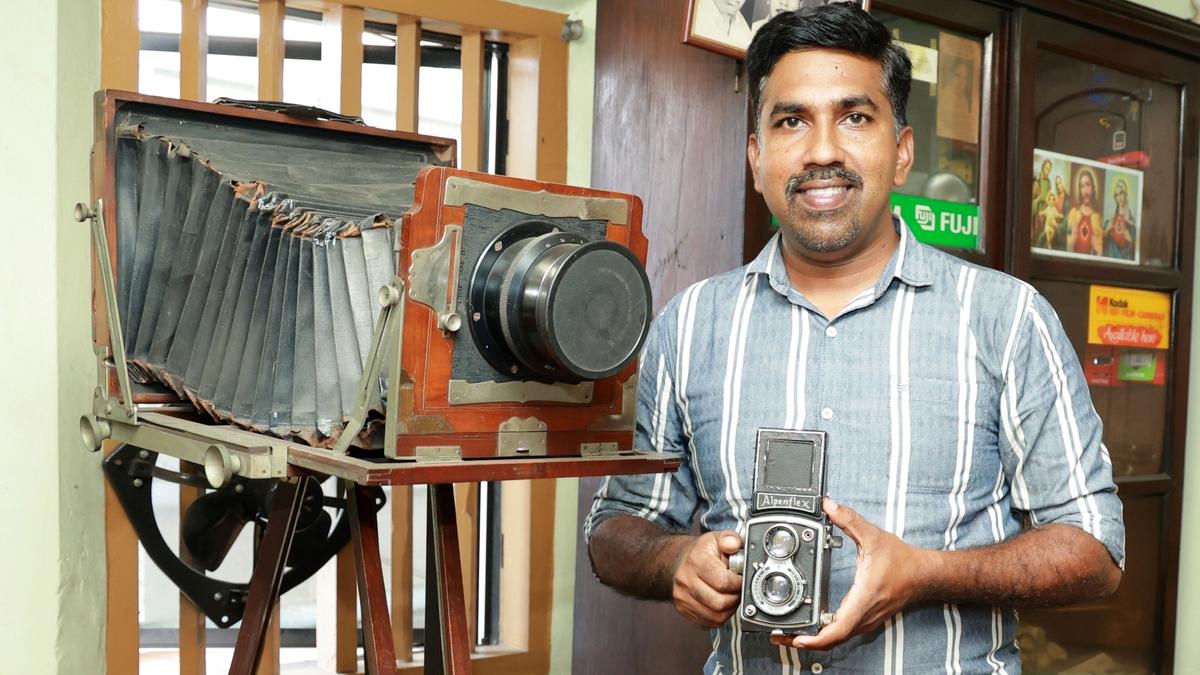
Nikhil Jose, photographer and grandson of M.J. Philip, with the field camera that captured visuals of the Idukki dam.
| Photo Credit: SPECIAL ARRANGEMENT
Decades before the Idukki dam rose to redefine Kerala’s power generation sector, a single photograph had played a pivotal role in proving its feasibility.
Captured by Thodupuzha native M.J. Philip and presented as evidence by W.J. John, the then superintendent of Malankara Estate, the image had convinced the erstwhile Travancore government of the project’s potential.
The very camera that captured the image still rests as a silent witness at Loyal Studio in Thodupuzha.
Nikhil Jose, photographer and grandson of Philip, recalls that John, who was also a hunter, was a regular visitor to Loyal Studio. “One day, they both travelled the hills on a bullock cart, where Philip captured the picture of water flowing through the Periyar between the Kuravan and Kurathi hills. John submitted the photo with his project report before the government,” says Mr. Jose.
“My grandfather had purchased the camera from Germany. He had captured the various moments of the Idukki dam construction, which have been kept in the studio as a treasure,” says Mr. Jose.
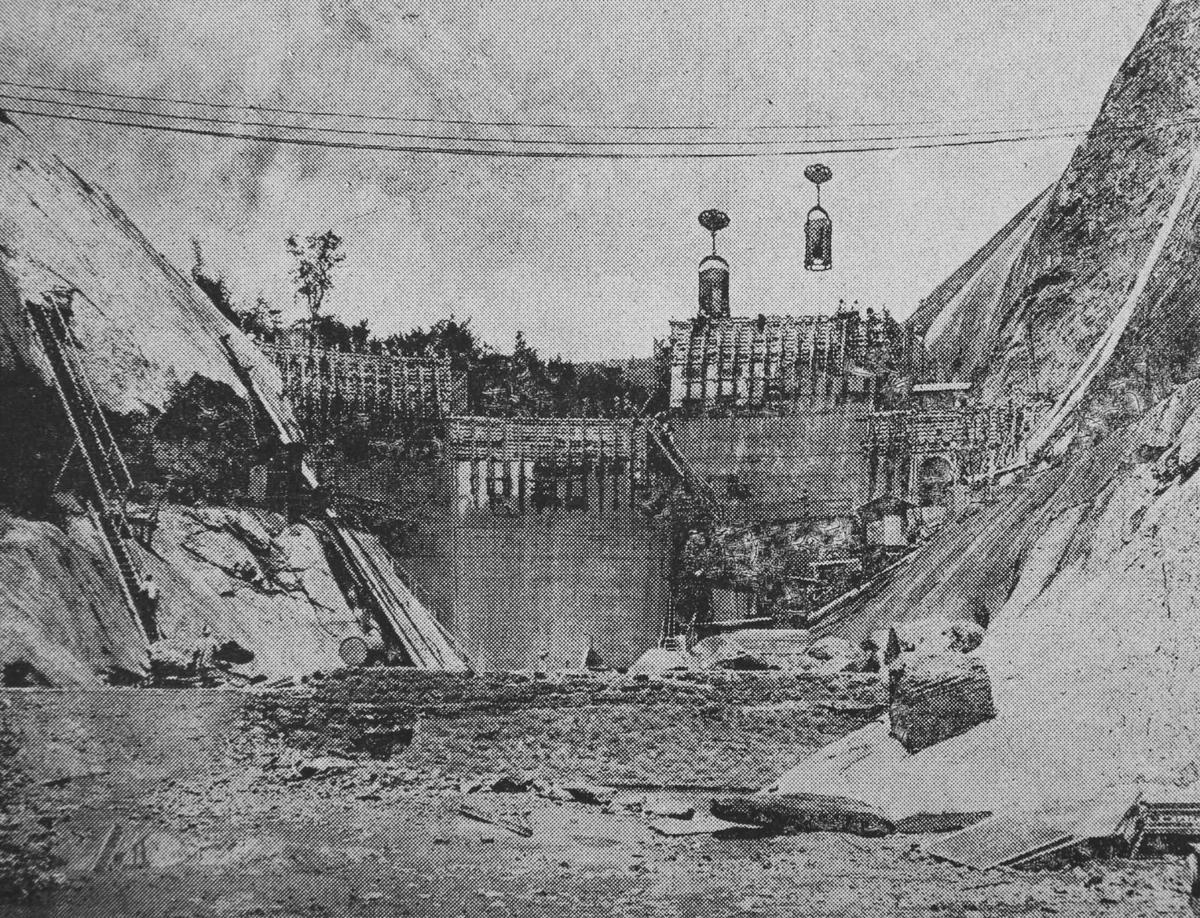
Idukki dam under construction. The photo was captured by Thodupuzha native M.J. Philip
| Photo Credit:
SPECIAL ARRANGEMENT
“My grandfather had also captured photos of Chemban Karuvellyan Kolumban, the tribal chief instrumental in realising the Idukki dam. Philip died on May 26, 1988. My father, M.P. Jose, was also a photographer,” says Mr. Jose.
Loyal Studio still keeps old cameras, negatives, and photo prints in the studio. “The photos and camera equipment provide a brief picture of the development stage of our photography. Many people come to the studio to see the old cameras and photos,” says Mr. Jose.
According to officials, Kolumban showed the way during a hunting trip by John and his friend A.C. Thomas. When they reached the present dam area, he told them the story of the Kuravan and Kurathi hills, between which the Periyar flowed.
Subsequently, John presented a proposal to the then Travancore administration, laying the foundation for Asia’s largest arch dam.
After Independence, the Central government asked the State to submit a detailed plan. The government started construction works in 1963 with the support of Canada government. The Indo-Canadian project was inaugurated by the Prime Minister Indira Gandhi on February 17, 1976.
Published – September 24, 2025 07:02 pm IST



