

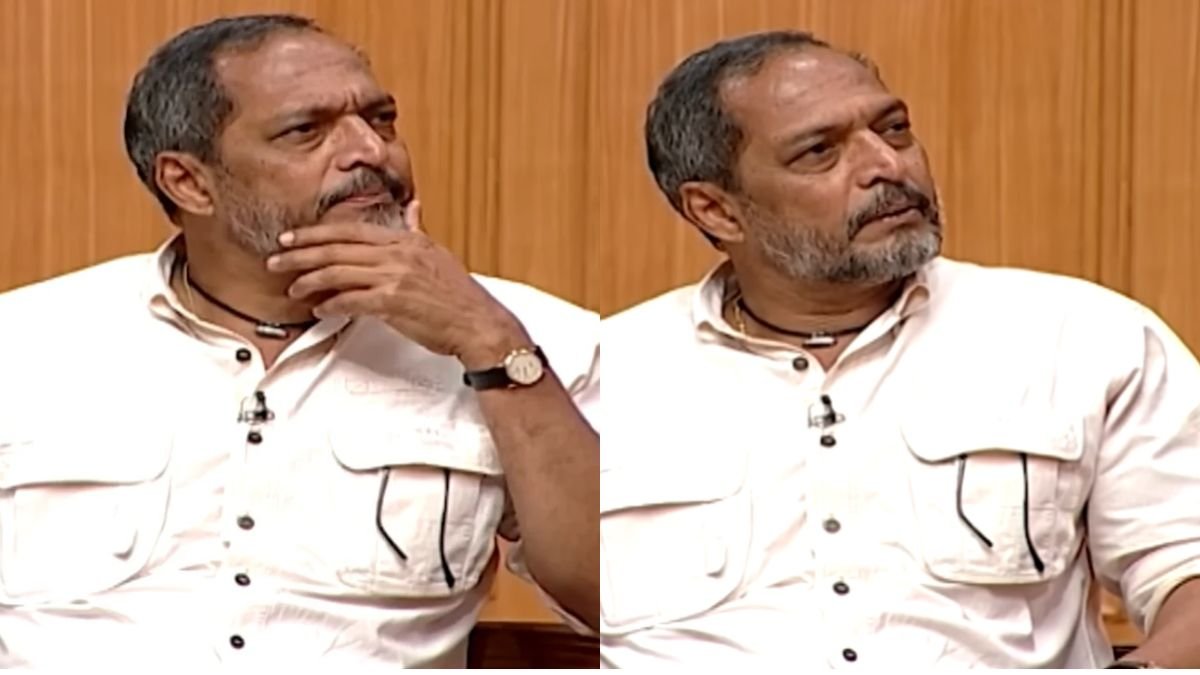

Nana Patekar, who passed away today, left behind some of Hindi cinema’s most memorable performances and dialogues. One of his most iconic lines came from Krantiveer, but the story behind how the “machhar” dialogue was born is just as remarkable. During his appearance on Rajat Sharma’s Aap Ki Adalat in 2023, Nana had opened up about the scene and revealed that the now-famous dialogue was never actually scripted.
Nana Patekar recalled the story on Aap Ki Adalat
During the conversation, Rajat Sharma asked Nana Patekar whether it was true that he would sometimes set aside written dialogues and deliver his own lines on set. In response, Nana shared the story behind the famous Krantiveer scene and explained how it came together almost spontaneously.
The actor revealed that he was unwell at the time and was in hospital. However, director Mehul Kumar had already gathered an audience of around 2,000-3,000 people for the shoot. Cancelling the shoot would have resulted in a major loss, so Nana decided to leave the hospital and go directly to the set. What happened next eventually became one of his most remembered scenes.
The scene was not scripted
Nana explained that there was no fixed script for the scene when he arrived on the set. Instead of trying to prepare a conventional dialogue, he asked the cameraman to set up five cameras. He wanted all the cameras to keep rolling so that he could simply speak whatever came to his mind without worrying about retakes or sticking to a predetermined script.
That decision gave birth to the now-iconic “machhar” dialogue. Nana went on to describe how the scene became a reflection of the helplessness of the common man and the way society can leave people feeling powerless.
‘Ek machhar aadmi ko hijda bana deta hai’
The line that emerged from that spontaneous performance became one of the most recognisable dialogues associated with Nana Patekar. “Ek machhar aadmi ko hijda bana deta hai...” he said in the scene, before continuing to describe the repetitive rhythm of everyday life, from leaving home in the morning and becoming part of a crowd to returning home, drinking and having children.
The power of the dialogue came not only from its unusual opening but also from the larger thought behind it. Nana used the image of a tiny mosquito to express how something seemingly insignificant could make an ordinary person feel powerless.
Nana said the lines after it mattered too
While the “machhar” line became the most widely remembered part of the scene, Nana pointed out during Aap Ki Adalat that the lines that followed were also important. He said those portions were written by lyricist Sameer and carried the larger social reality that the scene was trying to convey. The sequence therefore became more than just a memorable film dialogue. It combined Nana’s spontaneous performance with lines that captured the frustrations and helplessness of ordinary people.
A scene that became part of Nana’s legacy
Nana Patekar’s explanation on Aap Ki Adalat offers a glimpse into how one of his most famous cinematic moments came together. What began as an unexpected situation, with the actor arriving on set directly from the hospital and performing without a fixed script, eventually became an unforgettable piece of Hindi cinema.
Years later, the “machhar” dialogue remains closely associated with Nana’s intense screen presence and his ability to turn an ordinary line into something that stayed with audiences. Today, as fans remember Nana Patekar following his death, the story behind that scene makes the dialogue feel even more significant.
Also read:
Nana Patekar and Mushtaq Khan’s iconic Welcome meme makes X users emotional: ‘Two legends’



