

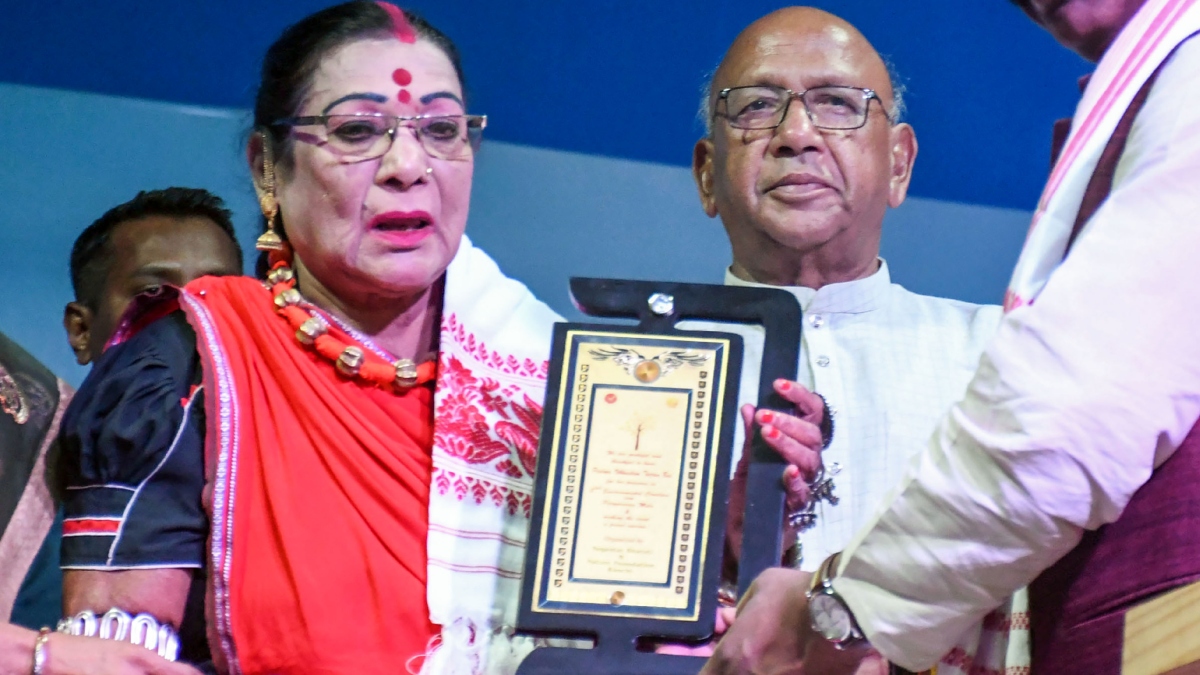

Padma Vibhushan awardee Teejan Bai, the legendary Pandavani singer who took Chhattisgarh’s centuries-old storytelling tradition to audiences across the world, passed away at 3:15 am on Sunday while undergoing treatment at AIIMS Hospital in Raipur. She was 70 years old.
Teejan Bai had been battling a prolonged illness and had been admitted to the hospital since May 27. Doctors at AIIMS Raipur confirmed her death. Her passing has left the art and cultural fraternity, as well as countless admirers across the country, in mourning.
PM Modi tweets
Prime Minister Narendra Modi paid tribute to the late singer. ‘I am deeply saddened by the passing of the renowned Pandavani singer Teejan Bai ji. Through her grand performances, she gave this folk art form of Chhattisgarh a unique identity across the world. Her departure is an irreplaceable loss to the world of art and culture. In this hour of grief, my condolences are with her family and admirers. Om Shanti!’ read his X post.
Who was Teejan Bai?
Tijan Bai was a resident of Durg district. She brought international recognition to Pandavani through her extraordinary singing style, powerful performances, and compelling acting. She won the hearts of millions of viewers across the country and abroad by presenting tales from the Mahabharata in her unique style.
The extraordinary journey of Teejan Bai
Teejan Bai was born on 24th April 1956 in the Ganiyari village of the Durg district. At a very early age, she found her passion for Mahabharat. As a child, she used to listen to these stories and eventually started performing them herself despite the social and economic obstacles.
During those times, the Kapalik style of Pandavani performances was not encouraged for women artists, but Teejan Bai managed to make a place for herself through her dedication and talent. At an incredibly young age of 13, she made her debut in Chandkhuri village.
Bringing Chhattisgarh’s folk tradition to the world stage
Throughout her career, Teejan Bai has performed extensively in India and even abroad, visiting countries such as America, the United Kingdom, France, Japan, Russia, Australia, and Germany. Through each performance, Pandavani gained more and more exposure to an international audience and Teejan Bai secured a place among the most acclaimed artists of India.
She received several accolades for her services to Indian folk art and tradition, which include the Padma Shri in 1988, the Sangeet Natak Akademi Award in 1995, the Padma Bhushan in 2003, and the Padma Vibhushan in 2019, which is India’s second highest civilian award.
A legacy that lives on
Pandavani was never just an art form for Teejan Bai; it was her vocation. Over the span of six decades, she dedicated herself to perpetuating a timeless legacy and motivated numerous artistes to draw inspiration from the rich cultural heritage of India. Though she may be gone, her legacy will ensure that many more will follow in her footsteps in the coming years to come.



