

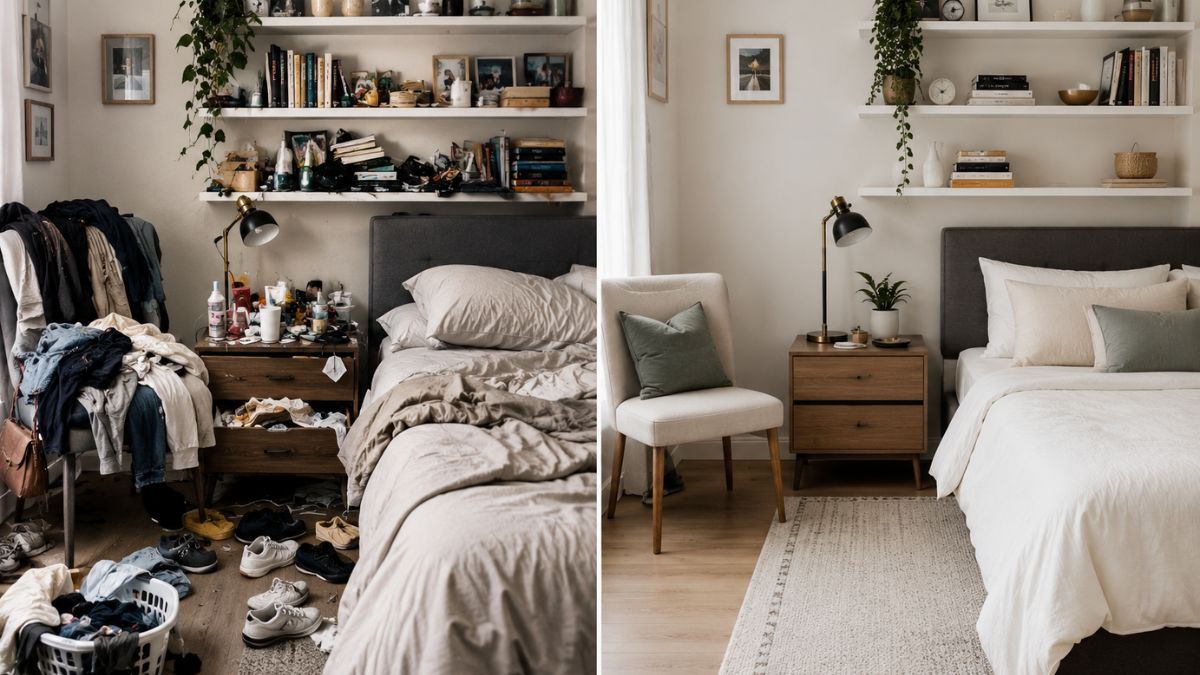

You vacuum the floor, make the bed and put things back where they belong, yet your room still feels messy. Sound familiar? However, the truth is that clutter does not always mean dirt or disorder. Sometimes, it is caused by interior design and organisational habits that often go unnoticed.
According to interior experts, visual clutter is commonly caused by overcrowded surfaces, inadequate storage solutions and overloaded shelves.
The good news is that the problem can often be solved with a few small changes, helping your space feel more organised, spacious and comfortable without the need for major renovations.
Covering surfaces with small items
A room can appear cluttered when bedside tables, desks and dressers are crowded with bottles, chargers, bills, keys and other miscellaneous items.
Clearing surfaces instantly creates a cleaner and more organised look.
Using too many decorations
Decorative items add personality to a space, but too many candles, photo frames, figurines and souvenirs can create visual clutter.
A few carefully chosen pieces often have a greater impact.
Lack of storage
When everyday items do not have a designated place, they tend to accumulate in visible areas.
Baskets, drawers, storage ottomans and organisers can help keep clutter under control.
Ignoring cable management
Visible wires from chargers, lamps, televisions and electronics can make even a tidy room appear disorganised.
Simple cable organisers can create a cleaner and more streamlined appearance.
Keeping clothes on chairs
The “clothes chair” is one of the biggest causes of visual clutter.
Even a few garments draped over furniture can make a room feel untidy.
Using large furniture in a small room
Oversized furniture can easily throw off the proportions of a room and make it feel crowded.
Choosing furniture that suits the size of the space helps maintain balance and openness.
Not making the bed
An unmade bed quickly becomes the focal point of a bedroom.
Making the bed every morning can dramatically improve the overall appearance of the room.
Holding on to unnecessary items
Expired products, old magazines, broken accessories and unused decor can contribute to clutter over time.
Regular decluttering helps keep a room organised and functional.
Poor lighting
Dark corners and inadequate lighting can make a room feel cramped and cluttered.
A well-planned lighting scheme using multiple light sources can make the space feel brighter and more inviting.
Using too many colours and patterns
Too many competing colours, prints and patterns can create visual chaos.
A cohesive colour palette often makes a room feel calmer and more organised.
Letting paperwork pile up
Bills, packages, documents and other papers can quickly take over desks and counters.
Sorting and filing paperwork regularly helps prevent clutter from accumulating.
Also read: What happens when you take your phone to the washroom? Here’s what a vastu expert has to say



