

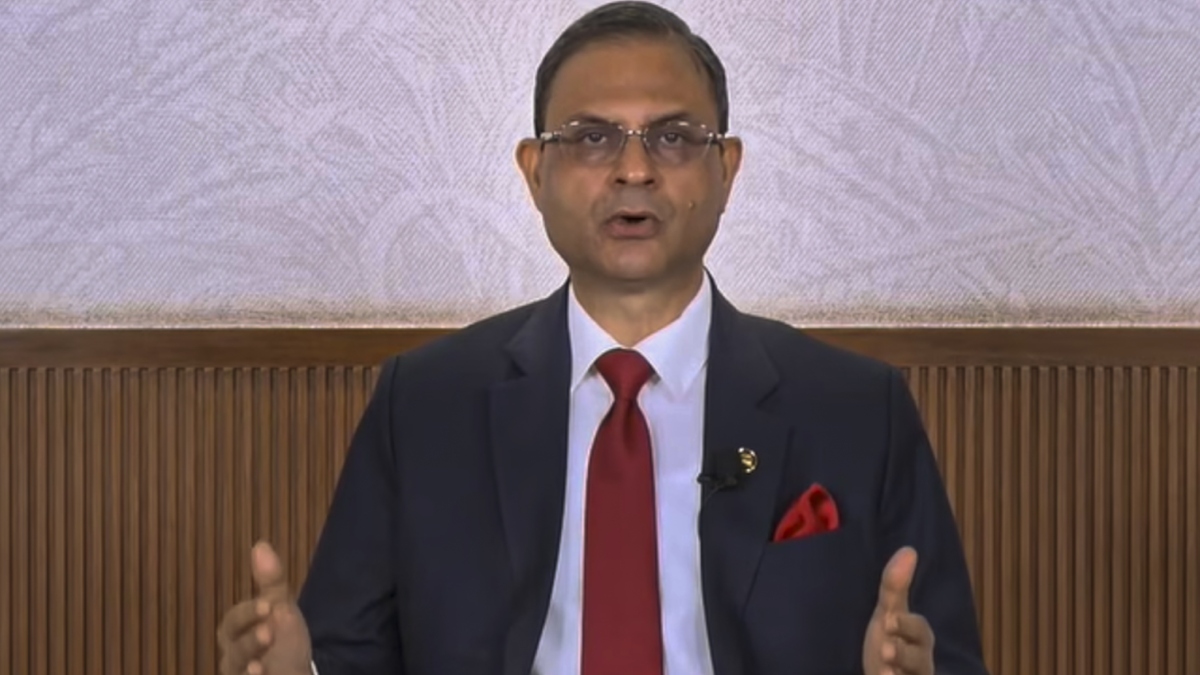

The Reserve Bank on Friday kept interest rates unchanged for the second time in a row. Announcing the second bi-monthly monetary policy for the current fiscal, RBI Governor Sanjay Malhotra said the Monetary Policy Committee (MPC) has unanimously (6-0) decided to retain the short-term lending rate or repo rate at 5.25 per cent. The central bank maintained its “neutral” policy stance to balance economic growth against fluctuating inflation risks and global uncertainties. The interest rate pause comes even as the Consumer Price Index (CPI) based headline retail inflation has moved closer to the RBI’s medium-term target of 4 per cent at 3.48 per cent in April.
“CPI inflation remains below the target despite global shock, as the pass-through to domestic prices has been limited. While the baseline projections point towards headline inflation forming up towards the upper tolerance level in Q3 this year. The impact of the supply shock is expected to wane in Q4 onwards. The underlying inflation pressures continue to remain benign at this juncture,” Malhotra said.
Lowers FY27 GDP forecast
The Reserve Bank has also lowered its GDP forecast for FY2026-27 to 6.6 per cent from the 6.9 per cent estimated in April, citing elevated energy and other commodity prices as well as continued supply disruptions arising from the conflict in West Asia, which are likely to weigh on economic activity.
The central bank also said that prolonged global supply-chain disruptions, heightened volatility in global financial markets, and weather-related shocks continue to pose downside risks to the domestic growth outlook.
Global uncertainties have increased concerns
Sanjay Malhotra said that ongoing geopolitical tensions in West Asia have cast a cloud of uncertainty over the global economy. Sharp increases in energy prices and disruptions to global supply chains are impacting economic activity. In such a situation, central banks in the world’s largest and most developed economies may consider raising interest rates.
Stock market buoyant, but bond market cautious
The RBI Governor stated that while stock markets are rallying on the back of positivity surrounding artificial intelligence (AI), the government bond market is experiencing a slowdown due to fears of a resurgence of inflation and concerns about a heavy debt burden. Furthermore, the forex market is experiencing significant volatility due to increased global risk aversion and increased demand for safe-haven investments (such as gold or the dollar). This is also impacting the currencies of many emerging economies, which are experiencing a weakening trend.
ALSO READ | EPFO 3.0: Will ATM PF withdrawals reduce your pension? Here’s what you need to know



