


Last week, the newly elected Chief Minister, C. Joseph Vijay, went walkabout at Fort St. George. Which is a good thing. He must be the first Chief Minister in living memory who went and saw some of the monuments in the precinct. The itinerary was predictable – the Church of St. Mary’s and the Fort Museum. But what was left out was what he really needed to go and see. And had he done so, he may have begun pondering over what can be done to save this historic enclave from its steady decline.
The first problem that faces the Fort is its poor general upkeep. Tonnes of rubbish lurk behind the massive walls – the byproducts of the administrative setup at the place. You don’t need to go looking for it. All around, you will see heaps of plastic, paper, and other discarded items. Go closer to the walls, and you will see a lot more. Go to the rear of the Fort and you will see the moat in all its ghastly (lack of) upkeep. Weeds, stagnant water, and refuse on both sides. This is not to be confused with the front side of the fort, where the moat is regularly tended to, but is bone dry.
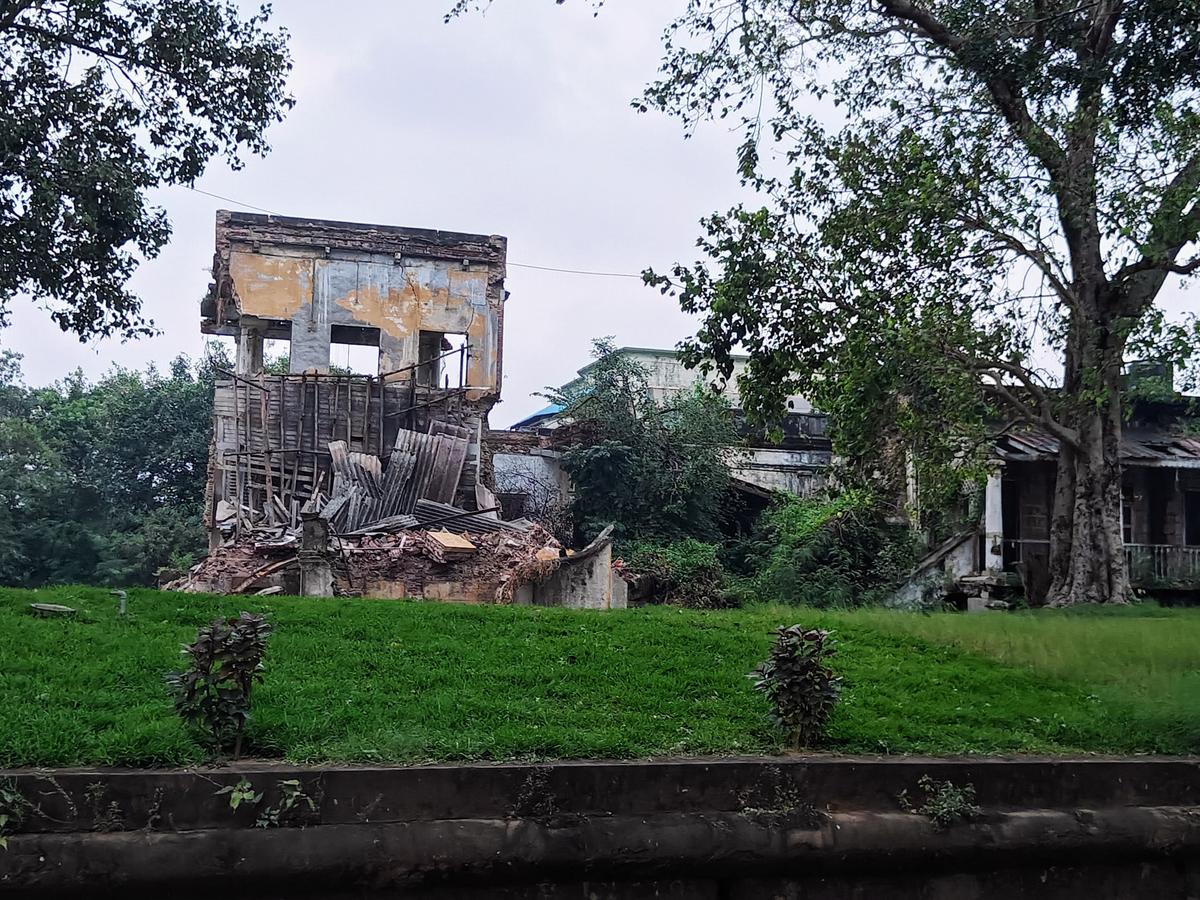
Last House, photographed in 2023
| Photo Credit:
Sriram V.
Ownership tussle
The next is the conflict of multiple ownership. The Fort has five owners, as far as I know. There is the Archaeological Survey of India (ASI), and there are the Legislative Assembly, the Tamil Nadu government, the Army, and the Navy. Each has its private turf and guards it fiercely – not by way of protecting the buildings within, but more in terms of recognised bounds. Thus, the Navy had, what is known for some mysterious reason, as Clive’s Library. Years ago, a tree began growing out of it, and nobody noticed it until it took on a stranglehold of the building itself. It is quite certain that the tree, unlike the beanstalk in the fairytale, did not grow overnight and yet, no steps were taken to remove it. Finally, the tree crushed the building for good.
If that is the Navy’s record, the Army fares marginally better. It has taken good care of some buildings, such as the Embarkation HQ. However, the King’s Barracks, said to be the largest in the country, is in a state of near collapse. This is because the Army and the ASI are at loggerheads over control of the building. The ASI wants the Army to hand it over, and the latter is reluctant, given the former’s track record of suddenly denotifying structures under its control, handing them over to the State government for demolition, and putting up new buildings in their place. As a result, King’s Barracks is a shabby, roofless shell.
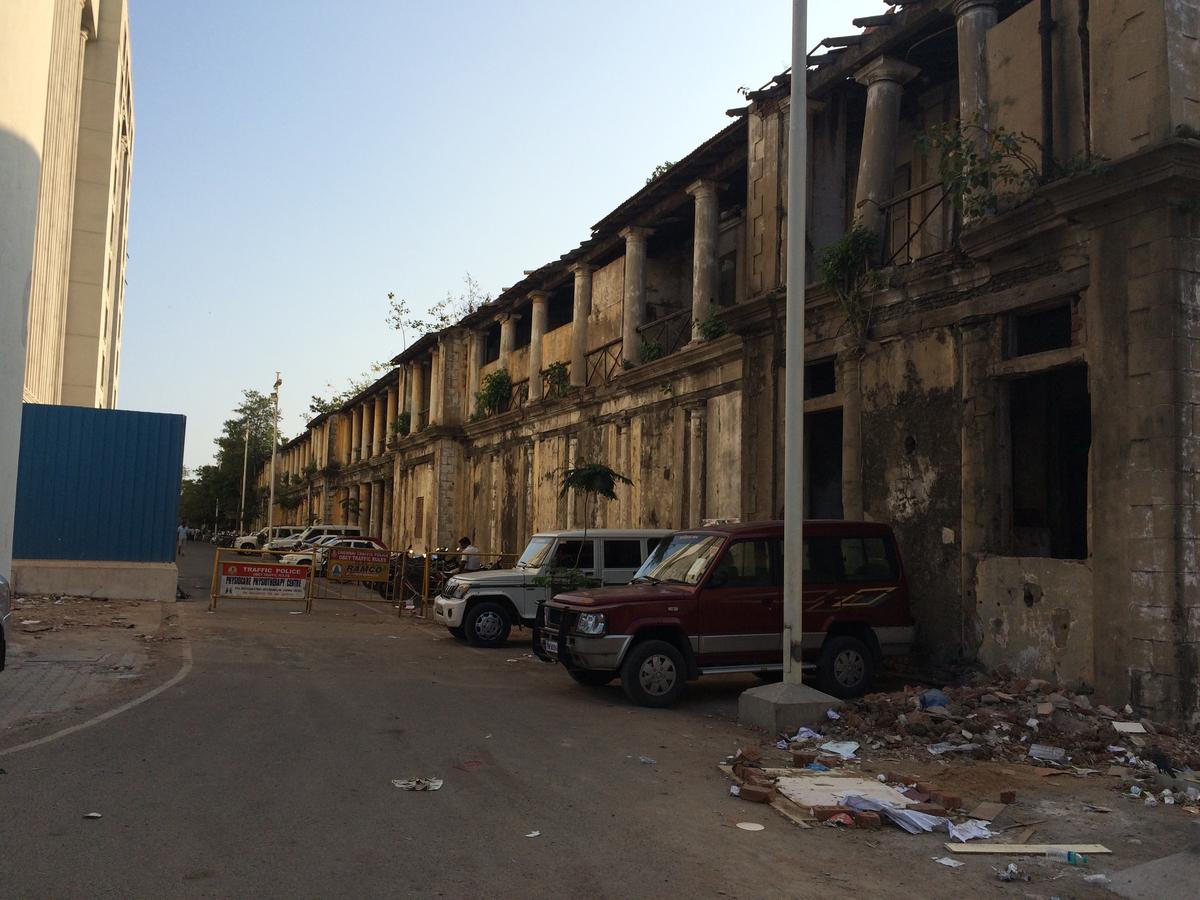
Despite being a site of significance, the Fort suffers from poor general upkeep
| Photo Credit:
Sriram V.
The Army is not wrong in the doubts it entertains. The ASI has, of course, done a stellar job in restoring Clive’s House (now the ASI HQ) and the church. But the rest of the Fort is littered with episodes where more could have been done. Even in the 1980s, an entire section of historic buildings was denotified to allow the government to build Namakkal Kavignar Maligai. That structure itself would have never been permitted in a precinct of this kind, if we had had a Heritage Act in place. Then came the wilful neglect of Wellesley’s House and Last House on Snob’s Alley, both of which were allowed to collapse. Their ‘protected status’ was subsequently withdrawn.
Which leaves us with the historic gates. Of these, the Sea Gate and the more ornamental entry and departure points are well taken care of. St. Thomas’ Gate, under Army supervision, is good, but the remaining, namely Wallajah, St. George’s, and North, are in very poor repair. The spaces under the arches serve as rubbish tips and the gates themselves are in a state of severe wear and tear.
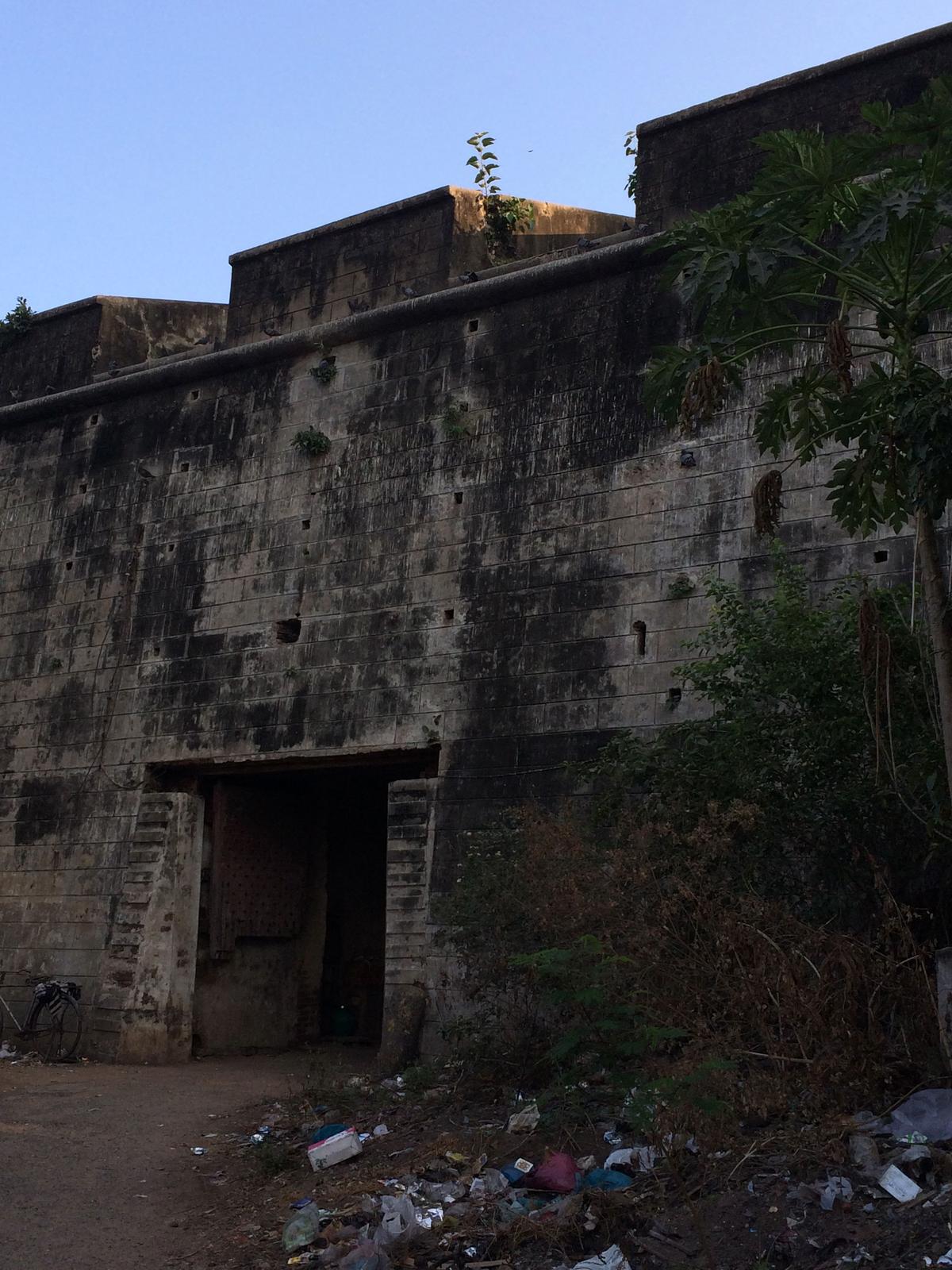
A garbage pile in front of the North Gate, which is in a state of severe wear and tear
| Photo Credit:
Sriram V.
The buildings under government ownership, namely the Secretariat and Assembly, seem in good condition because of use and regular maintenance. But once you step inside, you see so many mindless additions and renovations that the place has lost all vestige of its antiquity.
In short, the Fort is not what it should be.
What must be done
The new government needs to address the issue of ownership and if that is insurmountable, it should institute a committee of all stakeholders who can at least oversee preservation and maintenance. The Fort premises must be better documented and have signage at significant spots to highlight history. Access must be made easier, and at least from dawn to dusk. The present government timings are a deterrent, given our weather conditions. And lastly, why not a sound and light show on Parade Square? Most forts of India now have this facility. And so, why not Fort St. George?
(Sriram V. is a writer and historian.)
Published – May 27, 2026 08:00 am IST



