


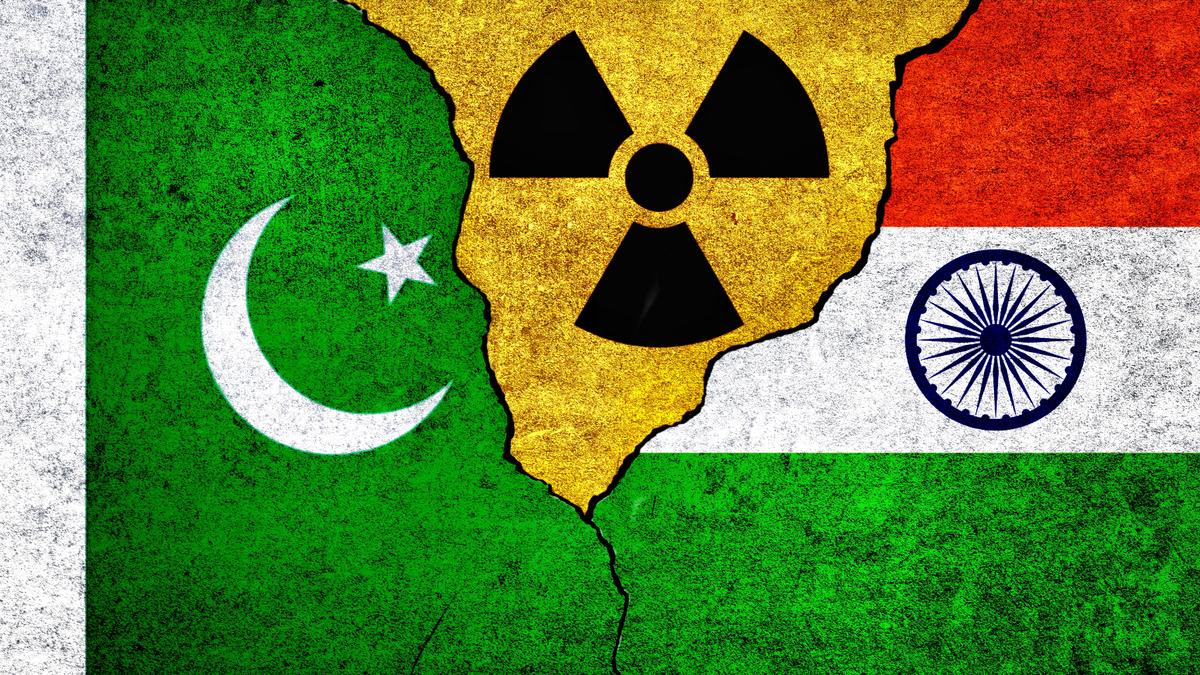
Though India and Pakistan do not seek to open conflict, conditions exist for terrorist actors to continue to create catalysts for crises, says the report
| Photo Credit: Getty Images/iStockphoto
India and Pakistan relations remain at risk for nuclear conflict, according to the Annual Threat Assessment of the U.S. Intelligence Community presented to the U.S. Senate on Wednesday (March 18, 2026).
According to the 34-page report, though India and Pakistan do not seek to open conflict, conditions exist for terrorist actors to continue to create catalysts for crises.

“India-Pakistan relations remain a risk for nuclear conflict given past conflicts where these two nuclear states squared off, creating the danger of escalation. The terrorist attack last year near Pahalgam, in the Indian Union Territory of Jammu and Kashmir, demonstrated the dangers of terrorist attacks sparking conflict,” the document said.
“President Trump’s intervention de-escalated the most recent nuclear tensions, and we assess that neither country seeks to return to open conflict, but that conditions exist for terrorist actors to continue to create catalysts for crises,” it said.
ISIS maintains foothold in South Asia
On South Asia, the document said that ISIS-K (Islamic State – Khorasan Province) maintains a foothold in the region and aspires to conduct external attacks, but the Taliban is improving its security services and has taken aggressive action against it. “The Taliban has conducted extensive raids against ISIS-K targets, probably thwarted some attacks, and driven some ISIS-K leaders to relocate to neighbouring countries,” it said.

Pakistan continues to develop increasingly sophisticated missile technology that provides its military the means to develop missile systems with the capability to strike targets beyond South Asia, and if these trends continue, ICBMs that would threaten the US.
Pakistan-Taliban tensions
“Relations between Pakistan and the Taliban have been tense, with intermittent cross-border clashes, as Islamabad has become increasingly frustrated with anti-Pakistan terrorist groups’ presence in Afghanistan while Islamabad faces growing terrorist violence,” it said.

The document said on February 26, the Afghan Taliban launched strikes against Pakistani military positions along their shared border, claiming retaliation for prior Pakistani airstrikes. Pakistan responded within hours by bombing Afghan border provinces and the capital Kabul– the first time Pakistan has struck Afghanistan’s urban centres, it said.
“The fighting has continued since it erupted. Pakistan’s army chief warned this month that lasting peace requires the Taliban to sever ties with militants targeting Pakistan. The Taliban’s public posture has been to call for dialogue, but it has denied harbouring anti-Pakistani militants,” the document said.
Published – March 19, 2026 06:52 am IST



