


The mid-February ritual of observing birds from balconies, campuses, wetlands and village tanks has steadily grown into one of the country’s most reliable citizen science exercises. The Great Backyard Bird Count (GBBC), coordinated globally by the Cornell Lab of Ornithology and partners, has seen Indian participation since it expanded worldwide in 2013.
The 2026 edition documented 1087 species, with India finishing second globally. Within the national canvas, Andhra Pradesh offered a revealing cross-section of habitats, from the dry tracts of Rayalaseema to the estuaries of north coastal districts. The State ranked 12th in overall species count with 319 species. West Bengal led the national tally with 519 species, reflecting its mosaic of Himalayan foothills, Gangetic plains and coastal wetlands.
District-wise data underscores how geography shapes the checklist. Chittoor topped the State with 203 species, followed by Anantapur with 165. In north Andhra, Vizianagaram secured sixth position with 141 species, while Visakhapatnam, with 133 species, ranked ninth. Srikakulam, though lower on the formal leaderboard this year, remains ecologically significant given its network of estuaries and coastal wetlands.
The numbers represent four days of disciplined observation, uploaded by amateurs and experienced birders alike and verified through the eBird platform. For researchers, the dataset provides a seasonal snapshot of winter migrants before their northward departure.
Campuses as urban refuges
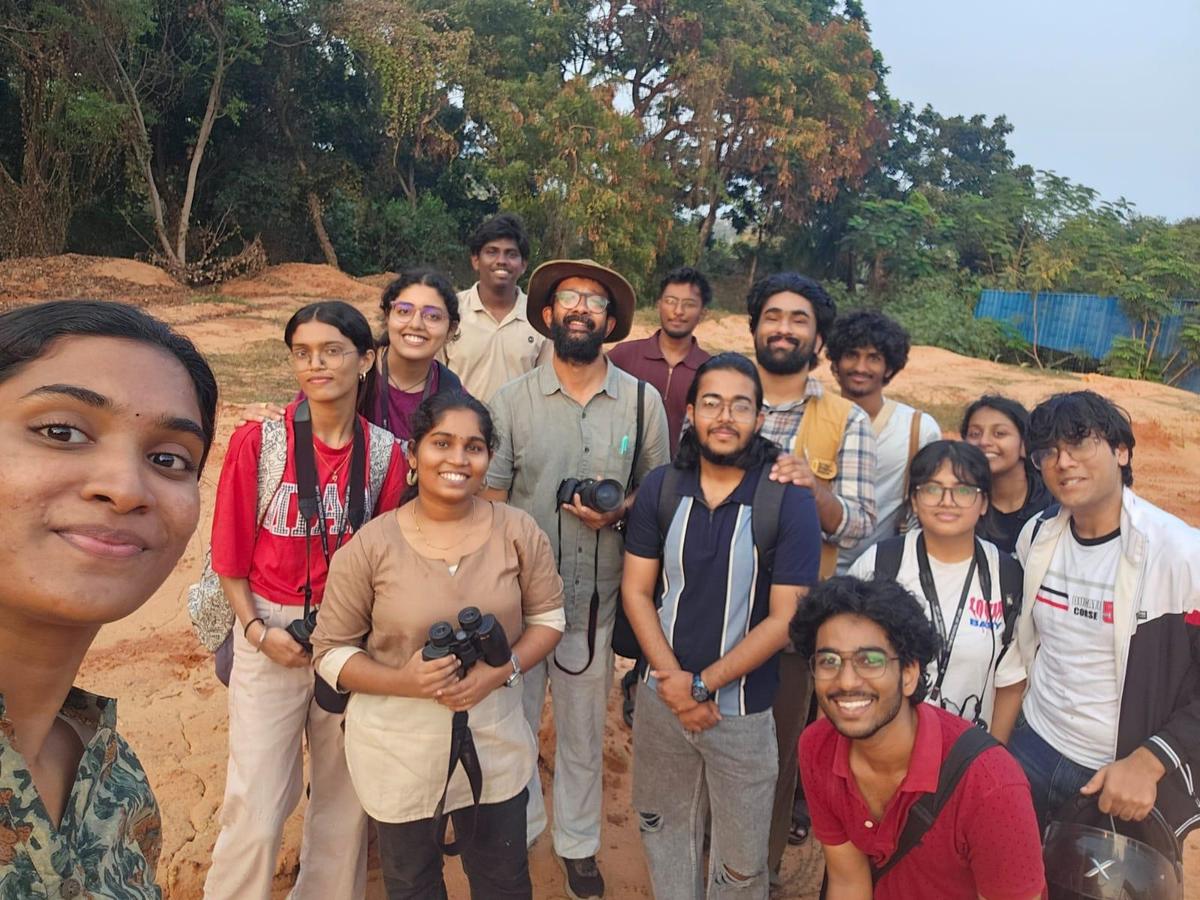
Participants from Green Poet Society of GITAM (deemed to be university) during GBBC in Visakhapatnam.
| Photo Credit:
SPECIAL ARRANGEMENT
In Visakhapatnam, GITAM (Deemed to be University) stood out as an active microhabitat. Members of the Green Poet Society, a campus Nature club, documented 43 species within the university grounds. Among the sightings were the orange-headed thrush, black-naped oriole and Indian grey hornbill.
Harish Prakash from the Department of Life Sciences, who mentors the club, observes, “Birds function as dependable ecological markers. A count such as the GBBC offers a credible picture of how urban green pockets are sustaining avian diversity. Educational campuses often retain more tree cover than commercial neighbourhoods and that structural complexity supports a wider range of species.”
He also notes an absence that surprised the group. “The red-vented bulbul, usually commonplace in the city, was scarcely recorded on campus. We encountered only one individual during the four days,” he says, suggesting that even familiar species require attention when their presence declines.
Across the district, more than 100 hotspots were covered. The Visakhapatnam airport wetland emerged as the leading site with 85 species. Vivek Rathod of Wildlife Conservation Through Research and Education, one of the top observers from the region, pointed to the wetland’s seasonal value. “The airport wetland continues to host winter migrants in substantial numbers. We recorded Northern pintail, common pochard, red-crested pochard and gadwall along with resident species,” he says, adding that such peri-urban wetlands quietly shoulder considerable ecological responsibility.
Vizianagaram’s wetland web
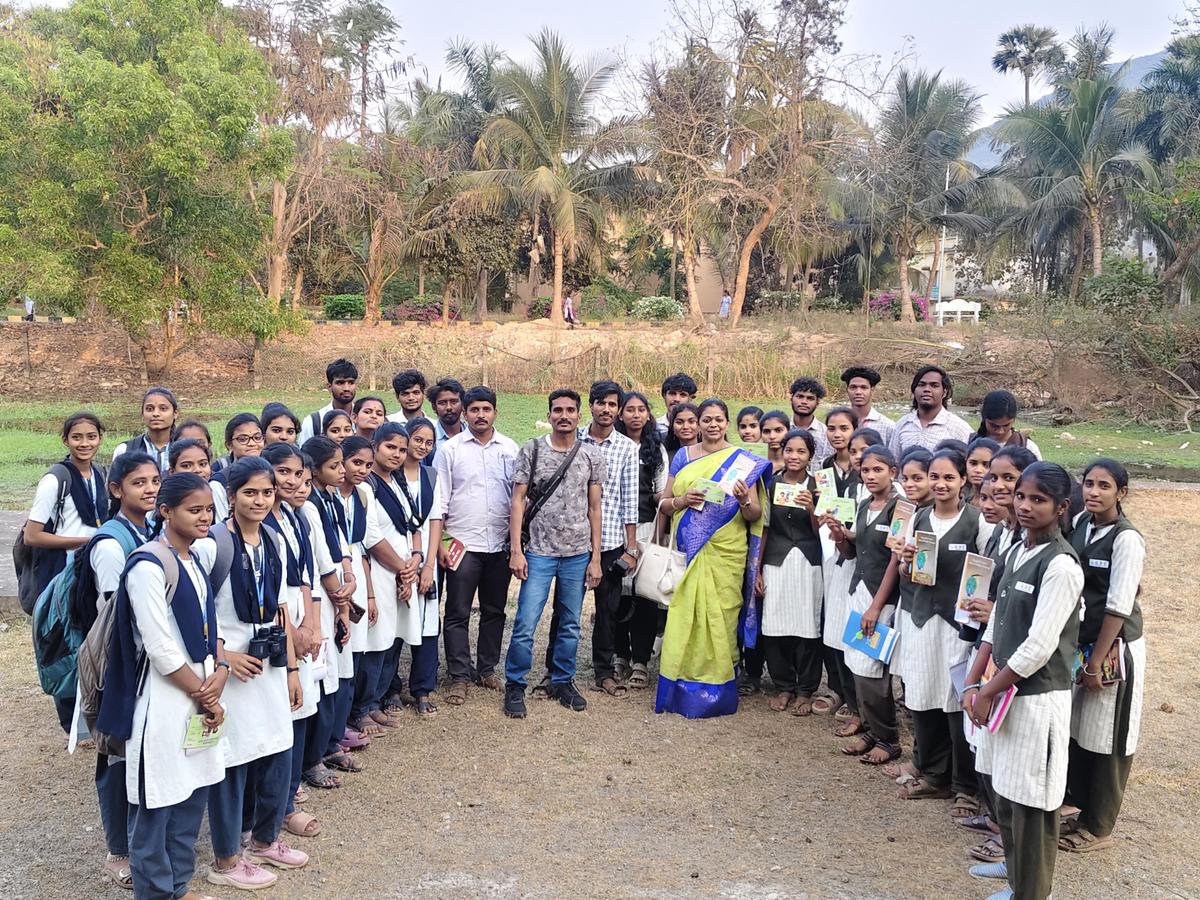
Participants from Vizianagaram during GBBC.
| Photo Credit:
SPECIAL ARRANGEMENT
Vizianagaram’s tally of 141 species drew from 23 wetlands. Durgasi Chandra Sekhar, a Zoology lecturer at SSSS Degree College and member of the East Coast Conservation Team, attributed the increase to broader participation. “This year, more sites were surveyed and more checklists were submitted. The rise in local engagement has strengthened the district’s data coverage compared to previous editions,” he says.
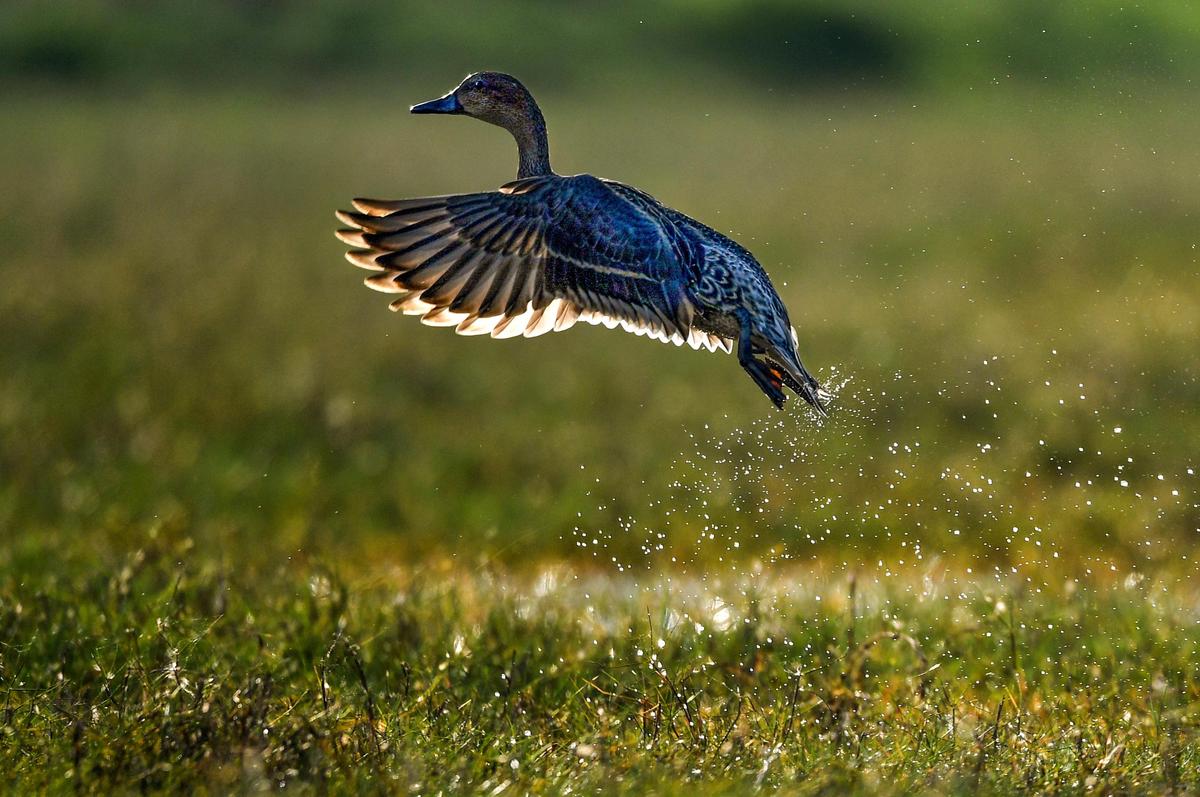
A northern pintail.
| Photo Credit:
DEEPAK KR
The checklist featured winter visitors such as common, green and wood sandpipers, white and grey wagtails, citrine wagtail, little ringed plover, whimbrel and common snipe. Raptors and passerines, including Eurasian kestrel, verditer flycatcher, black redstart, rosy starling and hair-crested drongo, added to the seasonal profile.
Srikakulam’s living corridor
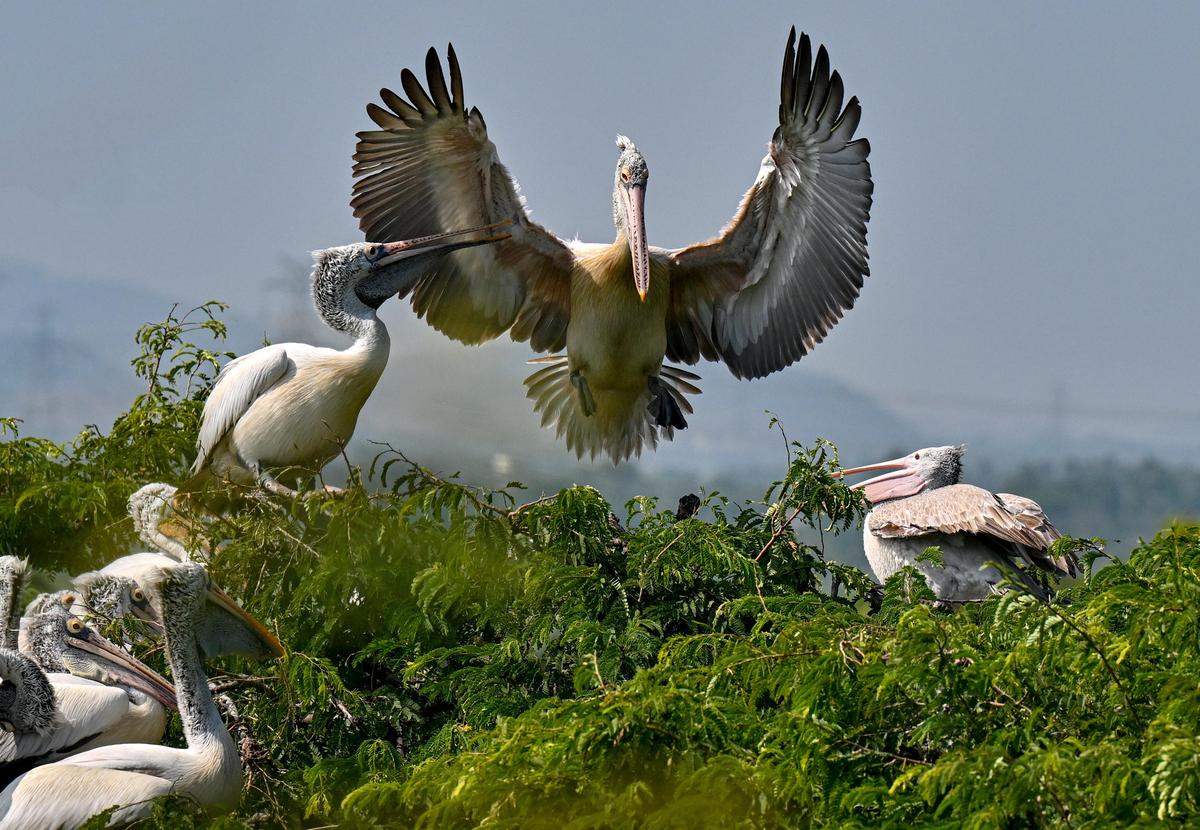
Painted storks mating at Telineelapuram in Srikakulam district.
| Photo Credit:
DEEPAK KR
In Srikakulam, birders have been documenting a broader migratory corridor extending from the Vamsadhara estuary to the Nagavali river mouth near PD Palem and Kalingapatnam. While the district’s GBBC checklist was modest this year, fieldwork over recent months indicates considerable potential.
Balaga Naveen, a birder from the district, describes the ecological range: “Srikakulam contains inland freshwater bodies such as Sylada and Vemulada lakes, alongside brackish estuaries at Naupada, PD Palem, Nagavali and Vamsadhara. Each habitat attracts a distinct assembly of migrants, from Siberian ducks to coastal waders and pelagic terns.”
Species such as pied avocet, black-bellied tern, falcated duck and pied harrier have been recorded in the broader landscape. Naveen emphasises the need for integrated thinking. “These wetlands and estuaries should be understood as an interconnected system rather than isolated birding spots. Recognition as ‘Important Bird Areas’ would offer a practical framework for safeguarding them,” he says, adding that there is negative impact from sand mining and coastal development.
Reading the numbers
At a national scale, India’s 1,086 species during the four-day exercise illustrates the country’s extraordinary avian wealth. West Bengal’s leading count of 519 species highlights how habitat diversity translates into higher tallies. Andhra Pradesh’s 319 species, though lower in comparison, is a reflection of its varied terrain and expanding citizen involvement.
For north Andhra, the GBBC is gradually evolving from a recreational listing exercise into a civic ledger of ecological change. The data assembled each February does not resolve habitat loss or regulatory gaps. It does, however, provide a cumulative record against which future shifts can be measured. In districts such as Visakhapatnam, Vizianagaram and Srikakulam, that record is steadily becoming more detailed.
Published – February 20, 2026 10:32 am IST



