


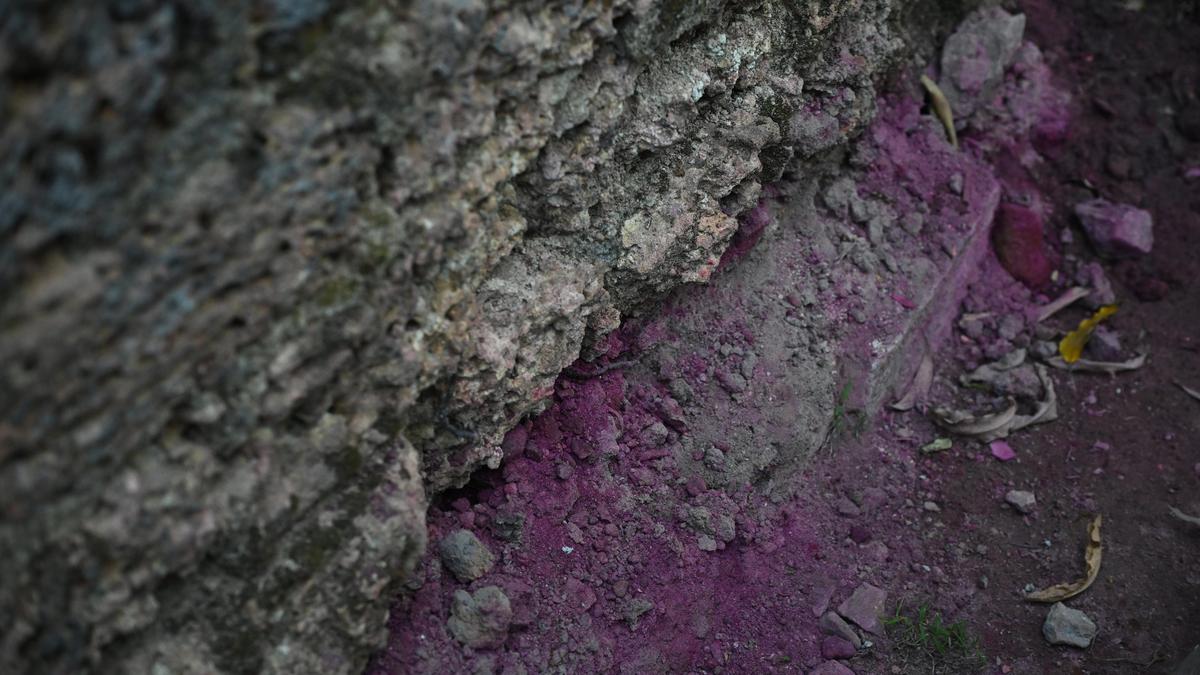
Residues from a closed dye-making unit left in the soil at Punnakkatt lane near Edappally railway station in Kochi.
| Photo Credit: THULASI KAKKAT
Workers engaged in widening of a drainage along Punnakkatt lane behind the Edappally railway station here came across a surprise recently as the soil revealed itself to be somewhat magenta in colour as they dug the ground. The residents of the area were not much surprised, though. They had seen the hue all over the ground and even in their waters long ago. The colour came from the residues left behind by a dye making unit, closed down 44 years ago.
The residues remaining intact in the soil around the property where Mangalam Dyes and Chemicals and its allied unit Southern Organic Chemicals functioned could be posing a public health and environmental risk, going by experiences of the residents in the area. The companies, started by the late M.I. Itty from Kottayam, who had a PhD in Organic Chemistry, in the early 1970s were liquidated by the Kerala High Court in 1982 after it became insolvent. The unit produced Rhodamine-B, a fluorescent dye used mostly in textile, leather and cosmetics industries.
“We were all excited when the unit was launched in our area as it brought us jobs. It took a few years for us to realise we were dealing with hazardous chemicals though we had been given safety gears. When two families in the vicinity dug up wells in their compounds, the water turned out to be reddish. The company then provided water supply connection to them. At least four families had to fill their wells after the water became contaminated,” P.V. Surendran, who worked in the company for 12 years and lives close to the property, said. Most of the families in the area have been depending on water supplied by the Kerala Water Authority for long. Mr. Surendran a few years ago developed a severe skin condition which his dermatologists suspect could have caused by the exposure to the chemicals he handled at the factory.
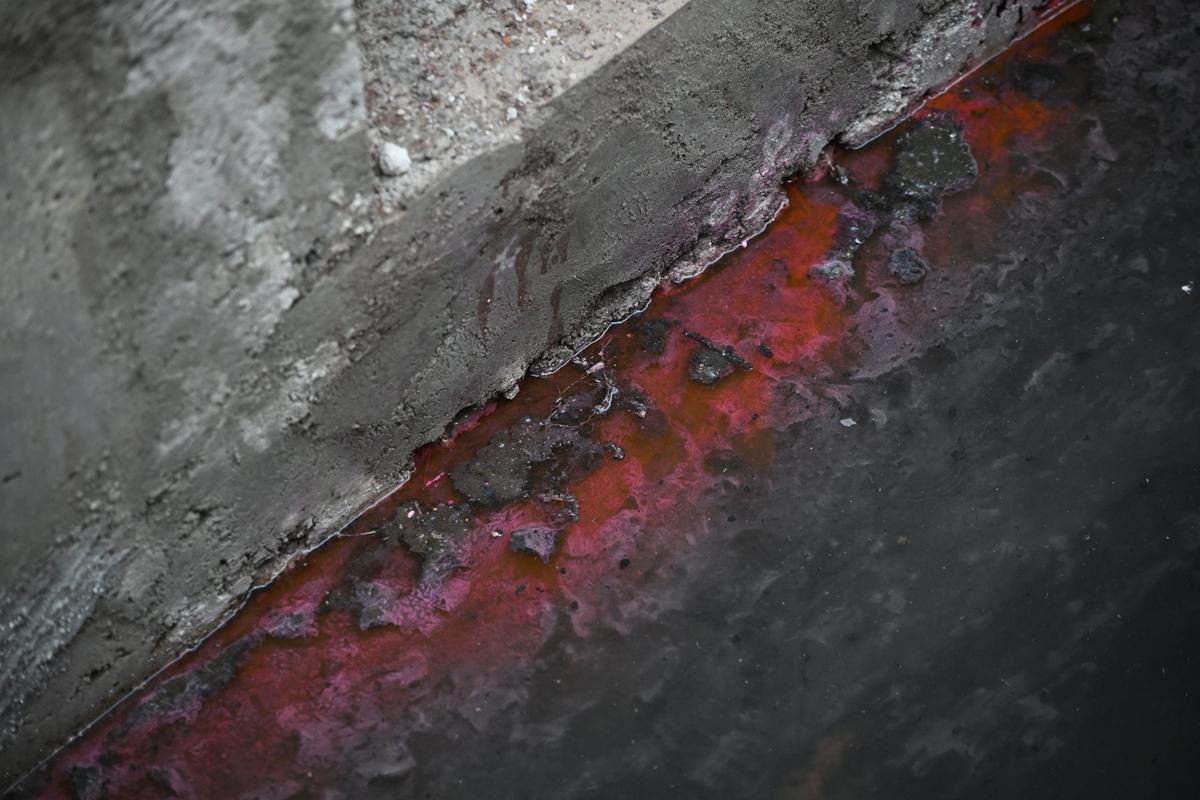
Water flowing through a drainage at Punnakkatt lane near Edappally railway station gets mixed with residues from a dye-making unit left in the soil in the area even after 44 year since the factory was closed.
| Photo Credit:
THULASI KAKKAT
He said the thick liquid waste generated from the company used to be stored in a cement platform to be dried and solidified. “I guess it must have been absorbed into the soil,” he said.
Several countries, including the US, have regulated use of Rhodamine B, recognising its potential dangers. In the US, the Food and Drug Administration (FDA) has long prohibited its use in food products, classifying it as unsafe for human consumption.
P.K. Baburajan, Chief Engineer, Pollution Control Board, Ernakulam, said the government agency was yet to receive any complaint on the alleged presence of the hazardous chemical on the ground in the area.
Ajith Haridas, former chairman, Kerala State Pollution Control Board, termed the presence of the soluble substance, reportedly toxic, in the soil “not a good sign”. “If the site is found to be contaminated, then the soil has to be dug out and disposed as per the remediation protocol,” he said.
Published – January 23, 2026 07:07 am IST



