


The years immediately after the Second World War’s end in 1945 marked a period of events and excitement not only at the macro level but also among the Scheduled Castes (SC) of Tamil Nadu. With the prospects of the country gaining freedom becoming bright, representatives of the SC community were intensely involved in the exchange of views on various issues that would affect a new nation, including those relating to the community’s welfare and future.
At the all-India level, the Congress, one of the principal political players, had its share of leaders from the community and this included Jagjivan Ram. In Tamil Nadu, there were leaders such as V.I. Munuswami Pillai, J. Sivashanmugam Pillai and P. Kakkan. The other side of the political spectrum was led by B.R. Ambedkar, who had founded the Scheduled Castes Federation (SCF) in 1942. In the State, the SCF’s face was N. Sivaraj who had occupied the post of Chennai Mayor.
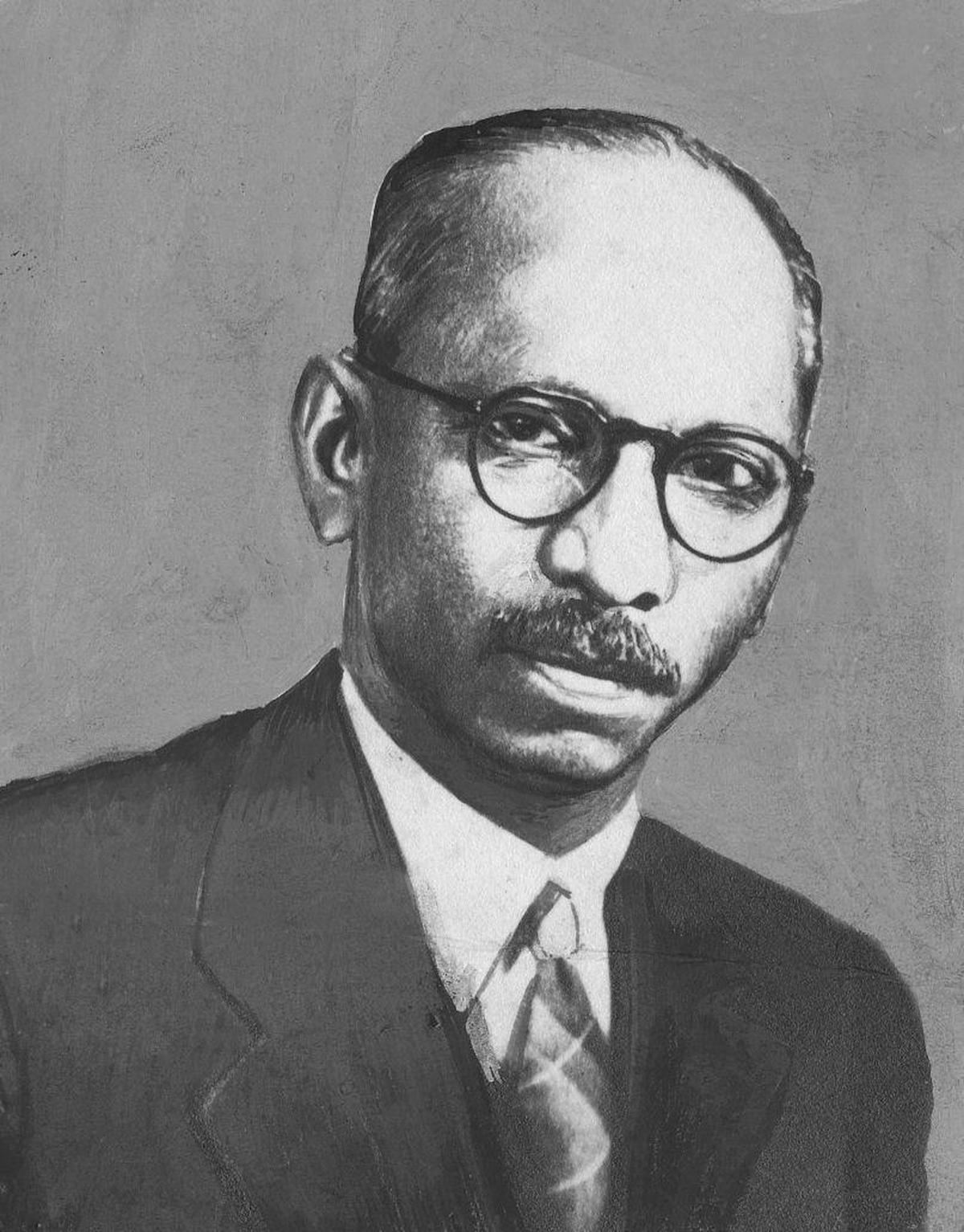
N. Sivaraj. File
| Photo Credit:
The Hindu Archives
In the 1946 elections to various provinces, the Congress demonstrated its superiority over the SCF. In the erstwhile Madras Presidency, the party bagged 27 out of 30 seats allotted to SCs. Even in the remaining three places, the SCF did not make it. It was against this backdrop that Ambedkar and his colleague Sivaraj criticised the Congress for not having given due recognition to the community.
V.I. Munuswami Pillai, who served as a Minister in the Council of Ministers headed by C. Rajagopalachari during 1937-39, issued a statement, giving an account of the “overwhelming” support that the Congress party had secured in the elections and pointed out that Sivashanmugam Pillai had been made Speaker of the Legislative Assembly, according to The Hindu on July 23, 1946.

V.I. Munuswami Pillai. File
| Photo Credit:
The Hindu Archives
Three months later, the Assembly Speaker, while addressing the West Godavari Harijan (a term widely used then to mean the SCs) Congress Convention in Eluru, came down on Ambedkar for his action of going to England to place the grievances of the community before the British Cabinet.
Sensing that it was only a matter of time that the country would gain Independence and alluding to the formation of the interim government led by Jawaharlal Nehru in September 1946, Sivashanmugam Pillai observed that “power has been given to Indians now and it is the duty of the Harijans to join the party now in power and fight within the party for their due share of such power.”

B.R. Ambedkar. File
| Photo Credit:
The Hindu Archives
Commenting on differences between Ambedkar and the Tamil Nadu’s prominent leaders of the Scheduled Caste, D. Ravikumar, the incumbent Member of Parliament from Villupuram representing the Viduthalai Chiruthaigal Katchi (VCK), says there is nothing to be surprised on this aspect. In fact, when Ambedkar, in 1935, gave a call for conversion, many leaders from the State had opposed him, as their approach towards Hinduism was based on philosophical and spiritual lines, not on the religious lines. Rettamalai Srinivasan, one of the towering leaders of the community, responded by saying that “Depressed Classes (another term then used for the SCs) are not in the Hindu fold. They are full blooded Dravidian in race”.
About a week after the announcement by the last British Viceroy Louis Mountbatten, on June 3, 1947 that freedom would be given by mid-August to two units — India and Pakistan, the Assembly Speaker wrote to Nehru on the problems of the community. He mentioned that the SCs were ignorant of important laws — the Temple Entry Authorisation Act and the Civil Disabilities Removal Act.
He called for the issue of house site pattas to the SCs, who were “at the mercy of caste Hindus” in view of the latter owning plots on which the community’s settlements were generally located. Pillai brought to the notice of Nehru how the concept of ‘Adimai Sasanam,’ a form of slavery, was in practice. Under the concept, the SCs, while borrowing money from lenders, who were invariably caste Hindus, would give it in writing that they and their descendants would serve the lenders till their loans were settled, according to a report of this newspaper on June 14, 1947.
As the days approached the first Independence Day (August 15), the community began demanding that not only one of its representatives be included in the first free Indian Cabinet but also a province be created for the SCs. On July 9, the Madras Provincial Harijan Convention, attended by lawmakers of the State legislature and the Constituent Assembly, met at the Banqueting Hall (now called Rajaji Hall) on the Omandurar Government Estate with Munuswami Pillai in the chair. Among the participants were Sivashanmugam Pillai, Kakkan and B. Parameswaran, who later became Chennai Mayor and Minister in Kamaraj’s first Cabinet.

P. Kakkan. File
| Photo Credit:
The Hindu Archives
The Hindu reported on July 10, 1947 that “the Convention looked with apprehension upon the agitation in South India for the creation of provinces on communal and racial basis such as ‘Dravidasthan.’ If, in any event, such provinces were to be formed, the Harijans should be allowed to have a separate ‘Adi-Dravidasthan.’
Other demands made at the meet were that in the appointment of envoys to Sri Lanka, Myanmar, South Africa and Malaysia, preference should be given to the community. A month later, at another meeting in the city which was presided by spiritual leader Swami Sahajananda, an open appeal was made to the Congress high command that Munuswami Pillai be included in the Cabinet.
The SCF, which continued its political work in the post-Independence years, was critical of both the Congress and the Dravidar Kazhagam (DK). At a conference of the Federation’s South Arcot district (now encompassing Cuddalore, Villupuram and Kallakurichi districts) unit in Nellikuppam which was attended by Sivaraj, speakers expressed their views that the advent of Independence did not “materially enhance the prosperity” of the community. The DK aiso did not work for the welfare of the SCs, a report of this daily stated on April 28, 1949. The Federation, which affirmed its loyalty in the leadership of Ambedkar, had pleaded for free education of SC children and assignment of “poromboke” lands free of cost to the community for cultivation.
When the Constituent Assembly adopted an Article on August 25, 1949 to provide 10-year-long stipulation for reservation of seats in Parliament and State legislature for the SCs and Scheduled Tribes, Munuswami Pillai had even then floated the idea of providing a longer period.
The Article concerned continues to be in operation, as Parliament, every 10 years, keeps on amending it to extend the quota. Last time, this was done in December 2019. Two months later, the SC members in the Constituent Assembly had urged the Union government to create an exclusive Ministry to look after the interests of SCs, STs and Other Backward Classes, a function that the Union Ministry of Social Justice and Empowerment is doing now.
In the last 30-odd years, the entire SC community in Tamil Nadu, regardless of intra-caste differences, has been regarding Ambedkar as its guiding light. It is unfortunate that statues of Ambedkar, especially in northern districts, have to be kept in cages in many places for the reasons of safety.

A CCTV installed near a grilled cage statue of B.R. Ambedkar in Kallakurichi district on January 20, 2021
| Photo Credit:
S.S. Kumar



