

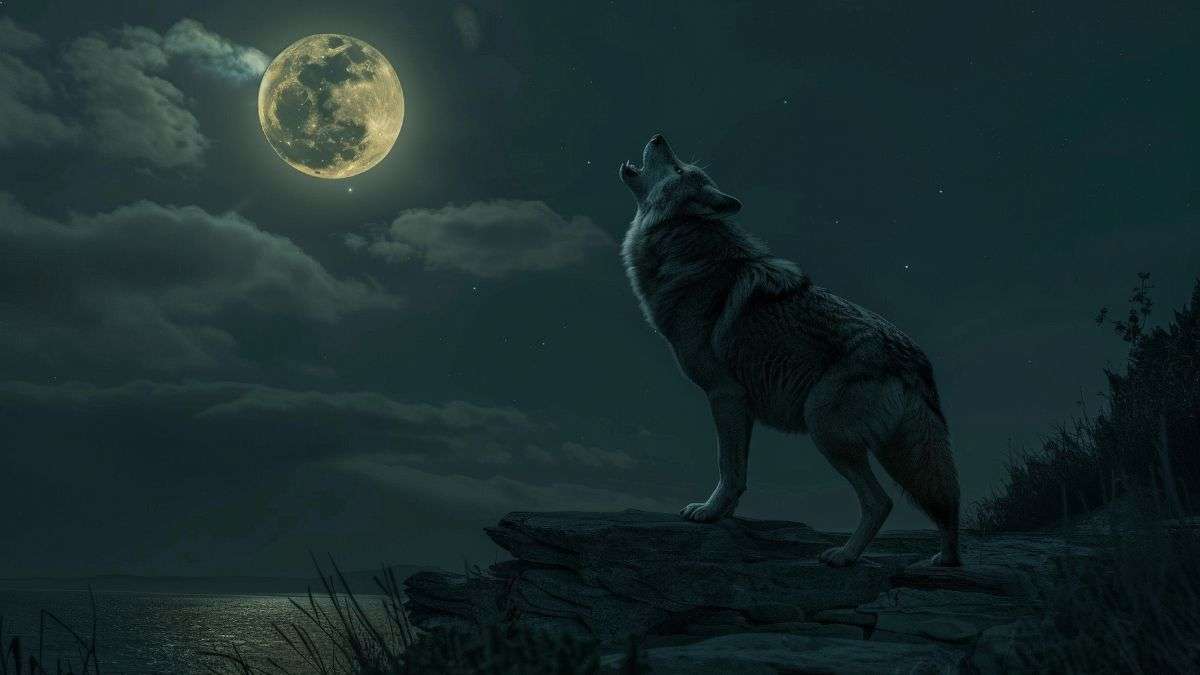

- The Wolf Moon is the first full moon of the year. We explore how it got its name, looking at winter conditions, wolf behaviour, early lunar naming traditions, and what makes January’s full moon stand out in history and observation.
- How the Wolf Moon got its name
- Why wolves were so closely linked to winter nights
- How people in ancient times named full moons
- What makes the January full moon different from the rest
The Wolf Moon is the first full moon of the year. We explore how it got its name, looking at winter conditions, wolf behaviour, early lunar naming traditions, and what makes January’s full moon stand out in history and observation.
The Wolf Moon is the first full moon of the year, and in 2026, it will be visible tonight, on January 3. It will rise bright and clear in the winter sky, catching attention simply because January nights tend to make the Moon feel closer and sharper.
Full moons have always drawn human curiosity, especially those that arrive at the edges of seasons. The Wolf Moon is one such moment. Its name has travelled through centuries, shaped by weather, wildlife, and the way people once lived closely with nature.
How the Wolf Moon got its name
The name Wolf Moon comes from a time when people named full moons based on what they experienced around them. January was harsh. Cold settled in deeply. Food was scarce. Wolves were often heard howling outside villages and settlements. That sound became closely associated with the full moon of this month, and the name stayed. It was never about superstition alone. It was observation. Simple and direct.
Why wolves were so closely linked to winter nights
Wolves are more vocal in winter, not because of the Moon itself, but due to survival. Cold weather spreads sound farther. Quiet nights carry echoes. Hunger pushes packs to communicate more often. To people indoors during freezing nights, wolf howls felt louder and more frequent. Over time, winter nights and wolves became inseparable in memory.
How people in ancient times named full moons
Long before printed calendars, the Moon helped people track time. Each full moon marked a phase of the year. Names were practical, not poetic for the sake of it. They reflected weather, animals, crops, or work that needed doing. Different cultures had different names, but the idea was the same. Use the Moon to remember what the season brings.
What makes the January full moon different from the rest
January full moons rise during the longest nights of the year. Cold air often makes the sky clearer. Light feels sharper. The Moon can appear brighter and more striking than at other times. In some years, the Moon is also slightly closer to Earth during this phase, adding to the visual effect. It stands out. Quietly, but clearly.
ALSO READ: Wolf Moon on Paush Purnima 2026: These 3 zodiac signs will see a surge in luck and wealth



