

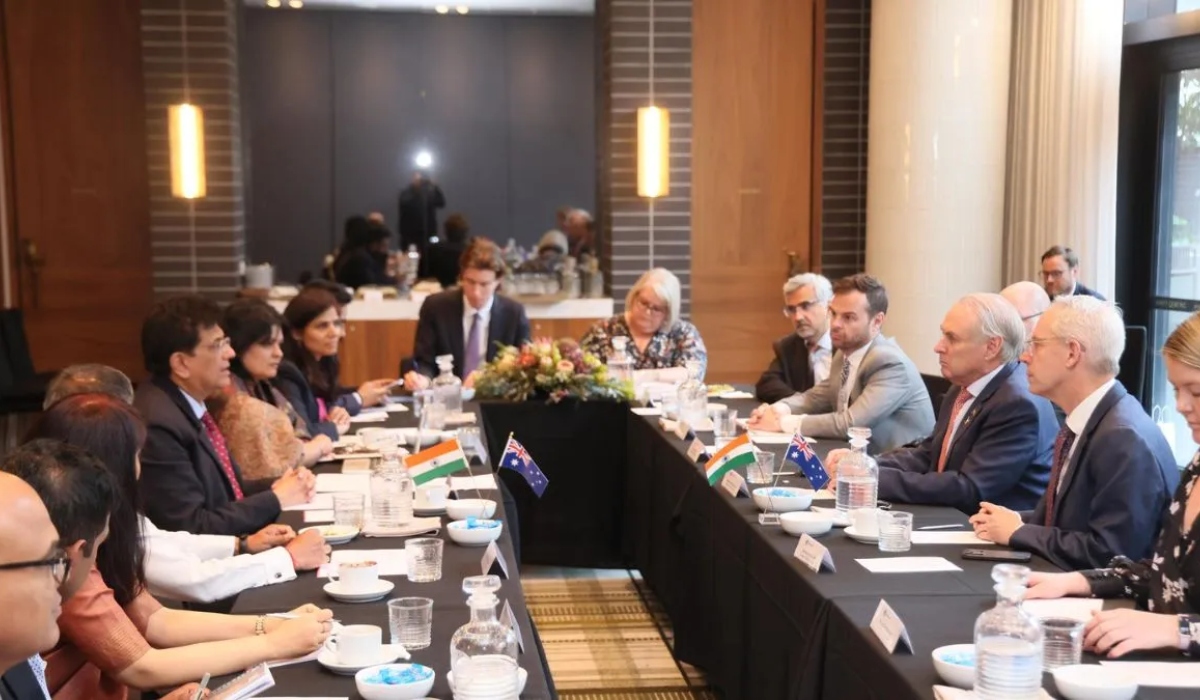

India is advancing trade negotiations with Australia, New Zealand, and Bahrain to strengthen global economic ties and boost investment opportunities.
Union Minister of Commerce and Industry, Piyush Goyal, held a meeting with his Australian counterpart Don Farrell on Saturday to review the second phase of negotiations for a bilateral trade agreement between India and Australia. According to an official statement, both nations reaffirmed their commitment to work constructively toward finalising a balanced and mutually beneficial Comprehensive Economic Cooperation Agreement (CECA) at the earliest.
The first phase of the Economic Cooperation and Trade Agreement (ECTA) between India and Australia came into effect in December 2022, marking a significant milestone in bilateral trade relations. The ongoing CECA negotiations aim to expand the scope of trade cooperation and deepen economic engagement between the two countries.
Meanwhile, India’s Ministry of Commerce issued a separate statement regarding the proposed Free Trade Agreement (FTA) with New Zealand, expressing optimism that it would enhance trade flows, strengthen investment ties, and improve supply chain resilience. The ministry noted that the agreement could also provide greater stability and improved market access for businesses in both nations. The fourth round of India–New Zealand FTA negotiations took place from November 3 to 7 in Auckland and Rotorua.
In addition to Australia and New Zealand, India and Bahrain are also advancing discussions on a trade agreement. On November 3, both countries announced the launch of talks for a comprehensive trade pact and revealed that they are close to signing an investment agreement.
During discussions between External Affairs Minister S. Jaishankar and Bahraini Foreign Minister Abdullatif bin Rashid Al Zayani, the two sides explored ways to enhance bilateral cooperation in defence, security, economy, trade, investment, health, fintech, space, and culture. A joint statement highlighted both countries’ commitment to boosting trade in electronics, petroleum, processed food, base metals, and gems and jewellery.



