

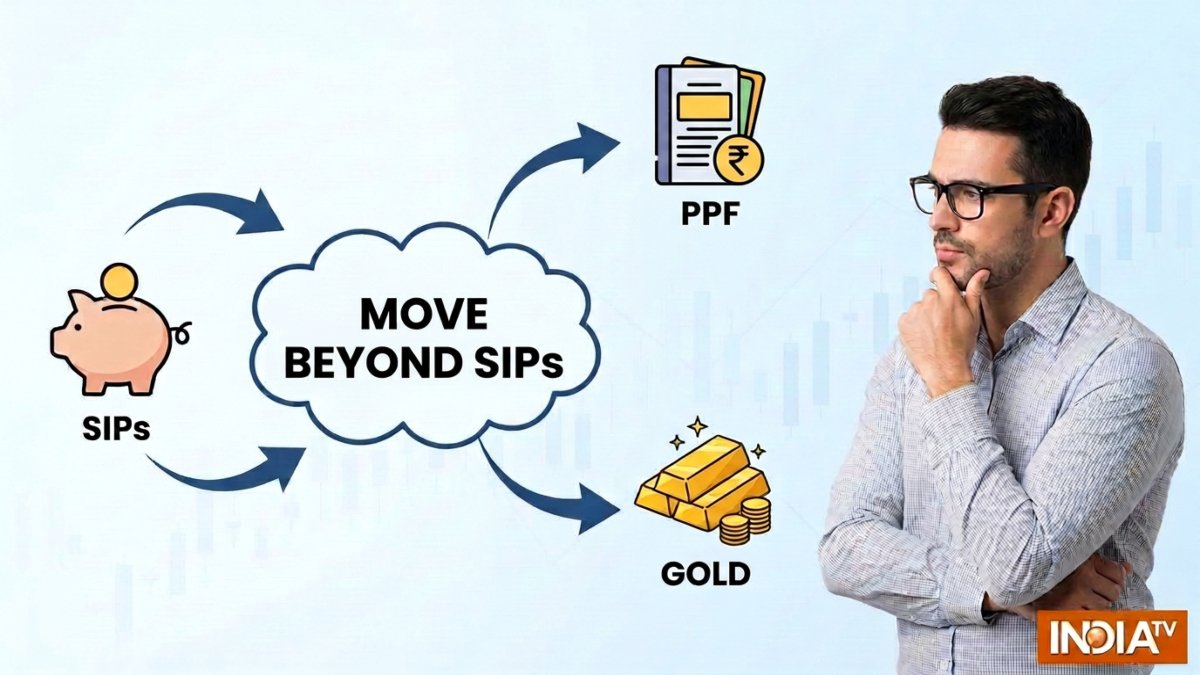

You have done everything right. Started a SIP in your twenties, increased it every time you got a raise, and religiously check your portfolio’s XIRR (Extended Internal Rate of Return). But here is an uncomfortable question – if your SIP is thriving, why does money still feel stressful? According to experts, the answer is simple: a SIP is one tool in your financial toolkit, not the entire toolbox. Let’s have a look at how to think about your money as a complete plan, not just an investment habit.
Protect yourself before you grow your money
Imagine building a beautiful house with no insurance against fire or floods. That is what investing without protection looks like. According to CA Ruchika Bhagat, MD, Neeraj Bhagat & Co., investors must ask themselves two questions before increasing the SIP amount.
• If something happened to me tomorrow, would my family be financially secure?
• If a family member fell or I became seriously ill, would a hospital bill wipe out my savings?
A Rs 1 crore term plan for a 30-year-old costs roughly Rs 800-1,200 a month – often less than an OTT subscription bundle, yet it is the one policy most people delay the longest.
Build your ‘don’t touch this’ fund
According to Bhagat, before your money goes to work in mutual funds, set aside 3-6 months of your monthly expenses in a savings account or liquid fund. Without it, a job loss or medical emergency forces you to break your investments at exactly the wrong time – usually when markets are down. This fund isn’t meant to grow; it’s meant to protect everything else you’re building.
Kill expensive debt first
If you are paying 36-42 per cent annual interest on a credit card while your SIP earns you 12 per cent a year, you’re losing money, not making it. A simple rule: any debt costing more than 12-15 per cent interest (credit cards, personal loans) should be cleared before you invest a single extra rupee elsewhere.
Do not put all your eggs in the equity mutual fund basket
SIPs are usually equity-focused, which is great for long-term growth but volatile in the short term. A balanced investor spreads money across equity, debt, and gold – and the right mix depends on age and risk appetite.
A tentative starting point, by age:
| Age Group | Equity | Debt (PPF/EPF/FD/Debt Funds) | Gold |
| 20s | 65-70% | 15-20% | 5-10% |
| 30s | 55-65% | 20-25% | 5-10% |
| 40s | 45-55% | 30-35% | 5-10% |
| 50s | 30-40% | 40-50% | 5-10% |
| 60s+ | 15-25% | 55-65% | 5-10% |
By risk appetite instead:
| Profile | Equity | Debt | Gold |
| Conservative | 30-40% | 50-55% | 10-15% |
| Moderate | 50-60% | 30-35% | 8-10% |
| Aggressive | 70-80% | 15-20% | 5-8% |
“These are starting points, not rigid formulas – your dependents, liabilities, and job stability matter as much as your age. Note that your emergency fund (Step 2) sits outside this split entirely, and within “Debt,” PPF/EPF works well for long-term goals while debt funds or FDs suit anything 3-5 years out,” CA Ruchika Bhagat added.
Give every investment a job
Instead of one big pile of “investments,” label them: “Retirement – 25 years away,” “Daughter’s college – 12 years away,” “House down payment – 4 years away.” When each SIP has a clear purpose and timeline, you won’t panic and withdraw during a market dip, because you’ll know exactly why that money exists.
Don’t leave tax-saving for March
Rushing into ELSS or NPS in the last week of the financial year leads to poor choices made under pressure. Plan tax-saving investments in April, not March; you will make sharper decisions.
Give your money plan a yearly health check
Your income grows, your responsibilities change, your goals shift. Once a year, ask: Is my insurance cover still enough? Is my asset mix still right? Am I on track?
This is why experts view a SIP as a fantastic habit, but not a financial plan on its own. Real security comes from protecting first, cushioning against shocks, clearing costly debt, diversifying sensibly, and reviewing regularly.
ALSO READ:
Mutual funds vs direct stocks: Expert explains which one is actually for you, check details
(This article is for informational purposes only and should not be construed as investment, financial, or other advice.)



