

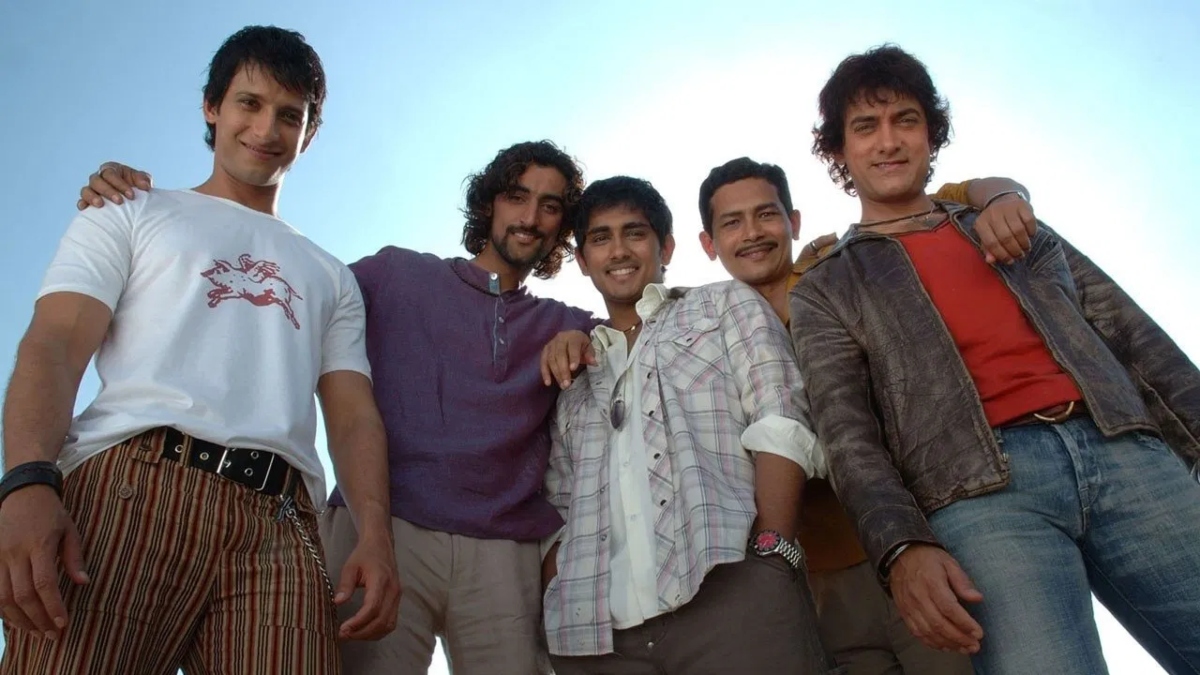

There is something about Rang De Basanti’s title track that makes patriotism feel less like a slogan and more like something that lives around us. The song does not begin with grand declarations. Instead, it reaches for the soil, the wind, the breath and the blood. It takes things that are part of everyday life and turns them into images of love for the country.
Recipe of freedom made of India’s five elements
One of the most striking lines is: ‘Thodi si dhuul merii, Dharti ki mere watan ki’. The dust of the land becomes the first ingredient. It is simple, almost ordinary, but carries a sense of belonging. The earth is where we come from, where we stand and, for many of the country’s freedom fighters, where their final resting places lie.
Earth, air and the breath of a nation. The song then moves naturally towards air: ‘Thodi si khushbu baurai si mast pawan ki, Thodisi dhondhane waali dhak dhak dhak dhak dhak saansein’.
The imagery of the ‘mast pawan’ brings movement and freedom into the song. Air, or Vayu, is associated with motion and breath. The reference to ‘saansein’ makes that connection even more intimate. The country is not simply a piece of land; it is something that is breathed in and experienced.
The lyrics make the elements feel alive. Earth gives the song its roots, while air gives it movement and breath.
When blood becomes the colour of sacrifice
Then comes perhaps the most powerful image in the song: ‘Jin mein ho junoon junoon woh boondeee laal lahu kii’. The red drops of blood represent something far heavier than emotion. They evoke the sacrifice of those who gave their lives for the country and the passion that drove them to do so.
This is where the song’s connection with India’s freedom struggle becomes particularly powerful. Blood is not presented simply as loss. It becomes a symbol of junoon, courage and willingness to sacrifice.
The five elements and the idea of freedom
The Indian philosophical tradition of Pancha Bhuta describes five fundamental elements: Prithvi (earth), Jal or Ap (water), Agni (fire), Vayu (air) and Akasha (space or ether).
The Rang De Basanti title track can be read through this elemental lens. The dust of the earth evokes Prithvi; the breeze and breath bring in Vayu; the imagery of red blood and heat can be associated with transformation and Agni; water, with its fluidity and life-giving quality, forms another part of the natural world; and Akasha, or space, provides the vastness in which all these elements exist.
The song does not need to name these five elements to make the connection feel intuitive. Its poetry constantly moves between the physical world and the emotional world.
From Bismil and Bhagat Singh to Rang De Basanti
The title itself carries another layer of history. ‘Mera Rang De Basanti Chola’, associated with revolutionary poetry and the legacy of Bhagat Singh and Ram Prasad Bismil, uses the Basanti colour as an image of sacrifice. Prasoon Joshi’s lyrics bring that imagery into a contemporary film and give it to a younger generation. The soil, wind, breath and blood are no longer distant references to history. They become immediate and personal.
That is perhaps why the song continues to feel so powerful during Independence Day celebrations. It does not only remind us that freedom was won in the past. It makes us think about the people, the land and the sacrifices that gave that freedom meaning.
In Rang De Basanti, patriotism is not just a flag or a colour. It is the dust beneath our feet, the wind we breathe, the elements that sustain life and, ultimately, the sacrifice of those who believed their country was worth giving everything for.
On Independence Day, that makes the song feel less like an old film track and more like a reminder: the idea of a nation is made up of the land we inherit, the air we share, the lives we live and the sacrifices we remember.
Also Read:
This was the first movie released on Independence Day in India



