


Lohagad Fort has been in the news lately, but not for the reasons it is usually known for. The death of 26-year-old Ketan Agarwal, son of Pune-based real estate businessman Vishal Agarwal, has brought the historic site into sharp focus. What was first described as an accidental fall during a visit has since taken a darker turn, with police now investigating it as a murder case and arresting Ketan’s fiancée Siya Goyal along with her alleged lover Chetan Chaudhary.
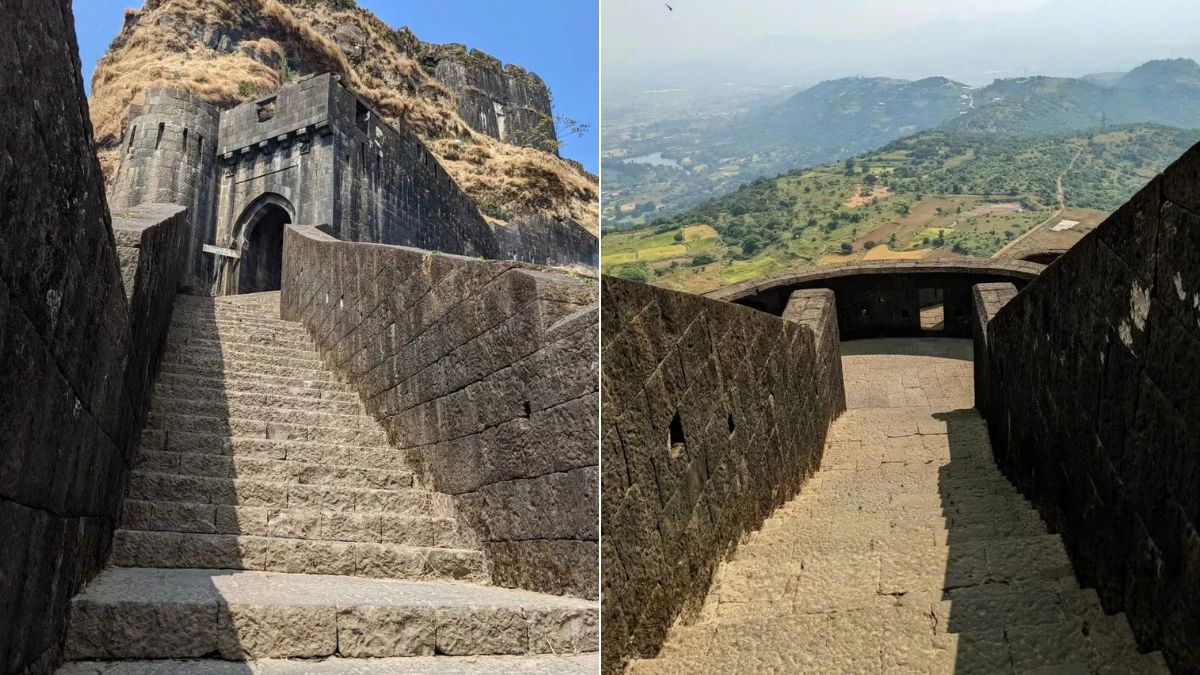
As the story continues to unfold, it has also sparked a renewed interest in Lohagad Fort itself. For many, it is a familiar name, especially among trekkers and weekend travellers. Set high in the Sahyadri hills near Lonavala, the fort has quietly stood for centuries, carrying with it layers of history, stories of shifting power, and views that stretch endlessly across the valleys below.
Where is Lohagad Fort located?
Lohagad Fort sits close to Lonavala in Maharashtra’s Pune district, roughly 50 kilometres from Pune city. Rising to about 1,033 metres above sea level, it offers a commanding view of the surrounding landscape. The fort is part of the Western Ghats, and its proximity to Visapur Fort adds to the area’s appeal, drawing both history enthusiasts and trekkers who often explore the two together.
What does Lohagad mean?
The name “Lohagad” comes from Marathi, where “Loha” means iron and “gad” means fort. Put together, it translates to “Iron Fort”, a name that hints at its strength and the natural advantage it holds due to its location.
History of Lohagad Fort
Pinning down the exact origins of Lohagad Fort is not straightforward. What is clear, however, is that it has been around for centuries and has seen many rulers come and go. Over time, it has been associated with several dynasties, including the Satavahanas, Chalukyas, Rashtrakutas, Yadavas, Mughals and Marathas.
The fort is most strongly linked with Chhatrapati Shivaji Maharaj. He captured Lohagad in 1648, lost it to the Mughals under the Treaty of Purandar in 1665, and then reclaimed it in 1670. These shifts reflect the larger political struggles of the time, with forts like Lohagad playing a crucial role in controlling territory.
There are also accounts suggesting that Lohagad was used to store wealth gathered during Maratha campaigns, including the well-known Surat expedition. Its secure location would have made it a practical choice for such purposes.
What makes Lohagad Fort unique?
One of the first things that stands out about Lohagad is the Vinchu Kata, or “Scorpion’s Tail”. This long, narrow extension of the fort stretches out from the main structure and is both visually striking and strategically significant. In earlier times, it would have served as an added defensive feature.
The fort’s gateways and walls are another highlight. Many of them have survived remarkably well, offering a sense of how the fort might have looked in its prime. Walking through these structures today gives visitors a tangible connection to its past.
Why is Lohagad Fort important today?
Today, Lohagad Fort is best known as a trekking destination. During the monsoon, the entire region transforms, with green hills, mist and flowing streams making the climb especially popular. It is accessible enough for beginners, yet rewarding enough to keep people coming back.
Beyond tourism, the fort continues to hold cultural and historical value. It is recognised as an important heritage site, and efforts by the Archaeological Survey of India, including self-guided digital audio tours, are helping visitors engage more deeply with its story.
Even now, centuries after it first rose to prominence, Lohagad Fort remains more than just a scenic spot. It is a place where history feels close at hand, quietly reminding visitors of the many lives, battles and moments that have shaped it over time.



