

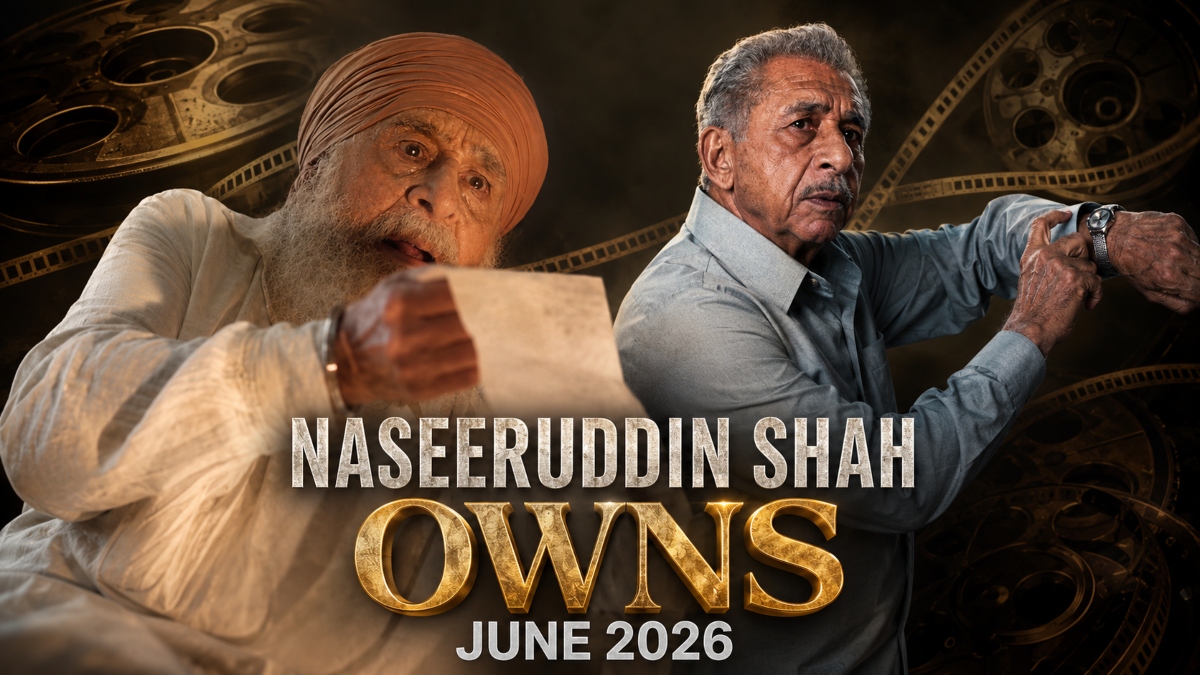

For years, the conversation around actors has been split between films made for theatres and content created for streaming platforms. Naseeruddin Shah, however, seems completely uninterested in that debate. Whether the audience is watching him on the big screen or from their sofa at home, the veteran actor brings the same level of commitment to every role.
June 2026 has offered perhaps the clearest example of that consistency and calibre.
Within a matter of weeks, Veteran actor Naseeruddin Shah has appeared in two projects that could not be more different. On one side is Made in India: A Titan Story, a series tracing the rise of one of India’s most recognisable brands and the people behind it. On the other is Imtiaz Ali’s Main Vaapas Aaunga, an intimate and emotional story rooted in memory, love and the scars left behind by Partition.
Different mediums, different worlds, different audiences. Yet in both projects, Shah approaches the material with the same sincerity and attention to detail, reminding viewers why he remains one of Indian cinema’s most respected performers. The projects could not be more different in tone, scale or subject matter. Yet both are united by the presence of an actor who continues to treat every role as an opportunity rather than an obligation.
Becoming JRD Tata without turning him into a monument
In Made in India: A Titan Story, Shah takes on one of the most significant figures in Indian corporate history: JRD Tata.
Biographical portrayals often fall into a familiar trap. Heroes of history are usually painted to be larger-than-life characters, thereby leaving no scope for the human in them. There lies a danger of turning such greats into idols and not humans at all.
It is precisely here that the performance of Shah becomes fascinating. Rather than focusing solely on Tata’s accomplishments, he seems intent on capturing the man himself. J.R.D. Tata’s contribution to Indian industry is already part of the public record. What is harder to portray is the personality, conviction and quiet determination that shaped those achievements in the first place.
Shah’s interpretation works because it feels less concerned with celebrating a legacy and more interested in understanding the person who built it. Shah’s screen presence lends credibility to the role because he understands something many actors miss: authority rarely needs to announce itself.
The casting itself feels telling. Few actors in Indian cinema possess the combination of gravitas, intelligence and restraint required to play a figure whose impact extended far beyond boardrooms. Shah brings those qualities naturally. At a time when streaming platforms are investing heavily in stories based on real people, his performance demonstrates why experience still matters.
In Main Vaapas Aaunga, he finds power in vulnerability
If Made in India demands authority, Main Vaapas Aaunga asks for something entirely different. Imtiaz Ali’s film is built around themes of memory, displacement and emotional inheritance. These are subjects that require sensitivity rather than spectacle, and Shah responds with one of the most understated performances of the year.
Unlike the larger-than-life historical figure he portrays in Made in India, here the emotional stakes are deeply personal. The character exists within a story shaped by loss and remembrance, forcing Shah to work in quieter registers.
The contrast between the two projects is striking. Many actors excel when playing commanding figures. Far fewer can move seamlessly from institutional history to intimate human drama. Shah’s ability to do both within the same month is what makes this stretch of his career particularly impressive.
The medium has changed, his approach has not
Perhaps the most interesting aspect of Shah’s 2026 run is that it arrives during a period when actors are increasingly navigating multiple formats. The old hierarchy that placed cinema above television has largely disappeared. Streaming platforms now attract major filmmakers, larger budgets and ambitious storytelling. Yet some performers still seem to adjust their effort depending on the platform. Shah does not.
Whether appearing in a web series, an independent film or a theatrical release, he approaches the material with the same level of commitment. Audiences are never given the impression that one project matters more than another. That consistency is becoming increasingly rare.
In an entertainment ecosystem driven by visibility, algorithms and opening-weekend numbers, Shah continues to prioritise the fundamentals of performance.
A reminder of why longevity alone is never enough
The easiest way to discuss Naseeruddin Shah is through the lens of longevity. After all, few actors remain relevant after five decades in the profession. But longevity, by itself, means very little.
Indian cinema is filled with veterans who continue to work. What separates Shah is his refusal to rely on reputation. Even now, he seeks out roles that demand effort, curiosity and reinvention. That quality explains why his performances continue to resonate across generations.




