


Rinku Chauhan was four and her sister Jayashree all of two months when they were married to two brothers in their village of Sukarlai in Rohat tehsil of Rajasthan by their grandmother and the elders of the caste. Rinku’s parents, who were not present at the ceremony, refused to accept the wedding. They decided to take on the panch, a body of elderly men within a caste, which takes decisions on a range of matters.
This rebellion led to the caste leaders announcing a social boycott (‘hooka-pani band, or the stopping of shared resources’). It has now been 26 years. The social boycott means that no member of their caste, including distant and close relatives, is allowed to interact with the family. The family has not been invited to weddings or death ceremonies all these years. No one in the village has any economic association with them.
This rebellion led to the caste leaders announcing a social boycott (hooka-pani band, or the stopping of shared resources). It has now been 26 years. The social boycott means that no member of their caste, including distant and close relatives, are allowed to interact with the family. The family has not been invited for weddings or death ceremonies all these years. No one in the village has any economic association with them. Intermittently, the family was asked to pay penalties ranging from ₹5,000 to ₹2 lakh, for which they eventually had to pawn their mother’s jewellery. They were also forced to organise feasts for meetings of the panch leaders. These meetings were held to decide how much longer the ostracisation would extend. Rinku’s father was routinely called for these meetings and allegedly humiliated by being made to stand apart from the rest of the gathering.
Rinku, now 30, grew up to become a lawyer, and about three years ago, she filed a criminal case against the panch. She is now fighting it in the Pali district court, where she is an advocate. “Through life, my family would keep me home because they didn’t want any more trouble because of me. Now, though, my fellow lawyers are standing with me,” she says. Across Rajasthan, in districts like Jodhpur Rural, Barmer, Jaisalmer, Jalore, Nagaur, Pali, and Banswara, caste panchayats rule with an iron grip, running extrajudicial courts. In March 2025, the judiciary stepped in after they saw a number of cases detailing instances of social ostracisation by panch groups. The Jodhpur Bench of the Rajasthan High Court ordered the formation of a commission of advocates and civil society members to probe the matter. The commission submitted its report in April 2026, following which the High Court ruled that social boycotts and diktats by caste panchayats are unconstitutional, violating fundamental rights under Articles 14, 15, 19, and 21.
Those who sit in judgment
In her chamber in the Pali district court, Rinku says her family had to leave their ancestral village, where they owned land, and move to Pali, about 20 kilometres away. Here, her father had to take up work as a factory labourer to sustain the family of six. “When my grandmother died, no one in the extended family turned up for the rituals,” she says. Rinku remembers attending a panch meeting once, where she spoke against the practice of social ostracisation. “I was fined ₹5,000 for speaking, as women are not allowed to,” she says. Over the years, following police complaints, two of the caste leaders were arrested, but, she says, “They were let off soon. Within the court premises, they mocked me, saying I would never be accepted by society.”
Caste panchayats in India, also called khap or jatiya panchayats, panch patels, or bhang jade (those who resolve disputes), are informal bodies mostly prevalent in parts of Rajasthan, Haryana, and western Uttar Pradesh. They differ from the constitutional Gram Panchayats created under the 73rd Constitutional Amendment (1992), which are elected, democratic bodies serving all villagers, with statutory powers over local governance, development, and minor disputes.
Panch leaders enforce traditional norms by imposing social boycotts, heavy fines, and other coercive measures against those who deviate from the community’s self-prescribed rules. Eventually, the victim is ousted from their community and sometimes, from the family. Reasons for ostracisation can range from marital discord and marrying outside the caste or sub-caste to land disputes and even standing in support of someone who has been ostracised.
Take the case of Tulsiram, a former municipal councillor in the city of Pali, roughly 100 km from Jodhpur. A former trade union leader, Tulsiram stood by the daughter of a family friend who had a long-standing marital dispute with her husband. “I thought of her as my daughter, especially since she had lost her father. However, the caste leaders, who were siding with her husband’s family, announced a social boycott of my entire family,” says the former mill worker, sitting in his single-storey house, which he shares with his son’s family.
He says the caste panchayat initially imposed a fine, which they call a dand (punishment) of ₹1,500 and then asked for ₹2-3 lakh as expenses in organising their meetings, which saw the participation of some 400-500 leaders from the caste. He says the boycott was even extended to his daughter’s family, who lived in another village. “They were made to pay a penalty of ₹2.5 lakh for re-entry into the samaj (community) and ending their social boycott,” he adds.
The men who put themselves in charge
Traditionally, a khap had 84 villages under it. However, with the reorganisation of villages, now each khap lords over 10 or more villages. Most of these tightly-knit organisations are organised on familial or hereditary lines. If a certain caste leader passes away, then the most likely choice to replace him is his son or the next male heir. “Whoever is rich and powerful can become a khap leader,” says Sanjeev Chowdhary, from Megharda village, in Beawar district, who has been socially excluded from his community after he filed a police complaint following a land dispute.
Chowdhary, who has a granite polishing business, says the total penalty imposed on him by the caste panchayat has now climbed to ₹84 lakh. Despite many FIRs and counter-FIRs and approaching senior political leaders, he says no inroad has been made and his family remains socially ostracised. “We were not even invited to the wedding of our elder sister-in-law,” he says.
There are designated buildings where meetings of these caste panchayats are held, and some of these organisations even own substantial amounts of land. The money collected from people is meant to be given to a victim, but it is allegedly split among the khap leaders. The diktats of social boycott and penalties imposed by these organisations are often written orders listing out the “crimes” committed and “punishments” thereof. Some of these are on notarised affidavits.
However, since the recent spate of FIRs filed and after the court stepped in, there has been a tweak in the way they are written. “Punishments” are now called “honours”. “This has been done to evade immediate police action,” explains Chowdhary, displaying such an order. The panch allegedly also misuses certain community norms. For instance, under the noyta system, villagers are compelled to contribute ‘noyta (money)’ for community functions or to collectively fight a village-level problem.
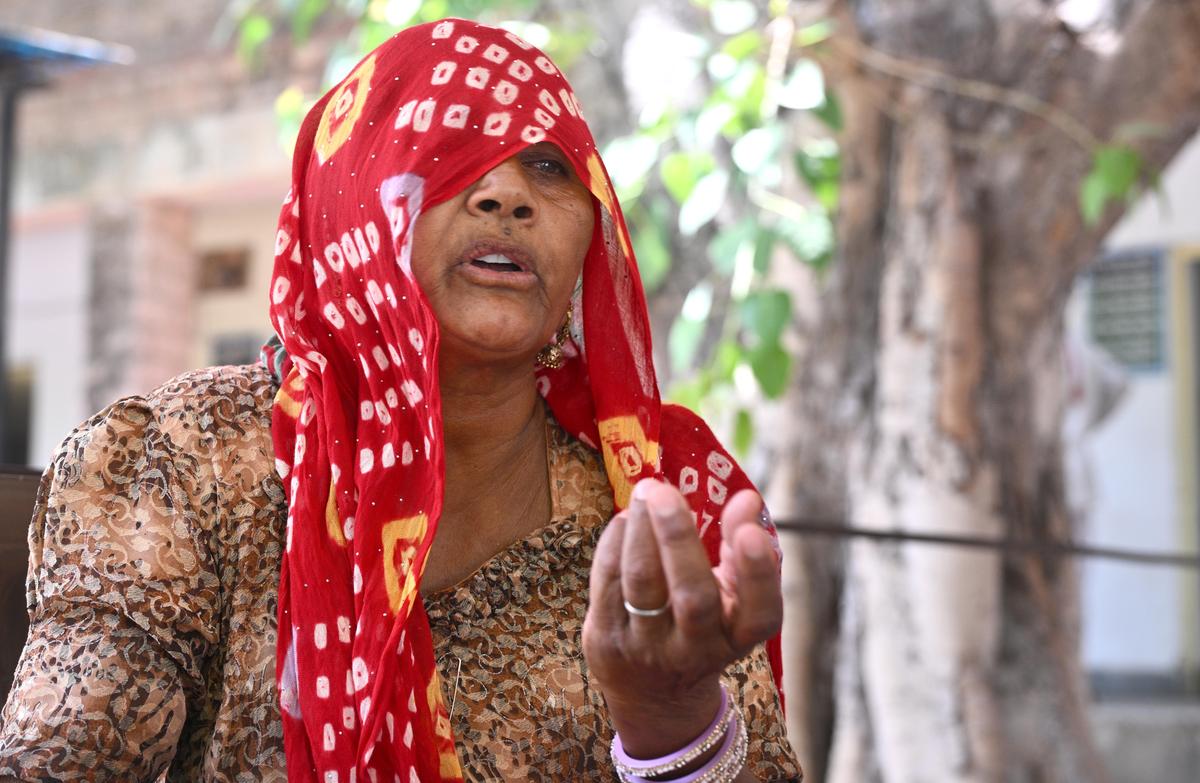
Bhanwari Devi (Bano), whose family has been systematically socially ostracised in Pali, Rajasthan.
| Photo Credit:
SHASHI SHEKHAR KASHYAP
But Bhanwari Devi (Bano), from Hapat village of Pali district, whose family was socially ostracised for refusing to accept the child marriage of her two daughters, says she was asked to organise feasts “serving mutton and liquor” to all caste leaders. “I don’t have enough to feed my family. How can I pay for food for all these gatherings?” Bano says.
The need for a targeted law
Ramlal Prajapati has a similar story of social boycott to tell. His daughter got married about five years ago within their community, but when she gave birth to a girl child, her in-laws allegedly physically and mentally abused her. “She came back to us, but soon her in-laws began to put pressure on her to go back without her child. This was done through the community leaders,” he says. When she refused, the community elders announced a social boycott. The penalty for an entry back into the community was fixed at ₹5 lakh. The frail Prajapati, who has a small portion of land which he tills, does not have the money.
The report of the commission notes that despite its devastating impact, there exists no central legislation in India that criminalises and punishes the concept of social boycott as an offence. “In the absence of a specific law that explicitly recognises social boycott as a punishable offence, investigative agencies face significant difficulty in determining the appropriate legal provision under which to register and investigate such complaints,” says advocate Shobha Prabhakar, who is fighting numerous such cases on behalf of the victims, and who was on the commission that submitted its report recently.
The practice prevails irrespective of religion. Sheru Khan lives in Bambara village of Jaisalmer district. Khan’s adult daughter married a man from the same caste as her own, but since the two had chosen to get married to each other, rather than have their parents arrange the marriage, through traditional family negotiations, the panch was unhappy. The chief ‘khalifa (headman)’ imposed the traditional social boycott known as haath band (handcuffed) on Khan and his family. In his April order, based on the commission’s report, Justice Farjand Ali ordered the Rajasthan government to formulate a policy with standard operating procedures to curb these actions. He suggested a law similar to Maharashtra’s. The Maharashtra Protection of People from Social Boycott (Prevention, Prohibition and Redressal) Act, 2016, (enforced in 2017) criminalises social boycott by caste groups, making it the first such law in India. It punishes offenders with up to 7 years in jail, ₹5 lakh fine, or both.
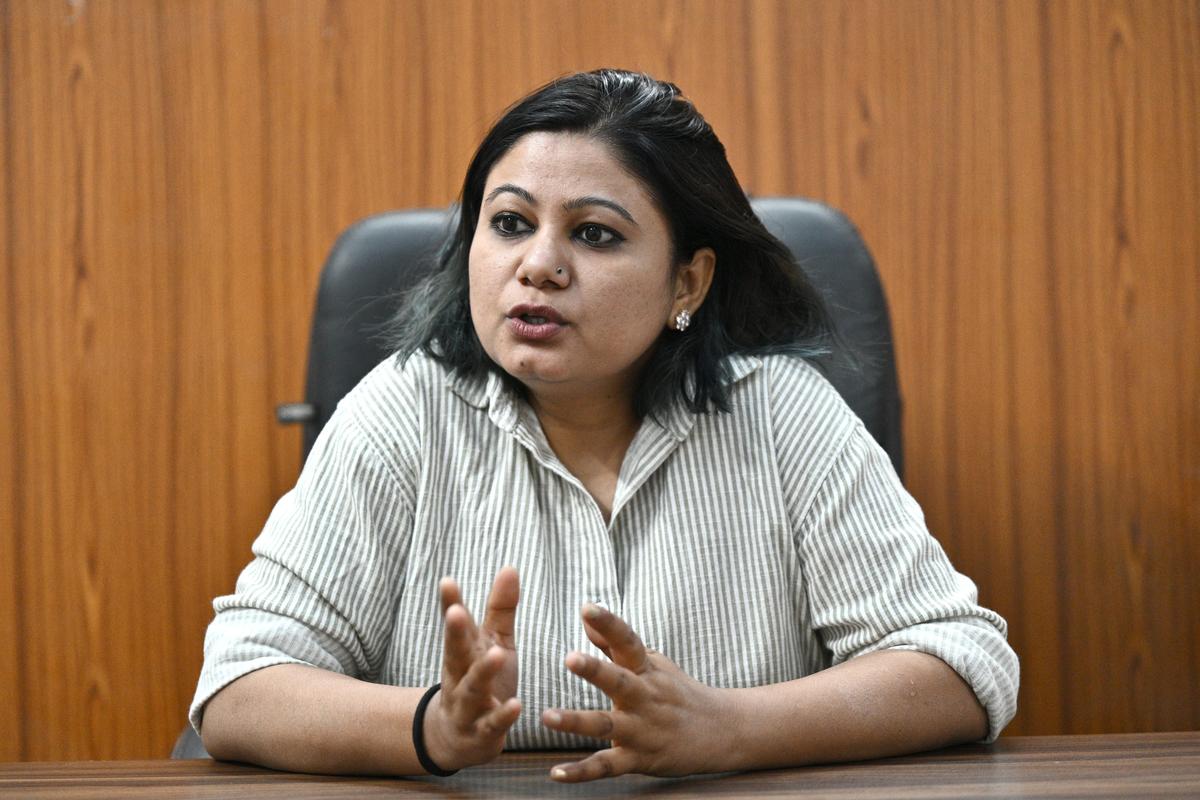
Advocate Shobha Prabhakar, who was part of the commission appointed by the court to probe the matter of families facing social ostracisation, in Jodhpur.
| Photo Credit:
SHASHI SHEKHAR KASHYAP
Advocate Prabhakar has now begun a ‘Rajasthan Social Boycott Prevention Campaign’ on social media. “The campaign aims to compel the government into enacting a specific law that criminalises social boycott. The law should also include provisions for compensation and rehabilitation of the victims,” she says. The campaign addresses the establishment of a robust support mechanism for victims, including a helpline, fast-track courts, psychological counselling, and financial assistance. “Investigations should be completed within 90 days and a senior officer of Additional SP rank as Nodal Officer should monitor all pending cases of social boycott,” she adds. Victims should be provided security to protect them from community pressure, the campaign demands. No panch was willing to speak for this story.
sreeparna.c@thehindu.co.in
Edited by Sunalini Mathew



