

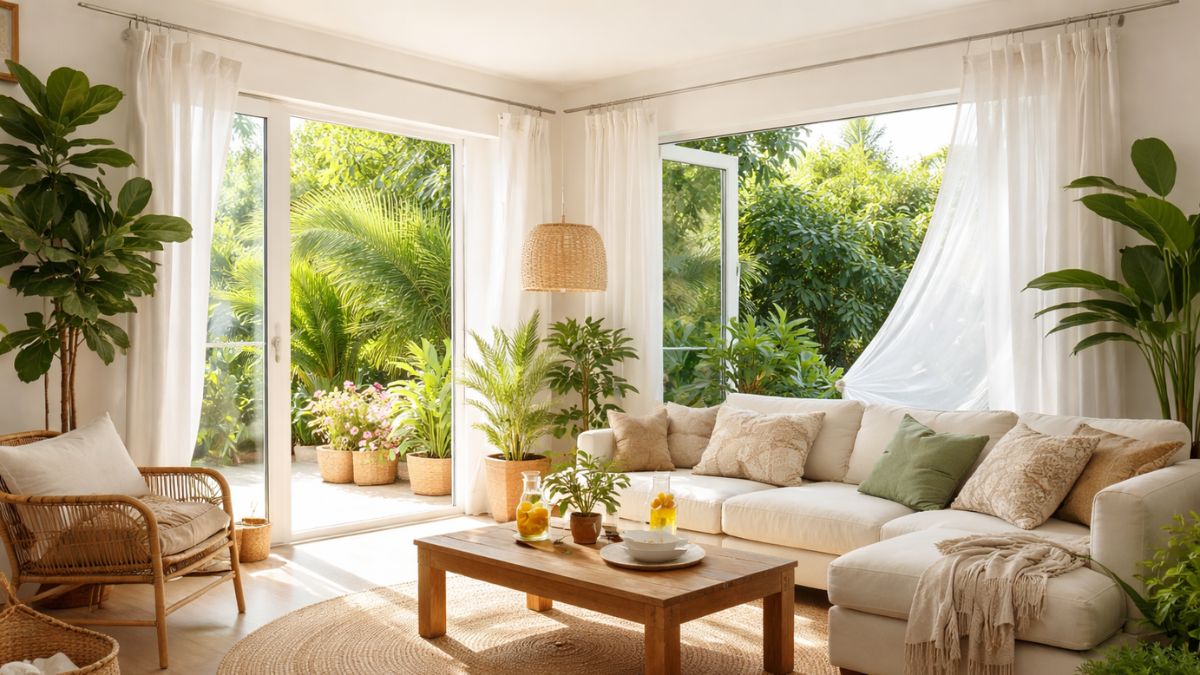

As temperatures rise, most homes respond the same way. The air conditioning is turned on for longer periods of time, fans remain operating throughout the day, and electric bills keep increasing silently. However, what if you could have a cool place without depending on these appliances?
According to Rohana Sarah, Founder and CEO of Green World Design, the key lies in thinking about cooling differently. “Thermal comfort is often addressed too late. Cooling should be built into how a home is planned, not added later,” she explains.
Start with airflow, not appliances
One of the simplest ways to cool a home is also the most overlooked: air movement. Ventilation helps to ensure that new air enters and circulates through the house. This is possible when the window openings are made such that they are consistent with the wind direction. The benefit of proper ventilation is that there will be less requirement for mechanical cooling.
Simple things such as maintaining unobstructed airflow and the opening of windows during cool periods are very helpful in this regard.
Reduce direct heat exposure
Not all sunrays are desired during the summer months. Houses that receive sunrays from the west side warm up quickly and stay warm for longer periods of time. Design features such as shaded balconies, verandas, and recessed windows assist in blocking these rays before entering the building. Curtains, blinds, and even reflective films can act as simple fixes if structural changes are not possible.
The idea is to stop the heat at the source, rather than cooling it after it has already entered.
Use greenery as natural insulation
Plants do more than add aesthetic value.These assist in providing a cool microclimate around your house. The use of trees, terrace gardens, and even plant pots on balconies will lower the temperature of the ambient air due to the effect of heat absorption by the greenery and its shading capacity.
In the long run, this provides a natural heat shield for your house.
Design for long-term comfort
Such houses would maintain a relatively stable temperature throughout the whole day, including even those hottest days of summer. That would mean no need for air-conditioning systems. Indeed, as Rohana Sarah says, “Cooling, once planned at an early stage, becomes integrated into the functioning of the house rather than a constant process.”
There is no need to renovate your home extensively to make it ready for summer conditions. Often, it is about working with natural elements such as air, light, and shade more thoughtfully.
Because the most effective cooling solutions are not always the loudest or the most expensive.
Also read: Why Gen Z is turning to Ayurveda for everyday wellness



