


Operating in a hidden world, intelligence agents across the globe remain an enigma to ordinary citizens. Public understanding of national security operations is shaped largely by films, yet the reality bears little resemblance to what unfolds on screen. Espionage rarely operates within the bounds of legitimacy, and its stories are seldom told. Nameless, faceless operatives — spies, assets, and handlers — work in the shadows to safeguard their nations, their contributions unknown and unacknowledged.
In his latest book, The Delhi Directive: Once You’re marked, There’s No Escape (published by Juggernaut), investigative journalist-turned-author Anirudhya Mitra cautiously sketches details about missions that never took place ‘officially’. It is quite an eye-opener on intelligence operations, terrorism, covert warfare, the hidden mechanics of global power, and how nations protect themselves beyond public narratives. Edited excerpts from an interview:
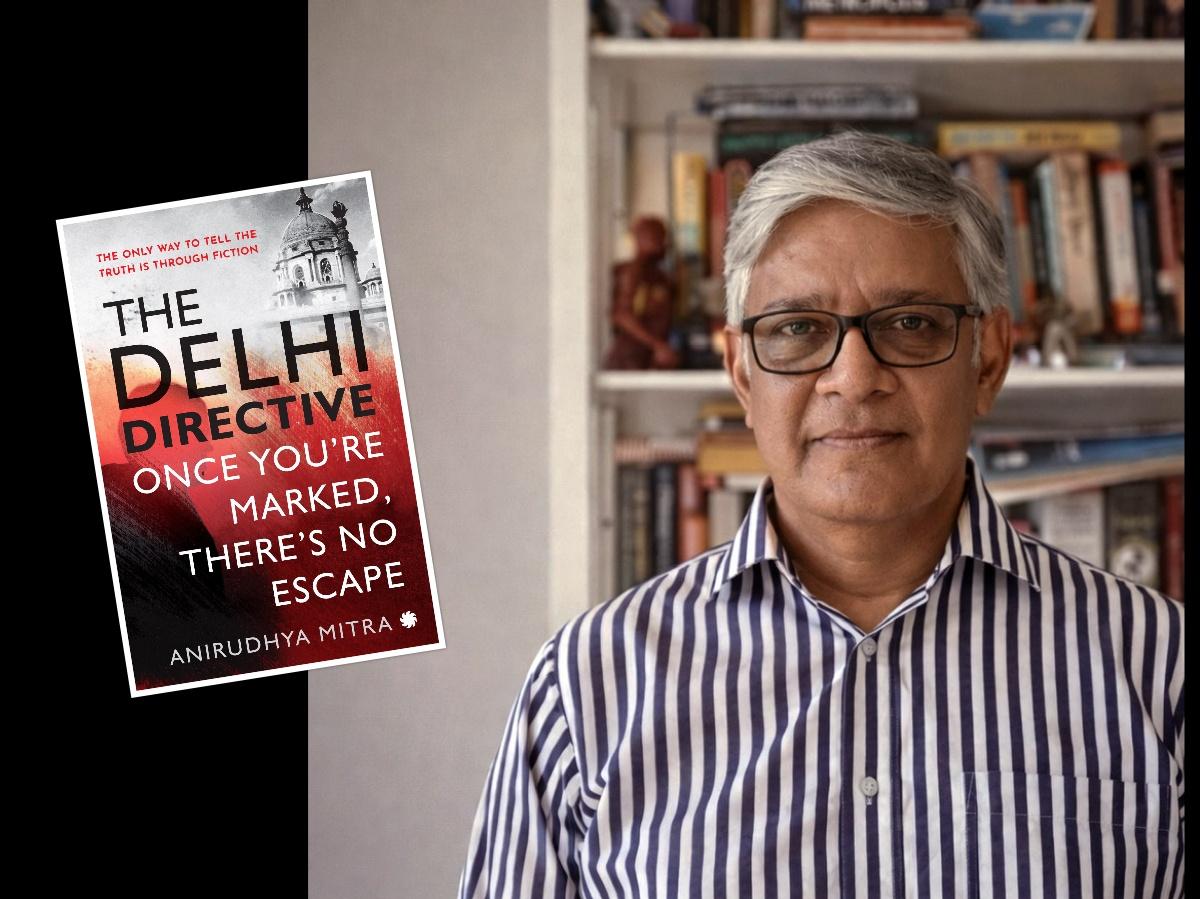
Journalist-turned-author Anirudhya Mitra’s book delves into intelligence operations, terrorism and covert warfare.
Q. You have said that The Delhi Directive is based on real R&AW operations. How long did it take you to write it?
A: It has taken me my entire career to understand the world of espionage, and I still feel I am only scratching the surface. The people I follow operate in darkness.
In 2023, after the then Canadian Prime Minister, Justin Trudeau, accused Indian agents of being involved in the killing of Hardeep Singh Nijjar (a Canadian Sikh involved with the Khalistan movement), I began researching it because it was not a routine allegation; it had diplomatic consequences.
Instead of simply accepting the Indian government’s denial or rejecting Trudeau outright, I wanted to examine how such operations are viewed globally.

Q. Bollywood hit Dhurandhar, about an undercover Indian agent, has generated much interest recently. Why did you fictionalise the spy universe in your book, when books can offer more than films, which often take creative liberties?

Ranveer Singh plays an undercover Indian agent in ‘Dhurandhar’.
A: The grammar of cinema is different as it compresses reality into spectacle. A book can open up the layers. I had no option but to write my book as fiction because the government will be the first to deny when you publish operational details as non-fiction. Covert funds are not officially recorded. Operatives use false identities. Written approvals for sensitive actions rarely exist.

Q. The book highlights the story of an Indian spy who goes after India’s most wanted criminals in Pakistan, Canada, the U.K. and U.S., and the Gulf. It shows the achievements of our agency operatives despite challenges and limited resources.
A: Yes, Indian Intelligence does not have the global budget of the CIA or the vast electronic surveillance grid of the United States. Yet, it operates across regions, works in difficult environments, often without the luxury of open political cover. In reality, it is long-waiting, endless paperwork, coded conversations, and huge personal risk without recognition. It fascinates me, and I wanted to show how complex and disciplined that ecosystem really is.
Q. In the book, you talk about India’s paradigm shift in intelligence strategy post 2014. How far has the government’s zero-tolerance policy reduced terrorism?
A: The 2016 Uri surgical strikes were not just a military response. They were a message. For decades, India absorbed attacks and responded with dossiers and diplomatic protests. Post-2014, the signalling has changed. India has made it clear that cross-border terror will invite visible retaliation. In geopolitics, perception matters. If your adversary believes you will react, the cost of misadventure rises.
Zero tolerance squeezes networks, disrupts financing, and forces handlers across the border to think twice. That is the shift.
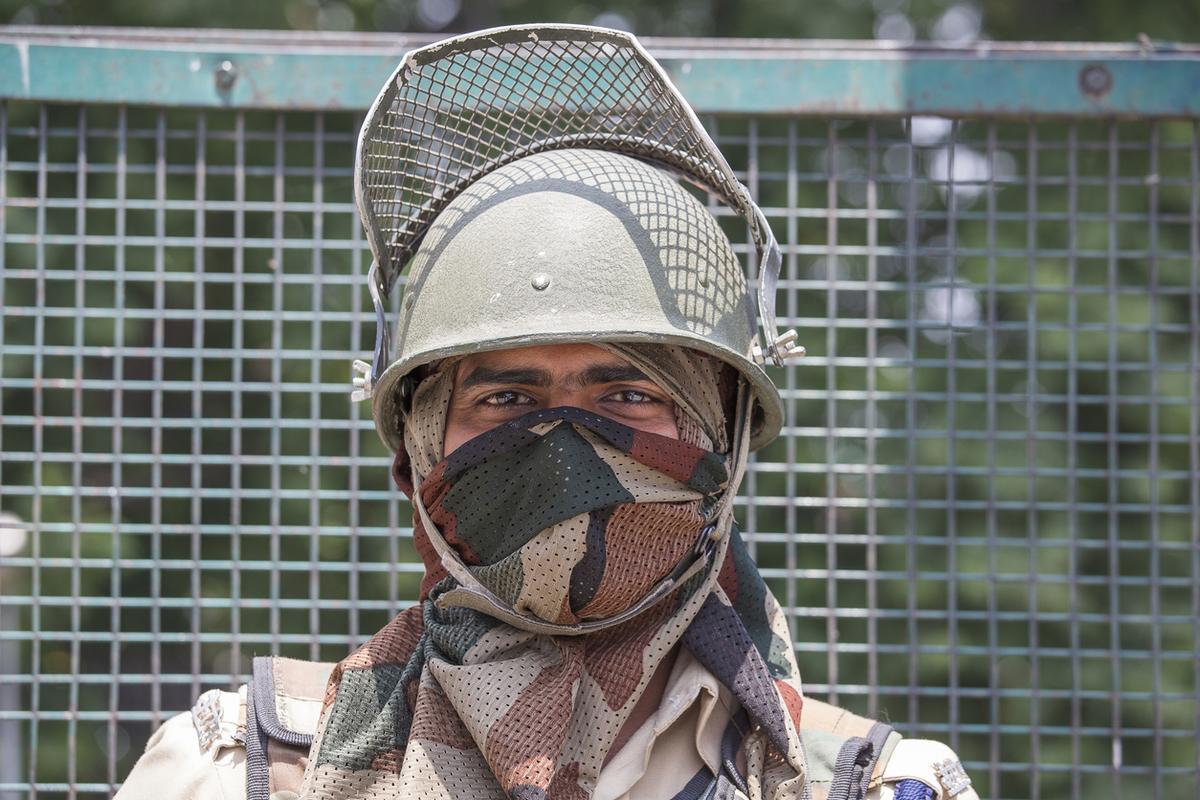
A guard at an Indian Army checkpoint in Kashmir.
| Photo Credit:
Getty Images
Q. Why do you think spy stories resonate so strongly? How has espionage evolved over the years?
A: People like spy stories because they know there is more happening than what they see on television debates. Somebody is always watching, tracking, intercepting, negotiating. And most of those people will never be known. If they fail, they are disowned. If they succeed, nobody hears about it. That tension and the idea that there is a hidden layer beneath politics, where decisions are made quietly but affect millions, pulls readers in.
Q. How does the terror funding ecosystem work, in your observation?
A: Terror is expensive. Guns, explosives, logistics, safe houses, legal defence, and propaganda run on money.
In my book, you read about Harwinder Singh Rinda, a wanted terrorist based in Lahore, allegedly moving Afghan heroin to Latin American cartels. Part of that money is meant to fund Khalistani networks in Canada and the U.S. There are also allegations of arms and explosives moving through the same channels. This is not fantasy. This is how modern hybrid warfare works.
Once, an Intelligence veteran told me that drugs fund guns, guns create leverage, and then leverage creates diplomatic bargaining power. But the cold truth is, today’s asset becomes tomorrow’s embarrassment. Agents are destroyed when they become liabilities. When a militant group becomes too visible, uncontrollable, or costly, the plug is pulled. Sometimes quietly, sometimes violently.
Q. People see gripping and fascinating portrayals of the FBI, ISI, CIA, KGB on the silver screen. What is the difference between R&AW and other intelligence agencies?
Getty Images
A: The real difference is how big they are, how much freedom they get, and the kind of system they operate in. Some have huge budgets and operate across continents with open backing from their governments. Others work more quietly, with fewer resources, shaped by regional pressures and political realities.
The CIA has global reach and huge budgets. After 9/11, it openly conducted drone strikes and covert operations across continents.
The ISI has historically used non-state actors as strategic tools in Afghanistan and Kashmir. That is part of its army-dominated structure.
The KGB, and today’s FSB, operate within a tightly controlled system where covert elimination and counter-intelligence are institutionalised.
R&AW was created in 1968 after the 1962 and 1965 wars exposed serious intelligence gaps. For decades it operated quietly, focusing on neighbourhood intelligence. It did not advertise itself. It did not glorify itself. Post 2014, the signalling has changed. India has become more open about some cross-border responses. But R&AW still does not hold press briefings about covert successes. It does not make films celebrating itself. It prefers silence. And sometimes, silence is power.
The interviewer is a senior journalist based in Delhi.




