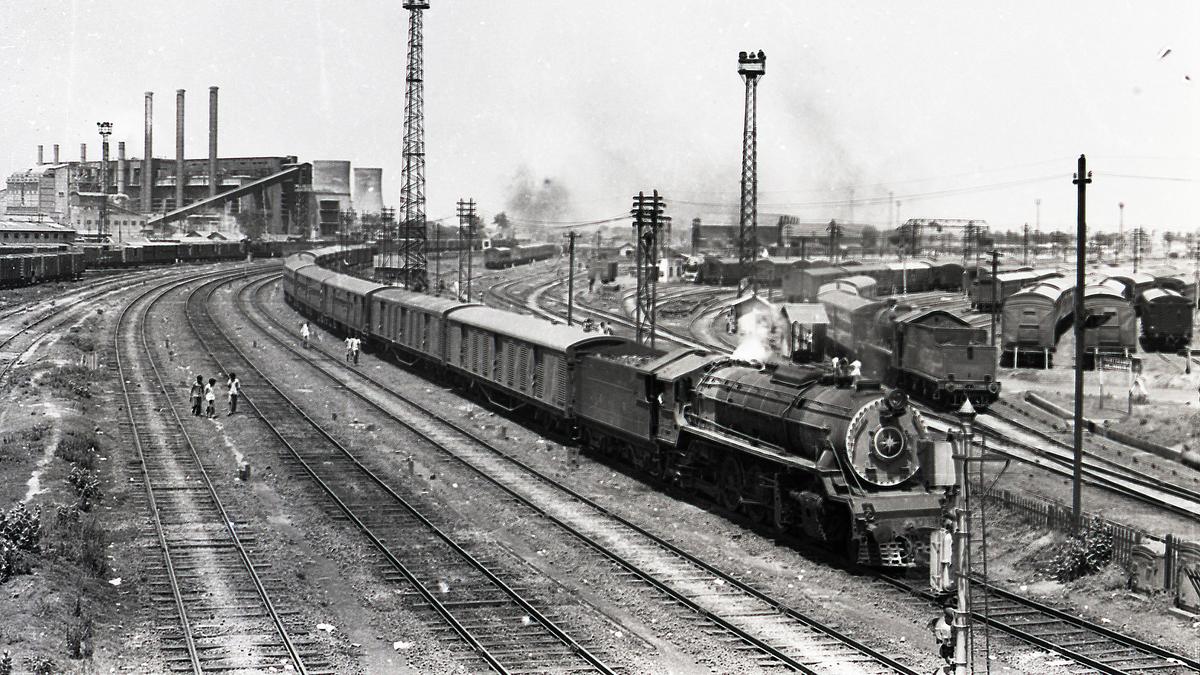

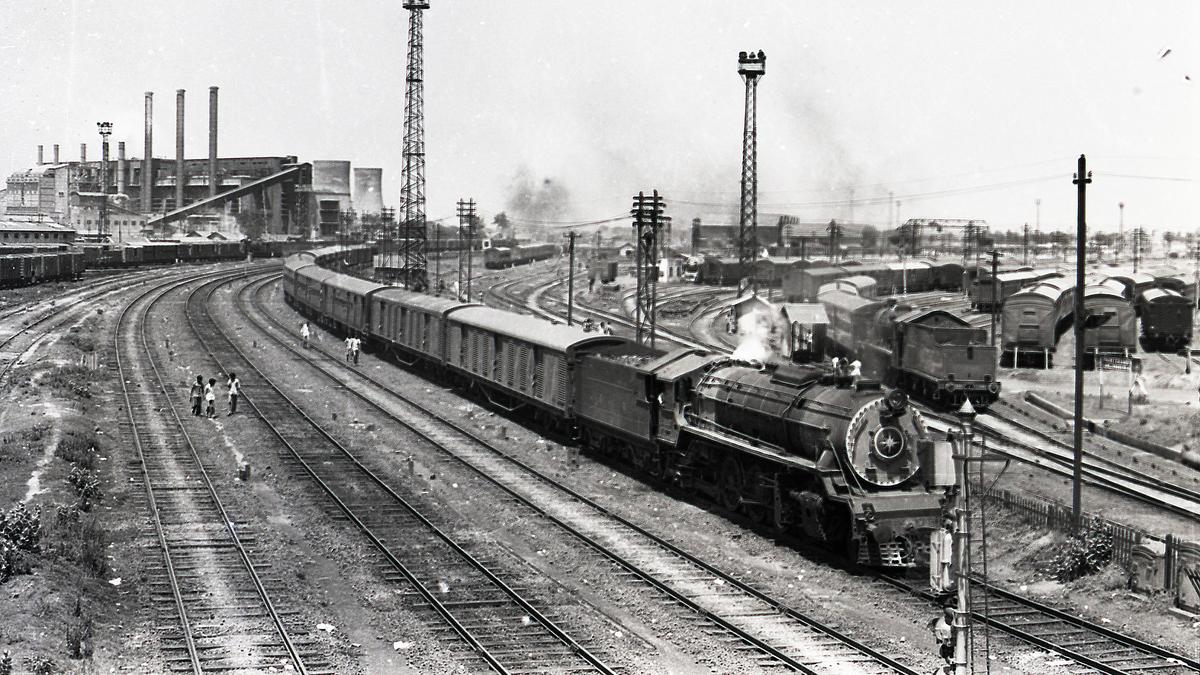
Representational image. File
| Photo Credit: The Hindu Archives
On the night of October 24, 1964, Rajagopal, an Engine Line Reference (ELR) gangman was on routine patrol checking the permanent track near Karunguli in Chengalpattu, close to Madras (now Chennai). To his horror, near the Thandalam bridge – lying between Padalam and Karunguli railway stations – he found the fish-plates and key missing. It was 10 p.m.
Three south-bound express trains had passed the bridge, fortunately without any mishap. The last of the express trains, the Tuticorin Express, was due any moment. Rajagopal placed the danger light at the spot, ran in the direction of the approaching train and placed three detonators on the track to serve as a warning to the crew.
Heroic act
However, when he returned to the bridge, he was shocked to find the danger light missing. With a quick presence of mind, he ran to the nearby Thandalam village for help. He and a Scheduled Caste leader Thangavelu, took a torch-light and cycle-lamp and returned to the scene as fast as they could.
The Tuticorin Express was fast approaching. Rajagopal asked Thangavelu to take the cycle lamp covered with red cloth and run ahead to stop the train, while he stood near the scene with the torch-light turned red. As the train neared the bridge, Thangavelu vigorously waved the red lamp. The crew brought the train to a screeching halt, saving the lives of hundreds of passengers on board.
The Railway Police registered a case. Subsequently, the case was entrusted to the Crime Investigation Department (CID).
The breakthrough
The scene of the crime, being a desolate place, provided virtually no clue on the perpetrators. Investigators began questioning railway employees who were directly in charge of the track. “A patient and persevering enquiry proceeded. A breakthrough came when one of the officers contacted a nearby tea-stall keeper at Padalam railway station where the railway labourers used to gather for light refreshments. The suspicion turned towards one Velu, a gangman,” writes S. Nagalingam, Superintendent of Police, Special Branch, CID, Madras in the October-December 1965 edition of The Madras Police Journal.
Investigators learnt there was a strike by gangmen when the Permanent Way Inspector mandated those engaged in relaying sleepers to replace six everyday as done in other sections instead of the three per day. Later, the Permanent Way Inspector had refused to take for duty those who organised the strike. Angered by this, three persons Narayanasamı, Natarajan and Ramasamy, along with Velu “conspired to wreck the Permanent Way to bring disrepute and discredit to the Permanent Way Inspector.”
Plan execution
As plotted, Narayanasami and Natarajan removed a pair of fish-plates from Thandalam brıdge with the help of spanners. Ramasamy removed the keys while Velu kept a watch over the track. On seeing the night watchman Rajagopal, they hid themselves. Thereafter, Narayanasamı and Natarajan took away the red lamp placed by Rajagopal on the Karunguli sıde when he was proceeding in the opposite direction towards Padalam.
Nearly a month after the sabotage attempt, the police arrested Velu, who revealed everything about the plot. Following this, the other three were also arrested. The spanner and hammer used to remove the fishplates were recovered from the houses of the three persons.
Trial
“Velu gave a straight forward story of the circumstances under which the conspiracy was hatched and how finally the offence was completed. The motive for the offence, though [apparently] flimsy, only went to prove that when personal hardships enter, the finer sentiments of humanitarian attitude are given a clean go-by. The evidence of Velu was largely corroborated by other material and circumstantial evidence and his evidence was in no way rebutted. Evidence of persons seeing the accused and Velu under suspicious circumstances prior to the occurrence was available from other independent sources as well. The accused persons could not bring forth any substantial material eiter to discredit the evidence of their accomplice or the other witnesses,” Nagalingam recounted in the article.
“After the preliminary inquiry by the Sub Magistrate, Conjeevaram (Kancheepuram), the case was tried in the Sessions Court at Chingleput (Chengalpattu),” says the article.
Case judgment
As many as 36 witnesses were examined on behalf of the prosecution. The defence examined a witness.
In the end, all the three accused were found guilty of the offence under section 120 (B) IPC and 126 (b) of the Railway Act of 1890 and were sentenced to suffer imprisonment for a term of three years each.
Published – September 17, 2025 05:30 am IST