


With the Iran war casting a long shadow over the Gulf over the past two weeks, what once appeared to be a region of glittering airports, financial hubs and endless construction now looks extremely vulnerable. India has already acknowledged the seriousness of the crisis. The Ministry of External Affairs had said that within less than a week of the war in the Gulf region beginning, more than 52,000 Indians had already returned from the Gulf under special arrangements, and the number may rise in the coming days. India has also issued repeated advisories on West Asia, showing that this is a real regional emergency.

For the Gulf Cooperation Council (GCC) states, the danger is not only military but structural. These states built their prosperity on stability, open sea lanes, energy exports, global finance and migrant labour. A prolonged war threatens every one of these pillars. Iran’s strategic logic is also clear enough. Tehran sees several GCC monarchies not as neutral neighbours but as part of a wider U.S.-led security architecture in the region. That perception is influenced by the long presence of Western military bases and by the political afterlife of the Abraham Accords, which began formal normalisation between Israel and the UAE and Bahrain in 2020. In Iran’s view, the Gulf cannot claim neutrality while remaining tied to American security power and, in some cases, to new arrangements with Israel.
ALSO READ | Dubai’s image as a safe, tax-free haven is rocked by blasts from Iranian airstrikes
The socio-economic implications are severe. Even where missiles do not land directly, fear itself can become an economic weapon. Insurance costs rise. Shipping routes become uncertain. Investors retreat. Aviation schedules are disrupted. Tourism slows. Energy markets become volatile. The Strait of Hormuz remains the region’s most sensitive chokepoint, and any threat there immediately affects oil and gas flows.

The GCC states have tried to diversify, especially the UAE and Saudi Arabia, but diversification does not remove vulnerability. It only changes its form. Dubai depends on confidence, connectivity and circulation. Saudi Arabia’s large-scale transformation plans require enormous capital and long-term predictability. Qatar’s strength in liquefied natural gas depends on uninterrupted maritime movement. Oman’s ports depend on trade stability. In short, the Gulf’s prosperity rests not only on oil, but on the belief that it is safer than the rest of West Asia. War damages that belief.
Migrant workers bear the brunt
The deepest wound, however, falls on migrant workers. The GCC hosts over 25 million Asian migrants, making it one of the largest labour migration corridors in the world. Indians form one of the GCC’s biggest communities. Official Indian data puts the Indian-origin population in the UAE at over 3.4 million and in Saudi Arabia at nearly 2.6 million; Qatar also hosts a fairly large Indian community. For Kerala, this is not an abstract number. Kerala Migration Survey 2023 found that remittances amounted to 23.2% of the State’s Net State Domestic Product, showing how deeply the State’s economy is tied to migration income. The same report underlined that remittances were 1.7 times the State’s revenue receipts. That means any Gulf shock quickly becomes a Kerala social crisis.
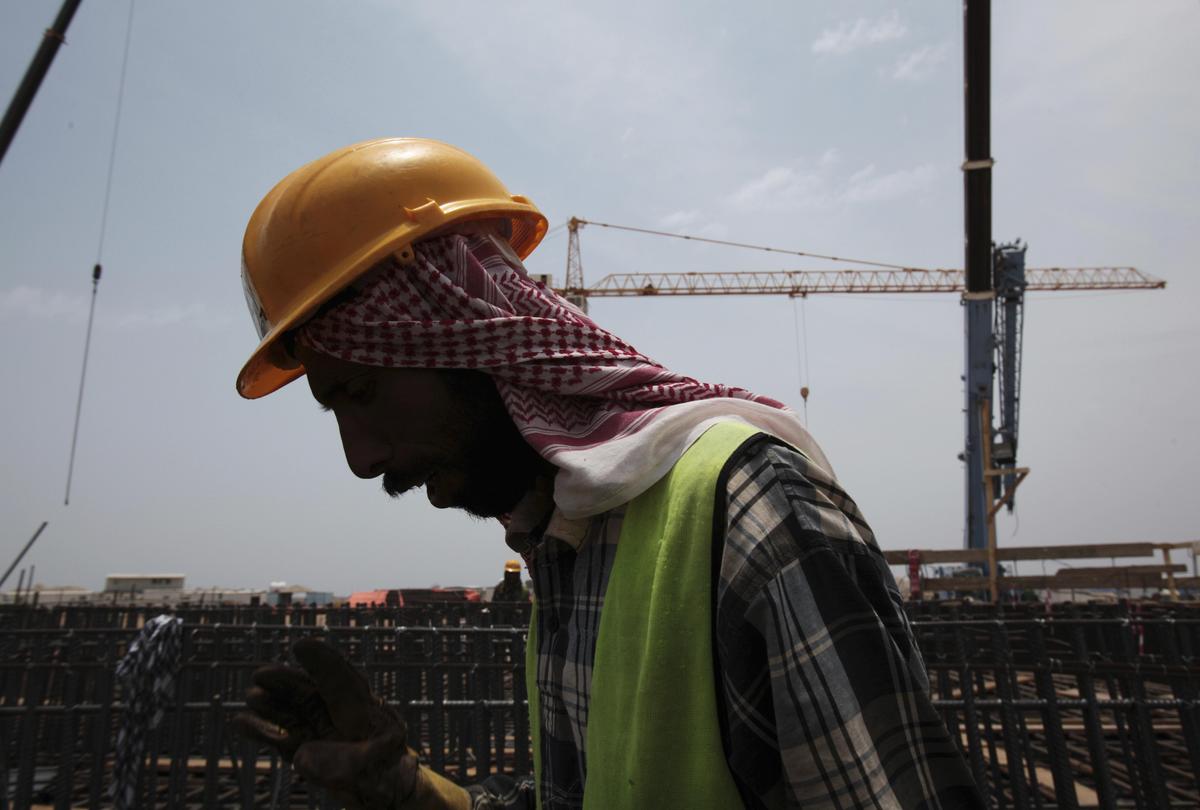
Low-paid workers in the Gulf, employed in construction, transport, retail, domestic work and services remain trapped between fear and necessity. Image for representation
| Photo Credit:
AP
In such a situation, migrant workers are always the most exposed. Executives may leave first. Capital may move digitally. Diplomats may negotiate exits. But low-paid workers in construction, transport, retail, domestic work and services remain trapped between fear and necessity. They cannot easily abandon jobs. They often live in shared accommodation far from urban protection zones. They must keep sending money home even when uncertainty grows. For many families in Kerala, remittances are not extra income. They pay for food, education, health care, housing loans and daily survival. A prolonged war, therefore, means more than temporary anxiety. It may lead to job losses, wage delays, stalled projects, reverse migration and a renewed social burden on Kerala’s already strained economy.
Strategic blunder: Editorial on the U.S., the Iran war
The larger lesson is thoughtful. The Gulf’s modern order was built on external security guarantees, hydrocarbon wealth and imported labour. The Iran war shows how brittle that order really is. If the conflict continues, the GCC may harden its security systems, restrict labour mobility and prioritise national workforces. That would narrow the space for skilled or low-skilled migrants from India. Even if the war subsides soon, the psychological break will remain. The Gulf will continue to matter for India, but the old certainty of the “Gulf dream” has been shaken. For millions of Indian families, especially in Kerala, the bridge across the Arabian Sea still stands, but it now stands under fire. Jean-Paul Sartre once wrote, “When the rich wage war, it is the poor who die,” and in the modern Persian Gulf, it is the migrant who loses their lifeline.
The author is Director, Inter-University Centre for Social Science Research, Mahatma Gandhi University, Kerala.
Published – March 12, 2026 12:53 pm IST



