

By using this site, you agree to the Privacy Policy and Terms of Use.
Accept
India Times NowIndia Times NowIndia Times Now
Notification Show More
Font ResizerAa
  • Bharat Shreshtha Ratna Sanman
  • India News
  • Categories
    • Technology
    • Entertainment
    • The Escapist
    • Insider
    • Finance ₹
    • India News
    • Science
    • Health
Reading: Israel-Iran conflict: As war intensifies, Keralite expatriates in Gulf face anxiety over limited shelter facilities
Share
India Times NowIndia Times Now
Font ResizerAa
  • Bharat Shreshtha Ratna Sanman
  • India News
  • Categories
Search
  • Bharat Shreshtha Ratna Sanman
  • India News
  • Categories
    • Technology
    • Entertainment
    • The Escapist
    • Insider
    • Finance ₹
    • India News
    • Science
    • Health
Have an existing account? Sign In
Follow US

Home » Israel-Iran conflict: As war intensifies, Keralite expatriates in Gulf face anxiety over limited shelter facilities

India News

Israel-Iran conflict: As war intensifies, Keralite expatriates in Gulf face anxiety over limited shelter facilities

Times Desk
Last updated: March 2, 2026 9:24 am
Times Desk
Published: March 2, 2026
Share
SHARE


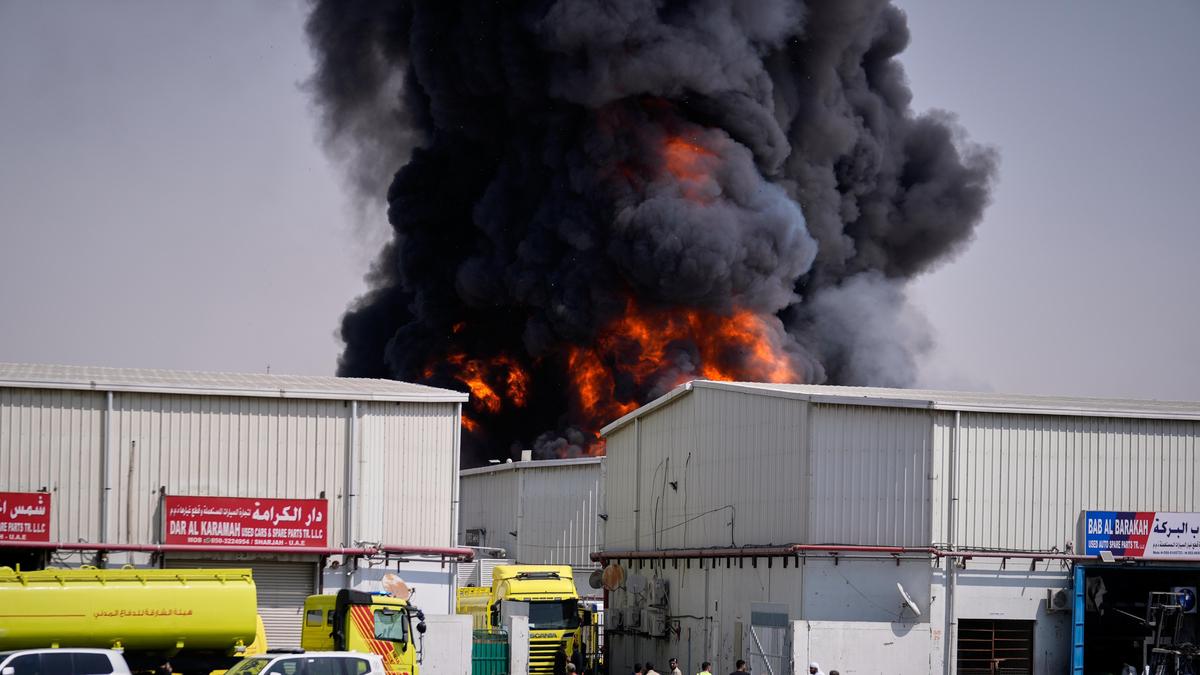
Flames and a black plume of smoke rise from a warehouse in the industrial area of Sharjah City, United Arab Emirates, on Sunday (March 1, 2026) following reports of Iranian strikes.

Flames and a black plume of smoke rise from a warehouse in the industrial area of Sharjah City, United Arab Emirates, on Sunday (March 1, 2026) following reports of Iranian strikes.
| Photo Credit: AP

The escalation of violence in West Asia and U.S. President Donald Trump’s claim that the conflict with Iran could last for around four weeks have raised concerns among Indians working in West Asian cities, as most cities in different GCC countries have a very limited number of basement shelters or designated bomb shelters in buildings, even as sirens warned of Iranian air strikes in retaliation for the U.S. attack.

Speaking to The Hindu, Ajith Kolassery, Chief Executive Officer of NoRKA-Roots, the Kerala government agency working for the welfare of non-resident Keralites (NRKs), said: “We have received over 600 complaints at the help desk set up by the NoRKA Global Contact Centre shortly after the war began. The complaints range from air traffic suspension to inadequate shelter facilities in affected cities. People who were forced to take shelter at Al Juffair in Bahrain following Iran’s retaliatory strike complained that the number of shelters was limited and that inadequate facilities made life miserable.”

A representative of the Kerala Muslim Cultural Centre (KMCC) in Kuwait told The Hindu that hardly 10%–15% of buildings in the country have basement shelters, forcing residents to take refuge in interior rooms of flats and apartments when sirens warn of imminent threats.

According to George Cheruvathur, a Keralite working in Doha, “We could see the lights and hear the sounds of missiles being intercepted before reaching their targets. A Keralite identified as Hisham, a native of Thrissur, was injured in Doha along with 15 others the other day after being hit by missile shrapnel that landed in multiple locations across Qatar. The fact is that proper shelter is available only in a few designated places, while other buildings remain vulnerable,” he said.

‘More organised’ in Israel

On the other hand, the situation appears more organised in Israel. According to Borgian Solomon, a Keralite and former joint secretary of the Israel Malayali Association who has been working in Israel for the past 18 years, even small children in Israel are trained on how to take shelter and follow procedures during air strike warning sirens. Despite ongoing attacks and counterattacks between Israel and Iran, people in cities are not as panicked as elsewhere, as such situations have become part of daily life, including for migrants, he said.

“Israel has a well-defined system, while most GCC countries have limited experience in handling such incidents. Repatriation is almost impossible in the current milieu, and we have been engaging with Keralites in West Asia through diaspora networks to instil confidence among them,” Mr. Kolassery added.

Kerala alone has a migrant population of around 30-35 lakh in West Asia.

Published – March 02, 2026 02:54 pm IST


Source link

NIA, ED bust Maoist extortion, money laundering rackets
Phone-in with HYDRAA every Saturday; complaints on lakes, roads, parks and public utilities land encroachment to be received
Global trade getting weaponised through tariffs: Nirmala Sitharaman
Samrat Choudhary, top prospect for Bihar’s next CM, to meet Amit Shah in West Bengal on March 8
Is it feasible to blend isobutanol and diesel? | Explained
TAGGED:Israel-Iran conflictkeralites in gulfmalayalis in gulf
Share This Article
Facebook Email Print
Leave a Comment

Leave a Reply Cancel reply

Your email address will not be published. Required fields are marked *

Follow US

Find US on Social Medias
FacebookLike
XFollow
YoutubeSubscribe
TelegramFollow

Weekly Newsletter

Subscribe to our newsletter to get our newest articles instantly!
[mc4wp_form]
Popular News
EntertainmentMovieMusic

Amid Dhurandhar 2 trolling, Deepika Padukone steps out for lunch with Ranveer Singh and his father

Times Desk
Times Desk
March 27, 2026
State spends more than ₹1,500 cr. on high-end procedures under CMCHIS
West Asia conflict: Over 52,000 Indians returned between March 1-7 after partial opening of airspace
How a political and legal battle halted efforts to conserve Tiruvannamalai temple 25 years ago
Haryana IPS officer ‘suicide’: Stalemate over autopsy continues; 48-hour ultimatum to remove DGP
- Advertisement -
Ad imageAd image
Global Coronavirus Cases

Confirmed

0

Death

0

More Information:Covid-19 Statistics
© INDIA TIMES NOW 2026 . All Rights Reserved.
Welcome Back!

Sign in to your account

Username or Email Address
Password

Lost your password?

