Animal rescue and welfare have long been synonymous with the Blue Cross of India (BCI) in Chennai. That familiarity is the product of more than six decades of work. The organisation’s beginnings, however, were modest. In 1959, in Madras, Captain V. Sundaram, a pilot, brought home two stranded puppies he found on a flooded street near his house at T. Nagar. With his wife, Usha, also a pilot, and their children, Suresh, Chinny Krishna, and Vijayalakshmi, he built makeshift kennels at home. Injured and abandoned animals soon began to be rescued from across the city and brought here.
It started as an informal network, known as the Animal Aid Association, before being registered in 1964 as the BCI, with nine founding members, including Sundaram, his family, and early supporters like Daivasigamony, then secretary of the Indian Football Association.
Gaps in civic systems
From the outset, the BCI functioned less as a shelter and more as a response to gaps in the city’s civic systems. Over the decades, it would grow into one of India’s most influential animal welfare organisations. “In the early years, everything was run entirely by volunteers,” Mr. Krishna recalls. “That worked for a while, but we soon realised, perhaps a little too late, that goodwill alone can only take you so far. If you want to succeed, you need a professionally run organisation.” While volunteers remained central to its ethos, the organisation began moving towards structured systems, trained staff, and professional accountability. “What always reassured me,” he says, “was that every rupee the BCI received went directly towards animal welfare.” By the late 1980s, support from international organisations helped accelerate this transition. Visitors from the U.K. offered assistance for building some of the early shelters.
But, for Mr. Krishna, the organisation was never only about rescue and shelter. His deepest engagement with animal welfare came from witnessing cruelty embedded in municipal policy. In the 1960s, he began visiting the Madras Corporation dog pound, where stray dogs were kept without food or water and killed by electrocution. “I used to carry water daily,” he recalls, “so that the dogs would not suffer dehydration before death. Ironically, hydration made electrocution faster.” When he examined Corporation records, he discovered that dog killing in the city dated back to 1860. Initially, a few hundred dogs were killed annually. By 1966, the number had risen to around 16,000. Yet rabies cases and stray dog populations kept increasing. “The stated purpose was public safety and rabies control,” Mr. Krishna says. “But despite decades of killing, the policy had failed completely.” Hence, the BCI developed what would become one of its most significant contributions: the Animal Birth Control (ABC) programme. Conceived by Mr. Krishna, the idea drew inspiration from spaying and neutering in private veterinary care and from India’s own family planning campaigns.
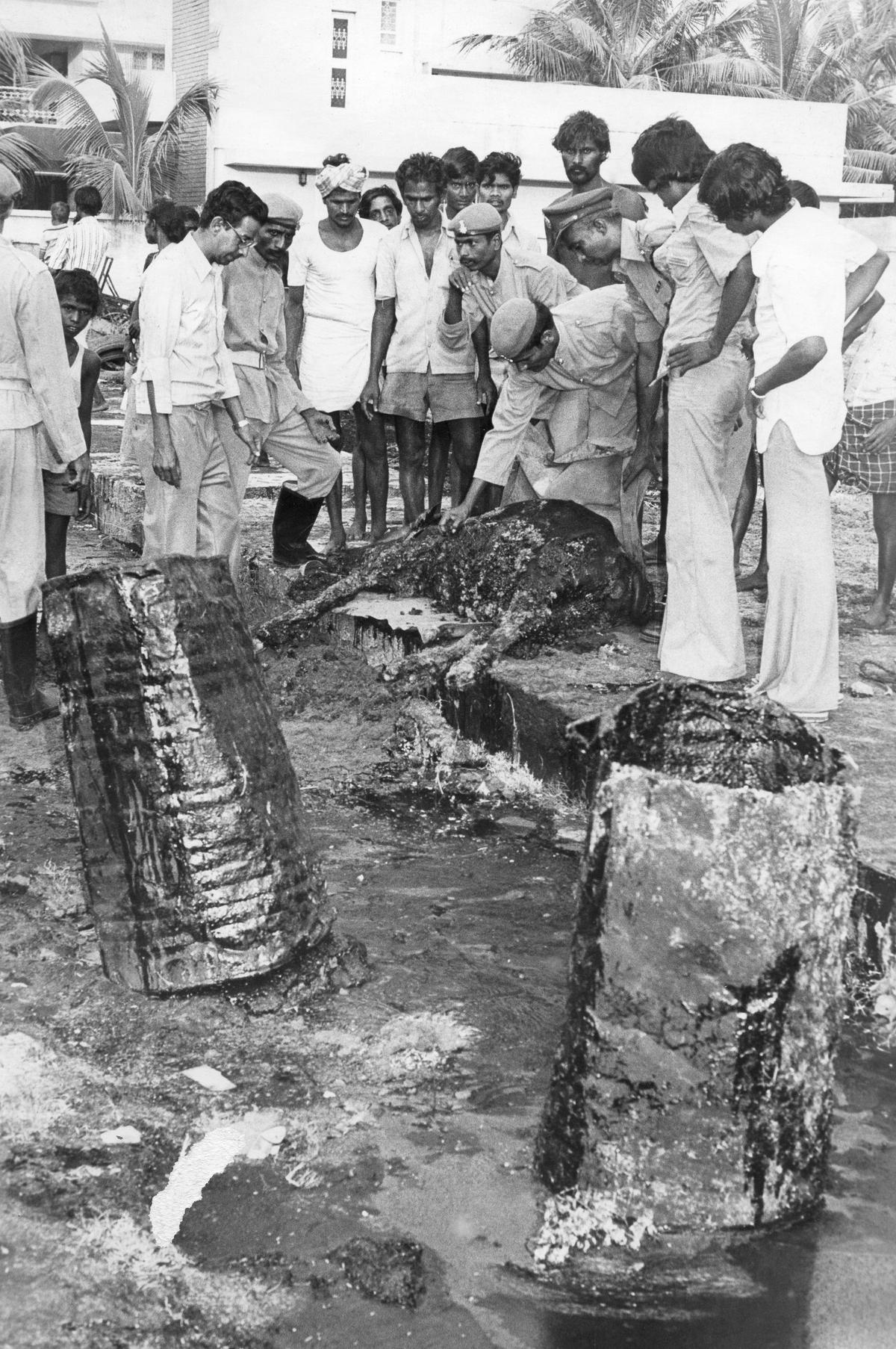
A buffalo was saved after it was trapped in a pool of tar stagnating in a trench on the sidewalk of the Fourth Main Road at Anna Nagar on July 4, 1981.
| Photo Credit:
THE HINDU ARCHIVES
‘Catch, sterilise, and return’
The BCI began piloting this ‘catch, sterilise, and return’ method as early as 1964. Gradually, the policy began to shift. The World Health Organization endorsed the ABC with Anti-Rabies Vaccination (ABC-AR) approach in 1990. In 1996, the Corporation stopped culling street dogs and adopted ABC. The Animal Welfare Board of India followed in 1997, and in 2001, the Government of India notified the Animal Birth Control (Dogs) Rules, making the programme mandatory nationwide. “Street dog populations are directly linked to food availability. Dogs are territorial. If you remove them without fixing waste management, new dogs will move in. Killing creates a vacuum, it does not solve the problem,” he says.
The results were evident. Rabies cases in Chennai declined steadily, and in 2007, the city recorded zero human deaths for the first time since records were kept. The BCI is an organisation that does not selectively accept animals, says its director Shanthi Sekar. Road accidents, often involving catastrophic injuries, form a large part of its caseload. “Many of these animals cannot survive,” she says, adding that in those cases, the focus is on pain relief, care, and dignity in death. Suspected rabies cases are also taken in. “Refusing such animals only prolongs suffering,” Mr. Krishna says.
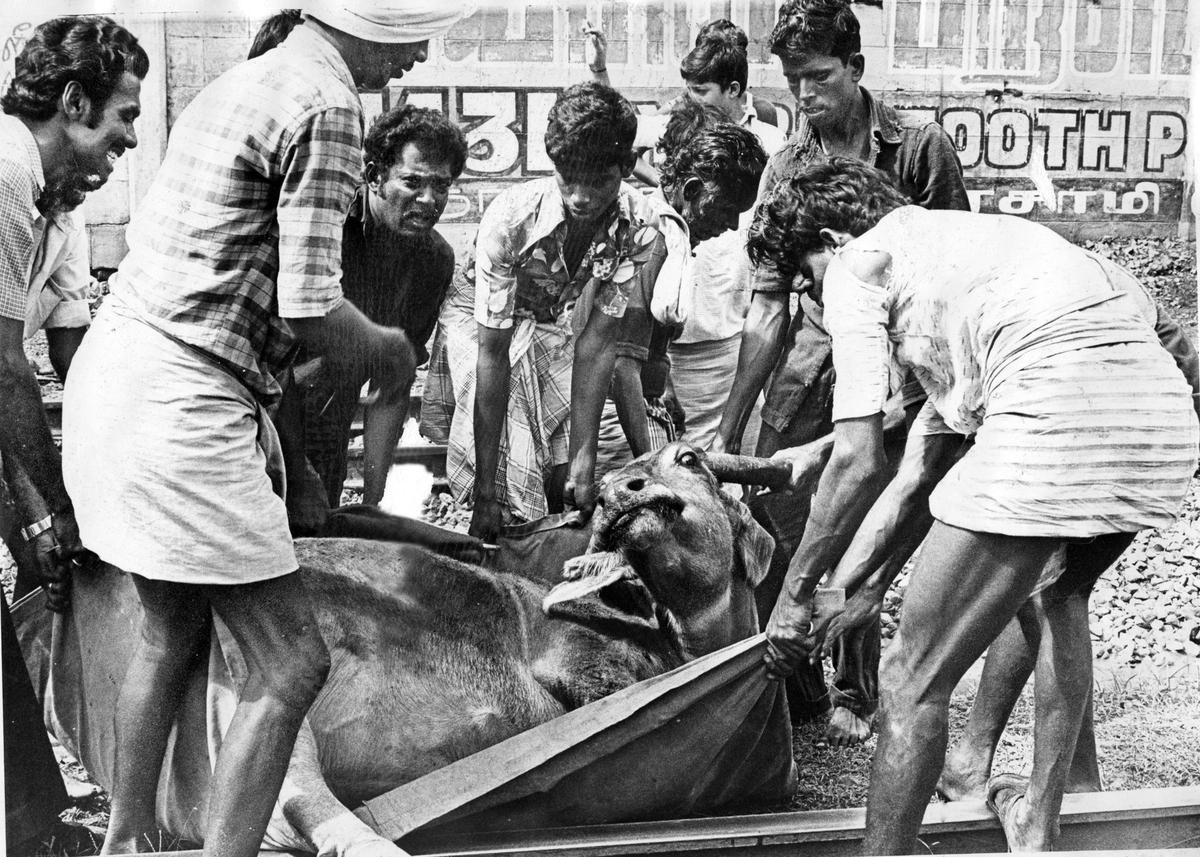
An injured buffalo, writhing in pain for about five hours near the Saidapet railway level-crossing, being taken to hospital by Blue Cross of India volunteers on November 27, 1983.
| Photo Credit:
THE HINDU ARCHIVES
Over the years, the BCI has faced charges of mismanagement and neglect. Mr. Krishna responds by stressing transparency. According to the BCI, when intake of animals is high, outcomes don’t always follow a neat curve, and sometimes, deaths are higher. “Deaths in a hospital do not automatically mean negligence,” he says, adding that during disease outbreaks like parvovirus among puppies, strict protocols are followed, including isolation of infected animals and thorough disinfection of ambulances after every run.
As the BCI enters its seventh decade, what will be the path ahead? His response is candid. Ideally, such organisations should not exist. In a system where waste management works, animal populations are managed scientifically, and public institutions function optimally, there would be no need for emergency rescues or parallel welfare structures. But until that world arrives, the BCI will continue.
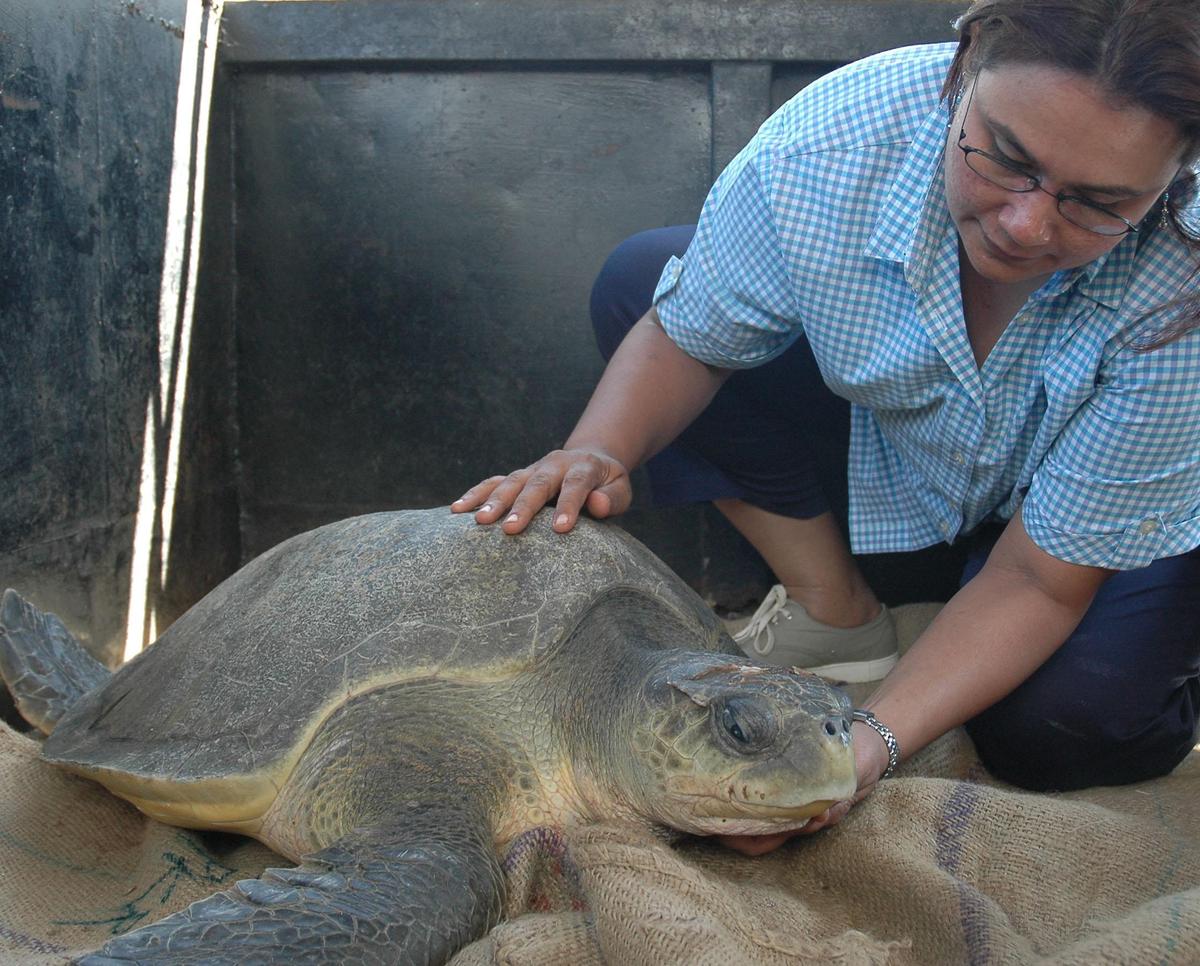
An Olive Ridley turtle, which was treated for a head injury at a Blue Cross of India facility, being taken back to be let into the sea in Chennai on March 2, 2005.
| Photo Credit:
S.R. Raghunathan
Published – January 02, 2026 05:30 am IST