

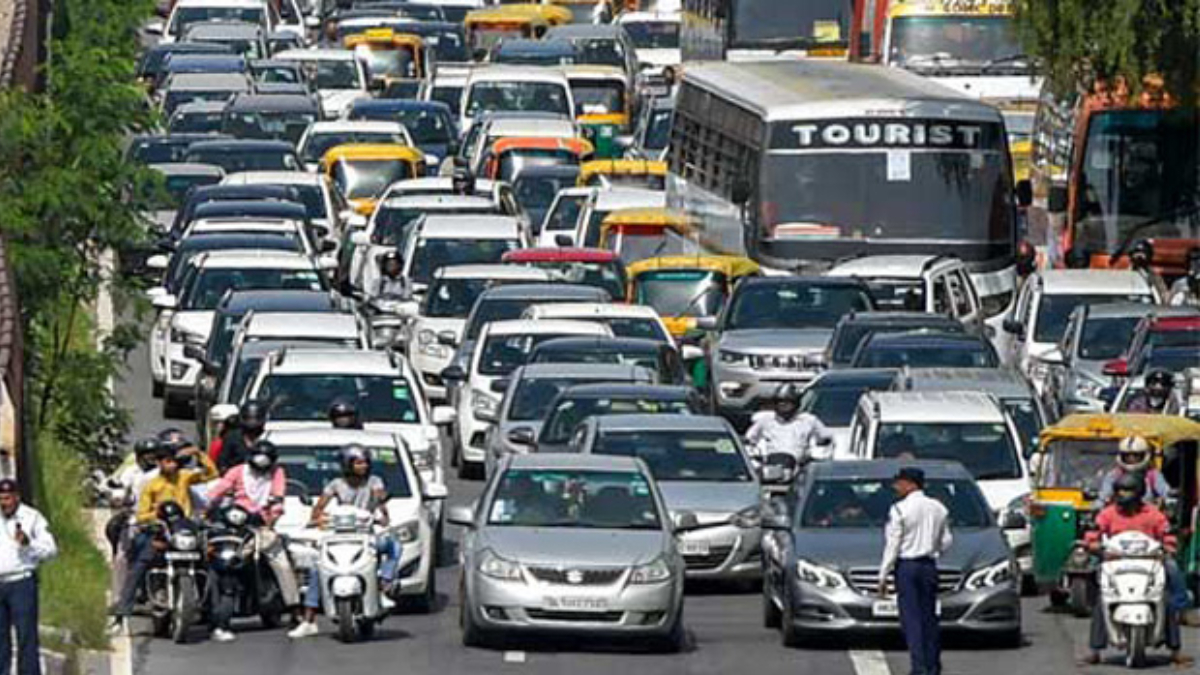

The latest orders imply that not only will the entry of such vehicles be stopped, but also these run the risk of getting seized for violations.
As air quality in Delhi continues to deteriorate, the Commission for Air Quality Management (CAQM) has implemented Stage IV of the Graded Response Action Plan (GRAP) to curb the pollution level with immediate effect. Amid this, there is a complete ban on the entry of vehicles with emission standards lower than BS6 into the national capital. In view of the toxic smog and continuously increasing air pollution, it has been announced that strict action will be taken against vehicles violating the rules from December 18, 2025.
The latest orders imply that not only will the entry of such vehicles be stopped, but also these run the risk of getting seized for violations. The strict measures from the government have necessitated the procurement of a PUC certificate for vehicles meeting the BS6 emission standards.
What is the BS6 standard, and why is it important?
BS6, or Bharat Stage-6, is an emission standard set by the Government of India. It looks to oversee the pollution standards, controlling the pollution emitted by vehicles. Being significantly stricter than the older BS4 standard, BS6 maintains a pollution level that is least detrimental to the environment. Since April 1, 2020, only vehicles meeting the BS6 standard have been allowed to be sold and registered in the country.
How to check if my vehicle is BS6 compliant?
It thus has become important for vehicle owners to determine whether their vehicle is in compliance with the new BS6 standards. This can be checked through simple steps, which are:
RC and Online Status: One can determine the BS6 standards through the Registration Certificate (RC) of a vehicle, which clearly mentions ‘Emission Norms’ or ‘Bharat Stage.’ If the RC clearly states BS VI or BS6, the vehicle is deemed to be meeting this standard. This information can be checked by the digital copy of the RC on DigiLocker, mParivahan, or the transport department website.
Check the sticker or plate on the vehicle: The BS6 standards can also be checked through the label or plate near the engine or on the driver’s side door frame. These clearly mention ‘BS VI.’
Check the registration year: One can also determine whether the vehicle meets the BS6 standards by simply checking the registration date. If the vehicle was registered after April 1, 2020, it is almost certain to be BS6 compliant. However, cross-checking with the RC is still advised.
ALSO READ | New Year Bonanza! CNG, domestic PNG prices set to drop by up to Rs 3, here’s all you need to know



